A Robust Digital Audio Watermarking Algorithm Based on Time-Frequency Analysis

A time-frequency analysis, digital audio technology, applied in speech analysis, transmission systems, instruments, etc., can solve problems when it is difficult to weigh the imperceptibility of the main signal, the robustness of the watermark, the file compression and filtering are not robust enough, and the signal is not considered. Domain characteristics and other issues, to achieve the effect of enhancing imperceptibility, avoiding main signal interference, and preventing malicious attacks and tampering

CN106898358BActive Publication Date: 2020-01-24WUHAN UNIV
4 Cites 0 Cited by

Patent Information

Authority / Receiving Office
CN · China
Patent Type
Patents(China)
Current Assignee / Owner
Publication Date
2020-01-24

Smart Images

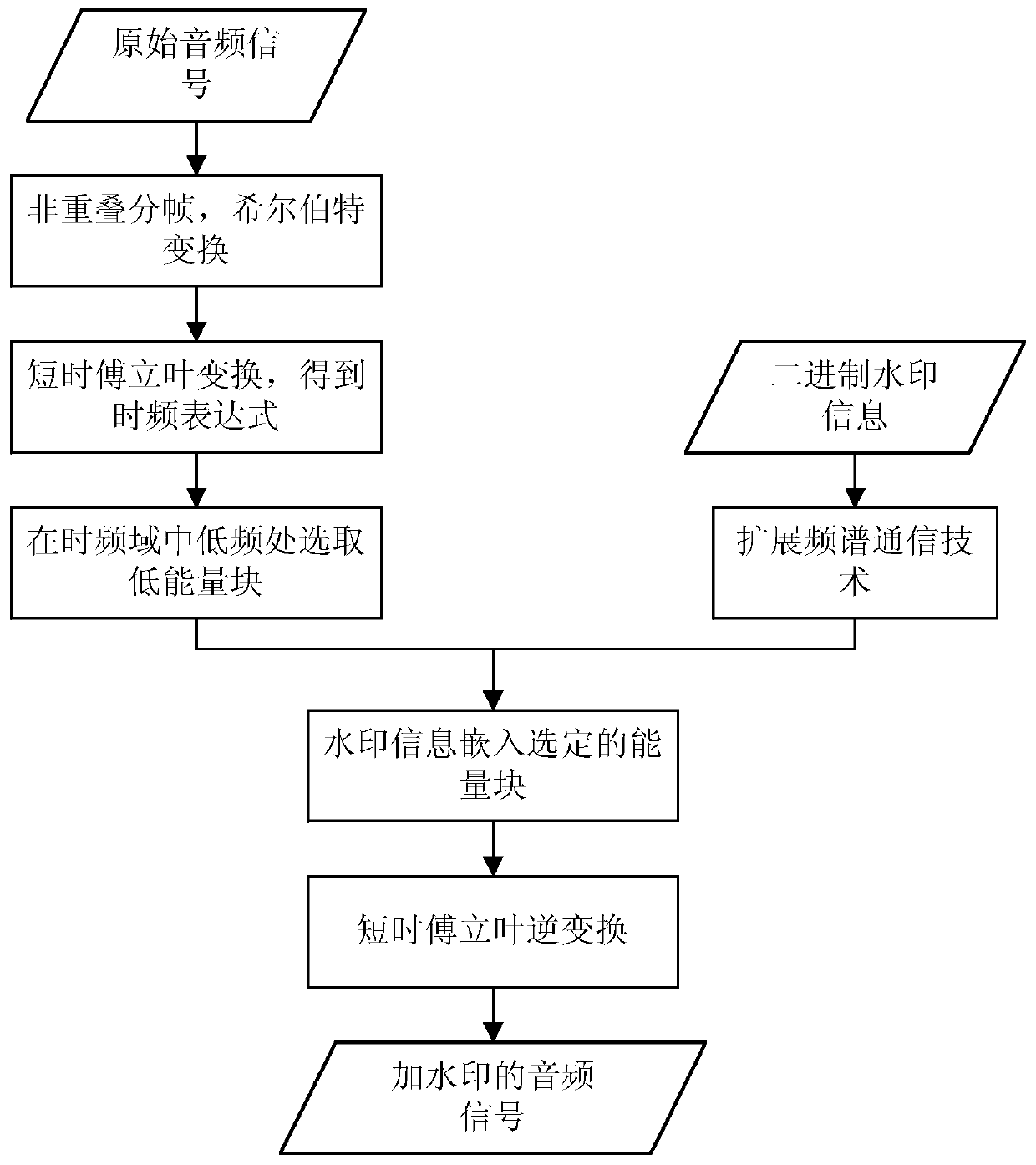
  • Figure 1
    Figure 1
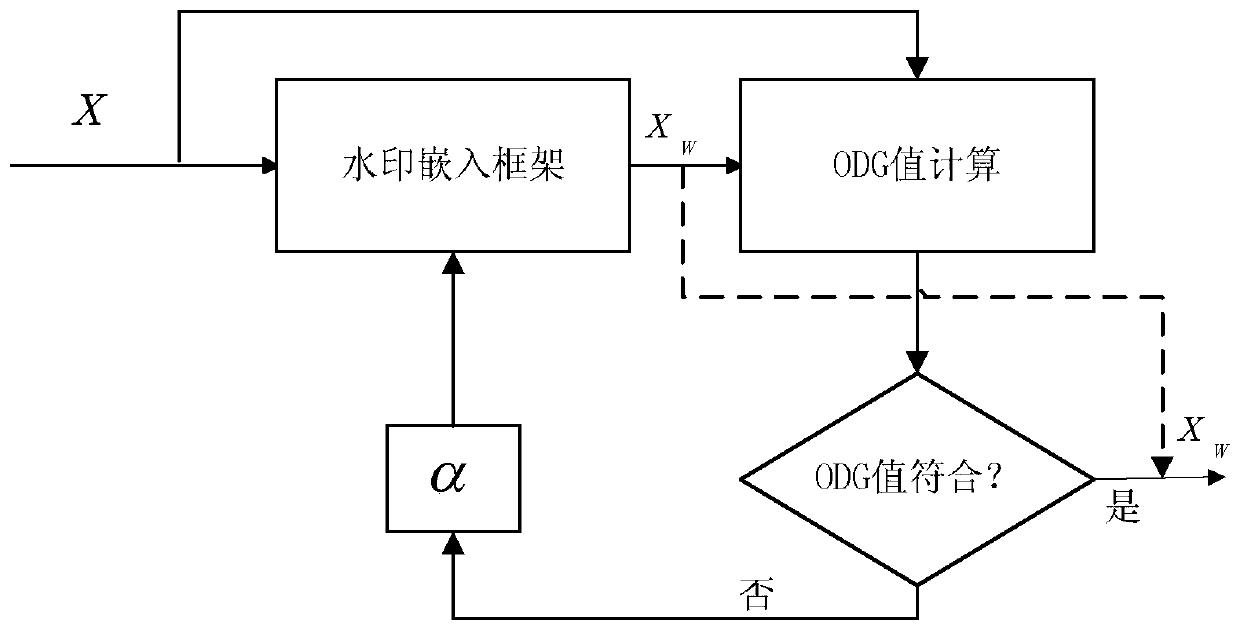
  • Figure 2
    Figure 2
  • Figure 3
    Figure 3
Patent Text Reader

Abstract

The invention provides a robust digital audio watermarking algorithm in view of time-frequency analysis. The algorithm comprises steps of: first subjecting a selected audio segment to non-overlapping short-time Fourier transform to obtain a time-frequency distribution map of an audio signal, performing windowing and blocking in the low and medium frequency range of the time-frequency distribution map, and randomly selecting a characteristic energy block with low energy as a specific position for embedding a watermark; embedding generated binary watermark bits into the corresponding characteristic energy blocks by means of an extended code by using an improved spread spectrum watermark embedding method; after the watermark embedding, obtaining the characteristic energy blocks with embedded watermark by means of a watermark embedding position conveyed by a watermark embedder, and recovering a watermark sequence by using a watermarked characteristic energy block vector and the plus or minus characteristic of spread code inner product. The algorithm can guarantee the quality of a main signal by embedding the watermark into the low-frequency and low-energy position of the frequency domain, and can still recover the watermark after the watermarked signal is subjected to quantification, noise, amplitude zooming, AAC coding compression and low-pass filtering.
Need to check novelty before this filing date? Find Prior Art

Description

[0001] Technical neighborhood

[0002] The present invention relates to the technical field of digital watermarking, and is mainly a design invention for searching for characteristic energy blocks in the time-frequency domain to embed and extract watermarks, and particularly relates to a robust audio watermarking algorithm from the perspective of time-frequency analysis.

[0003] technical background

[0004] With the rapid development of modern communication and multimedia technology, digital multimedia products are becoming more and more popular. People can easily and quickly obtain various digital images, audios, videos, animations, software and texts, etc. The wide spread of digital multimedia products has also It inevitably brings a lot of security problems, such as illegal copying, copyright breaking, and malicious tampering of digital information. Because of this, a digital watermarking technology that can effectively protect digital multimedia products has received extensive ...

Examples

Embodiment Construction

[0043] The implementation steps and effects of the technical solution of the present invention will be described in detail below in conjunction with the drawings and specific embodiments.

[0044] The method provided by the present invention for realizing robust digital audio watermark embedding and extraction in the time-frequency domain can be divided into three parts: determination of watermark embedding position; watermark generation and embedding; watermark detection and extraction, and specific processes Such as figure 1 Shown.

[0045] First of all, step 1, the determination of the watermark embedding position;

[0046] Step 1.1: Perform non-overlapping framing processing on the selected audio segment x containing N samples, and get each frame containing M 0 Samples of x i , Hilbert transform is performed on each frame to eliminate the symmetry of the frequency spectrum in the range of 2π. Because the Hilbert transform signal and the original signal have different phases, othe...