
Overhead bare-handed three-dimensional target selection method based on half-contour highlight
A three-dimensional target and contour technology, applied in the field of human-computer interaction, can solve problems such as affecting the accuracy of three-dimensional target selection, inaccurate input, and difficulty in recognizing user operation intentions, so as to improve efficiency and user experience.
- Summary
- Abstract
- Description
- Claims
- Application Information
AI Technical Summary
Problems solved by technology
Method used
Image

Examples
Embodiment Construction
[0041] The present invention will be further described in detail below with reference to the accompanying drawings and embodiments. It should be noted that the following embodiments are intended to facilitate the understanding of the present invention, but do not limit it in any way.
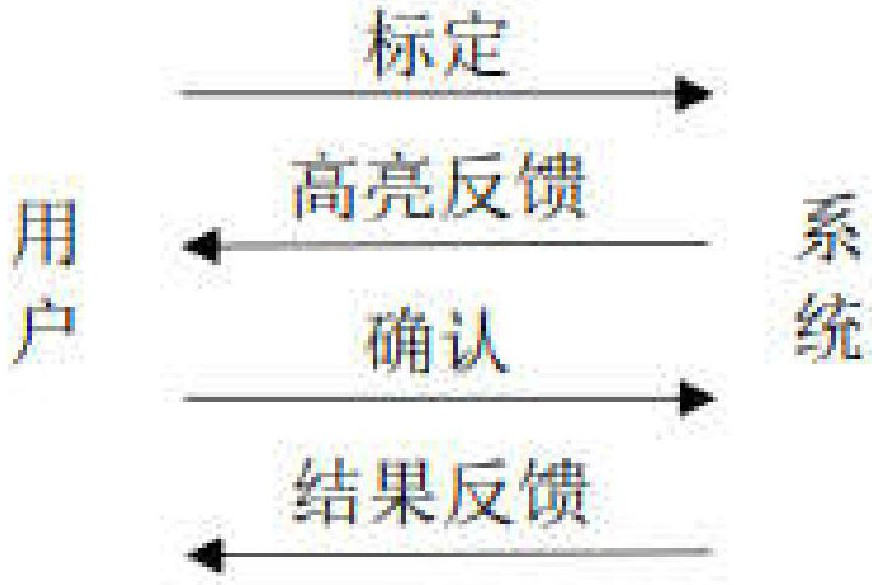
[0042] The interactive process of the inventive method is as figure 1As shown, from the perspective of user input, it includes two major operations: calibration operation and confirmation operation; and from the perspective of system output, it includes two major feedbacks: highlight feedback and result feedback. The user performs the calibration operation to complete the input, and the computer collects and processes the input data and informs the user of the currently selected object (set) through the highlighted object. After multiple interaction cycles, the user finally selects the target object, and the calibration process ends. Calibration and highlight feedback complement each other in th...
PUM
 Login to View More
 Abstract
Description
Claims
Application Information
 Login to View More