
Windscreen wiper device
A technology for automobiles and wiper arms, which is applied in vehicle cleaning, vehicle maintenance, transportation and packaging, and can solve the problem of low risk of pedestrian injury
- Summary
- Abstract
- Description
- Claims
- Application Information
AI Technical Summary
Problems solved by technology
Method used
Image

Examples
Embodiment Construction
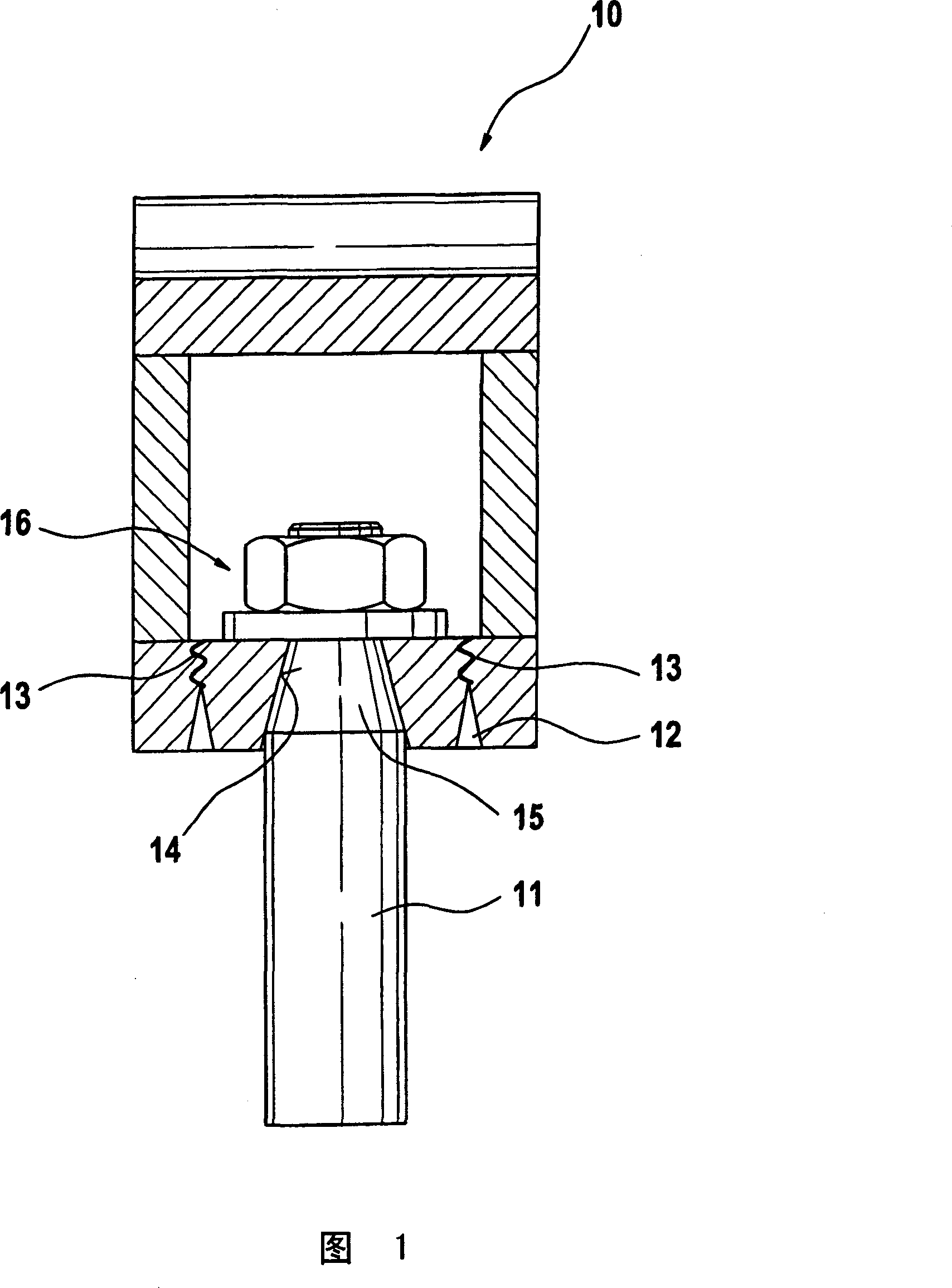
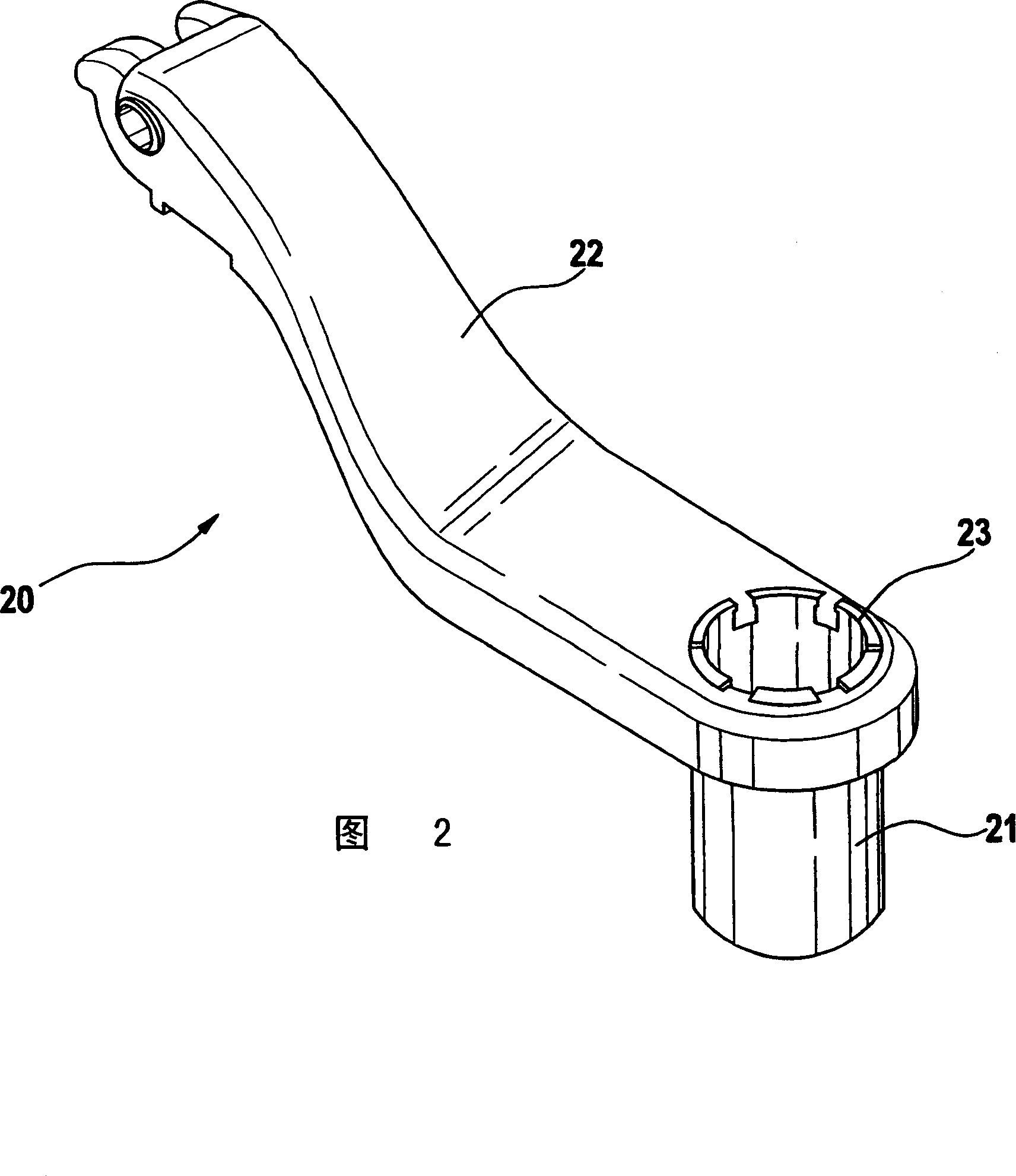
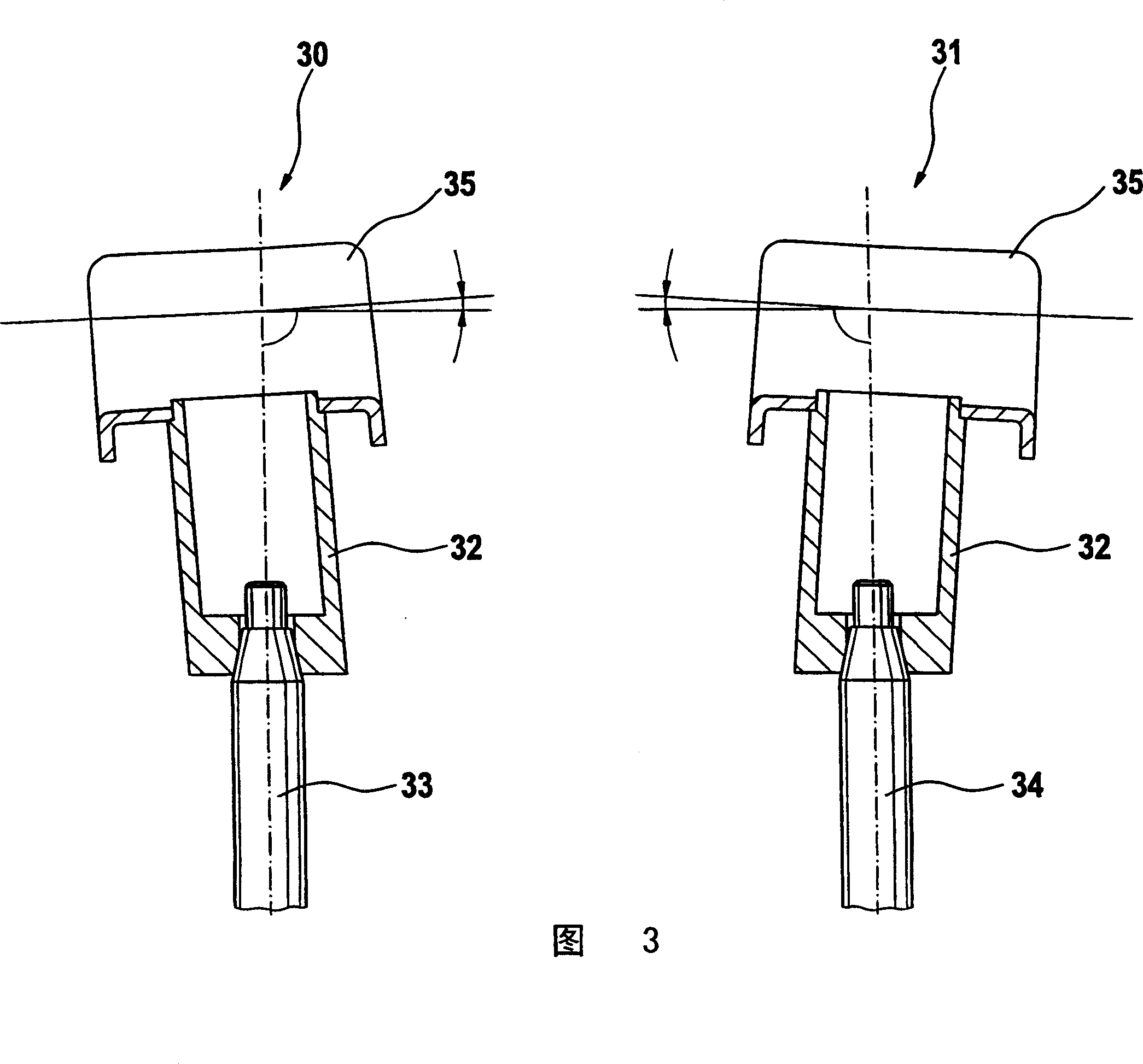
[0020] figure 1 A fastening part 10 of a windshield wiper system, which is not shown in detail here, is shown. The fastening part 10 connects a wiper arm, not shown in detail here, with a wiper shaft 11 . The fixture is a hollow cylinder. The fastening part 10 has, on the side facing the wiper shaft 11 , a desired breaking point 12 in the form of an annular groove. In the event of a collision with a pedestrian, the fixing element 10 will fail at the theoretical breaking point 12 . In order that the fastening element 10 breaks already at low impact forces, the groove 12 narrows towards its groove base. The wavy line 13 represents a possible fracture situation. The fastening element 10 will at least partially loosen from the wiper shaft 11 due to the fracture. Depending on the angle at which the pedestrian hits the fastening part 10 , the fastening part 10 is either pushed onto the wiper shaft 11 or deflected transversely to the wiper shaft 11 so that the fastening part ben...
PUM
 Login to View More
 Abstract
Description
Claims
Application Information
 Login to View More