Systems and methods of using UV absorbent coatings for detecting defects in substrates used to make sterile medical device packages

a technology of absorbent coating and medical device, which is applied in the field of systems and methods of detecting defects in sterile medical device packages, can solve the problems of unreliability and cost of human inspectors, and achieve the effect of light and cheaper than glass filters

US10914685B2Active Publication Date: 2021-02-09ETHICON INC
13 Cites 0 Cited by

Patent Information

Authority / Receiving Office
US · United States
Patent Type
Patents(United States)
Current Assignee / Owner
Publication Date
2021-02-09

Smart Images

  • Figure 1
    Figure 1
  • Figure 2
    Figure 2
  • Figure 3
    Figure 3
Patent Text Reader

Abstract

A method of evaluating the integrity of a substrate used in medical device packaging include providing a flexible, porous substrate having a first major surface, and a second major surface, applying a UV absorbent layer over at least one of the first and second major surfaces of the substrate, and placing the substrate over a UV reflective surface. The method includes directing UV light toward the substrate and the UV reflective surface, whereby the UV absorbent layer absorbs light in a spectrum that matches the wavelength of the UV light, and detecting with a UV sensitive camera any UV light that is reflected from the first and second surfaces of the substrate. The substrate is rejected if the reflected UV light that is detected by the UV sensitive camera indicates that the substrate has at least one opening having a size that is greater than or equal to 10 microns. The substrate is accepted if the reflected UV light detected by the camera indicates that the substrate has no openings that are greater than or equal to 10 microns.
Need to check novelty before this filing date? Find Prior Art

Description

BACKGROUND OF THE INVENTIONField of the Invention

[0001] The present patent application is generally related to packages for medical devices, and is more specifically related to systems and methods of detecting defects in sterile medical device packages.Description of the Related Art

[0002] The manufacture of sealed, sterile packages for medical devices requires rigorous inspection and quality control measures throughout the packaging process. In particular, manufacturing processes seek to eliminate and / or avoid the presence of defects (e.g., pinholes, tears) in the components used to make sterile, medical device packages. In many instances, inspections involve humans conducting visual inspections of the components. The use of human inspectors to perform these tasks, however, is costly and unreliable because such operators are susceptible to boredom, fatigue, and error.

[0003] There have been many efforts directed to providing systems and methods for detecting defects in medical device pa...

Examples

Embodiment Construction

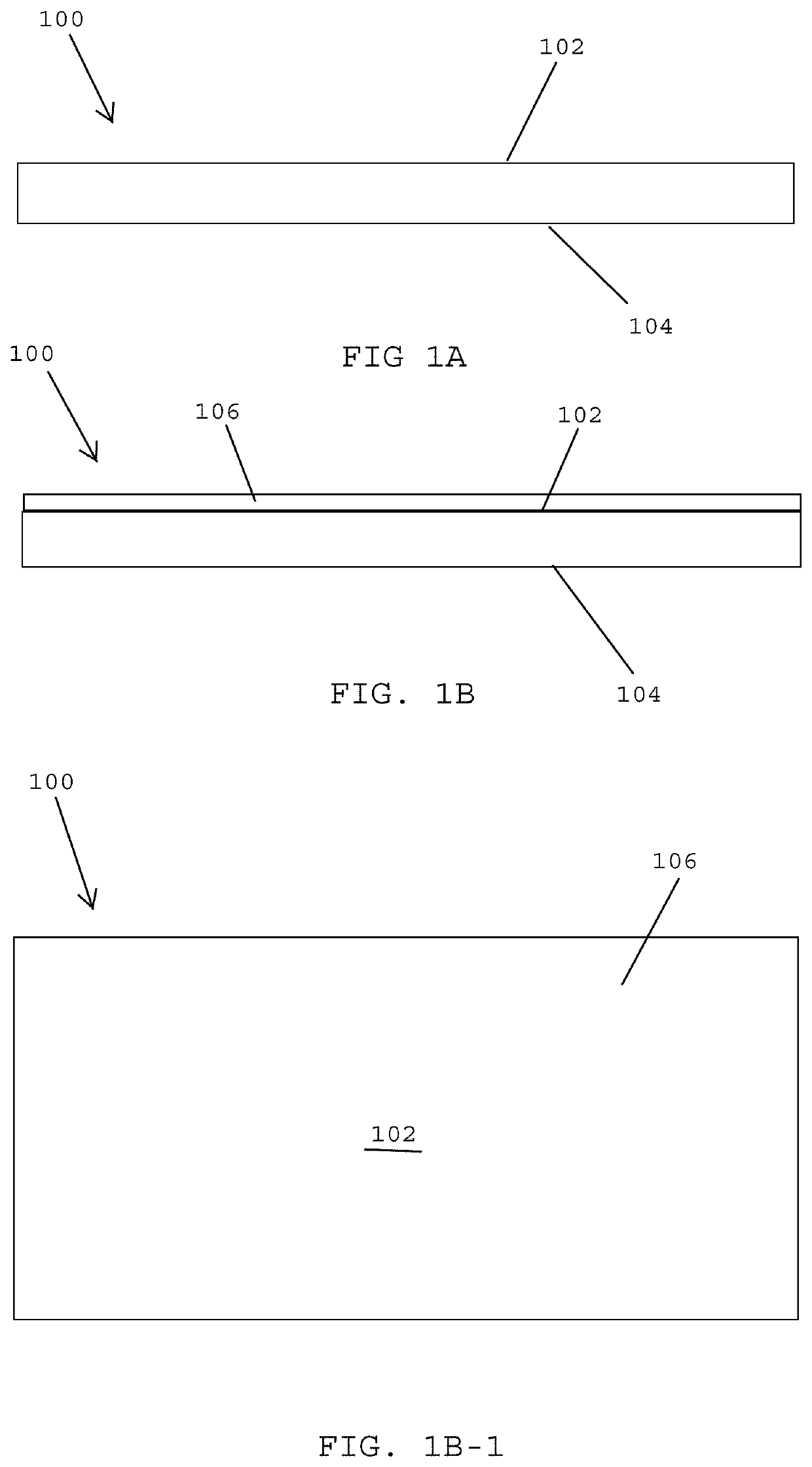
[0089]Referring to FIG. 1A, in one embodiment, a substrate 100 preferably includes a first major surface 102 and a second major surface 104. In one embodiment, the substrate 100 may be utilized as a sterile barrier in a medical device package. In one embodiment, the substrate 100 may be either porous or non-porous. In one embodiment, the substrate 100 may be utilized for packaging medical devices such as sutures, surgical tools and surgical meshes. In one embodiment, the substrate may be made of a synthetic material, such as the polyethylene fibrous material sold under the trademark TYVEK® by DuPont of Wilmington, Del., or other materials such as paper, and / or foil.

[0090]Medical device packages (e.g., pouches) made of TYVEK® are used by medical device and pharmaceutical manufacturers for packaging a wide variety of sterilized medical devices. Packages and sterilization pouches made of TYVEK® are used in hospitals and other healthcare settings for in-house sterilization of surgical i...