
Pallet content identification mechanism that converts RFID information to corresponding barcode information
a technology of rfid information and identification mechanism, which is applied in the direction of burglar alarm mechanical actuation, burglar alarm by hand-portable articles removal, etc., can solve the problems of not being able to benefit from rfid inventory control, distributors and retailers will be much slower to install rfid systems, and potential mismatch between rfid and existing barcode technologies
- Summary
- Abstract
- Description
- Claims
- Application Information
AI Technical Summary
Benefits of technology
Problems solved by technology
Method used
Image

Examples
Embodiment Construction
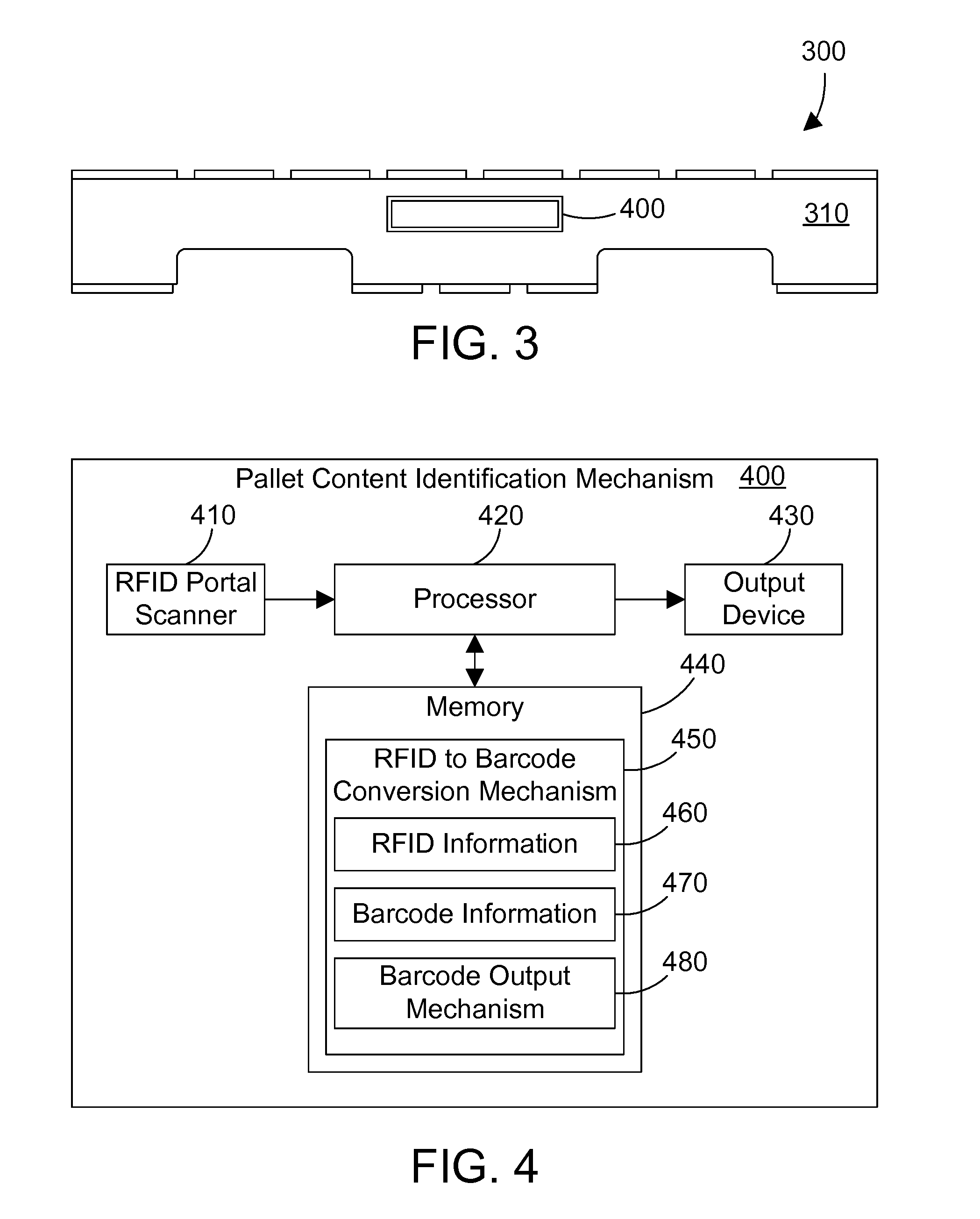
[0018] A pallet content identification mechanism provides a simple and easy-to-use bridge between RFID data and traditional barcode systems. The pallet content identification mechanism is attached to a pallet, and includes an RFID scanner that is capable of scanning RFID data for the items on the pallet. A RFID to barcode conversion mechanism reads the RFID data from the scanner, converts the RFID data into corresponding barcode information, and outputs the corresponding barcode information to a barcode-based inventory control system. In this manner the RFID data from the items on the pallet is converted and input into a barcode-based inventory control system. In one specific embodiment, the barcode information is output to a display on the pallet content identification mechanism, which may then be scanned by a traditional barcode scanner.
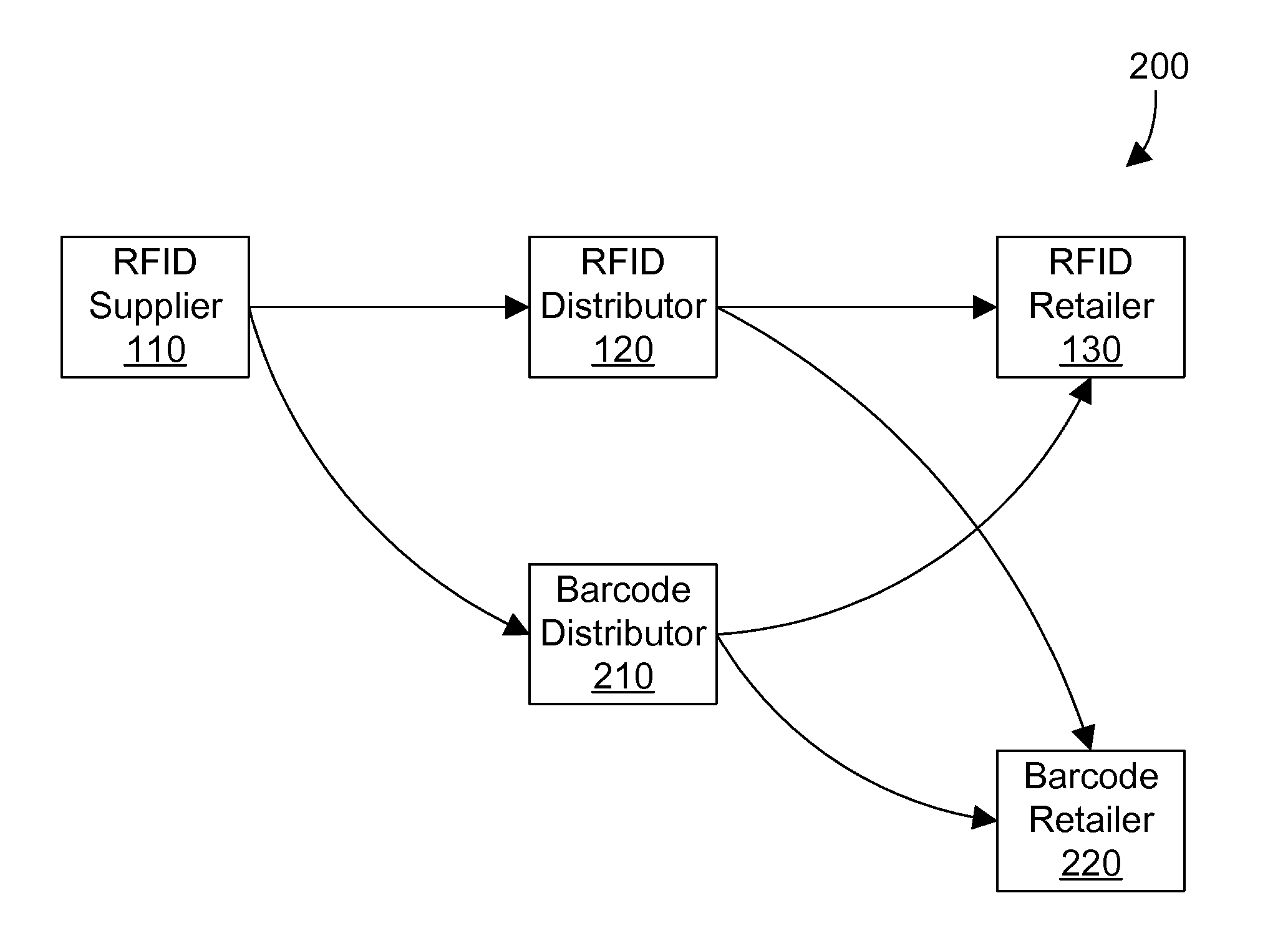
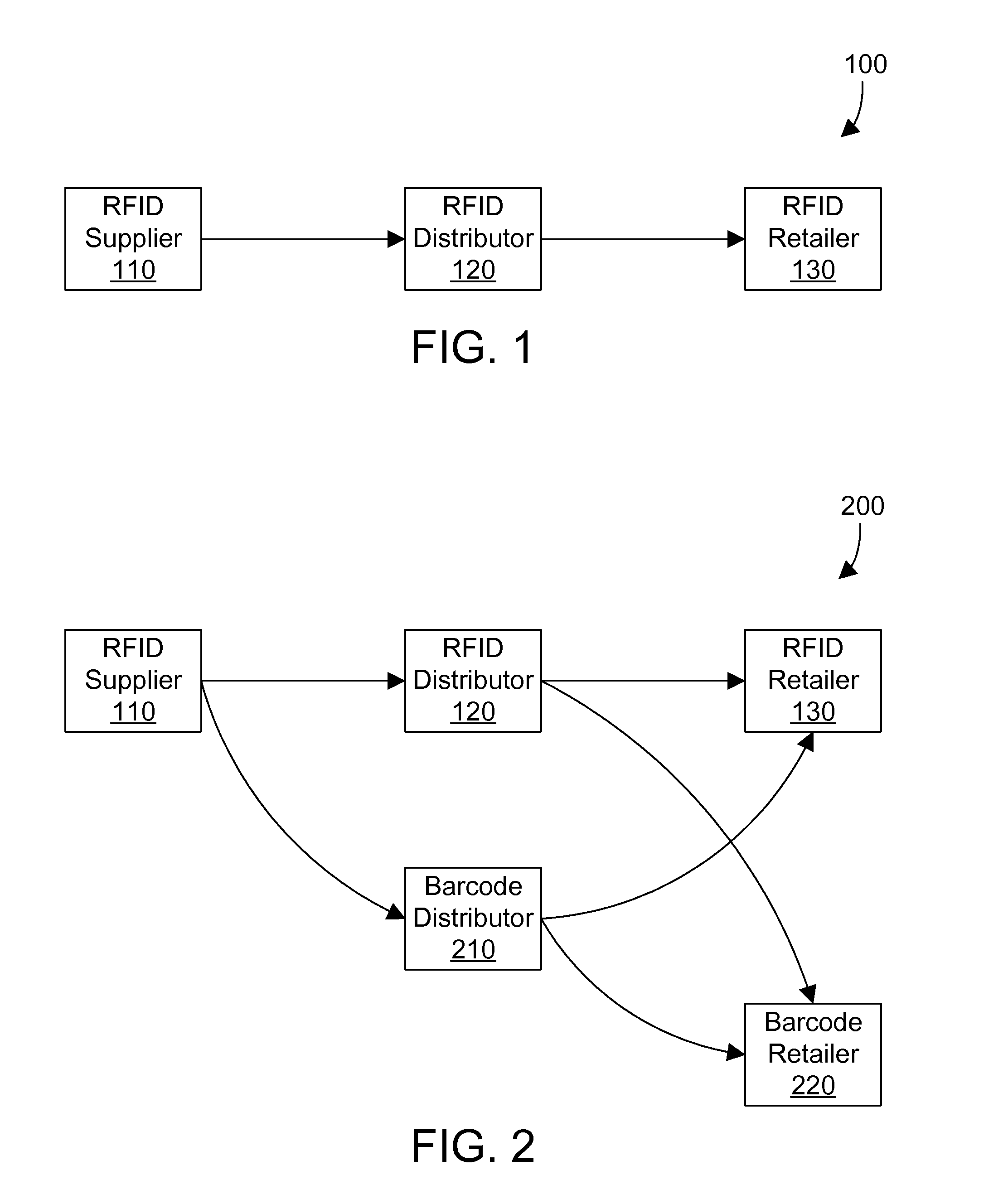
[0019] Referring to FIG. 1, an RFID supply chain is shown, and includes an RFID supplier 110 coupled to an RFID distributor 120, which is coupled...
PUM
 Login to View More
 Abstract
Description
Claims
Application Information
 Login to View More