
Electrical connector having pull tether for latch release
a technology of electrical connectors and latches, which is applied in the direction of electrical apparatus, connection, coupling device connection, etc., can solve the problems of affecting the latching mechanism, affecting the latching, and affecting the latching ability of the technician, etc., and achieves the effect of adequate resiliency
- Summary
- Abstract
- Description
- Claims
- Application Information
AI Technical Summary
Benefits of technology
Problems solved by technology
Method used
Image

Examples
Embodiment Construction
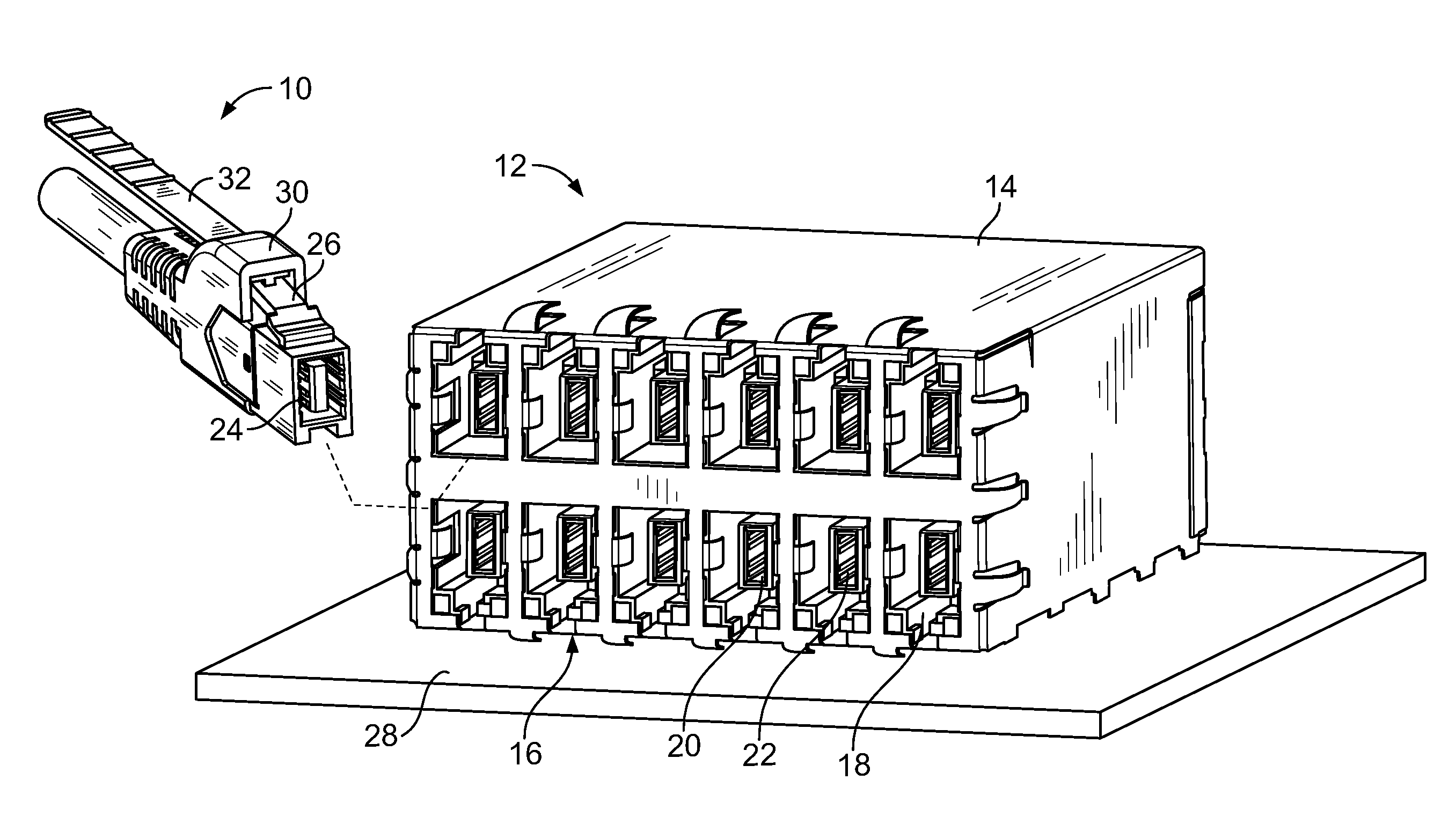
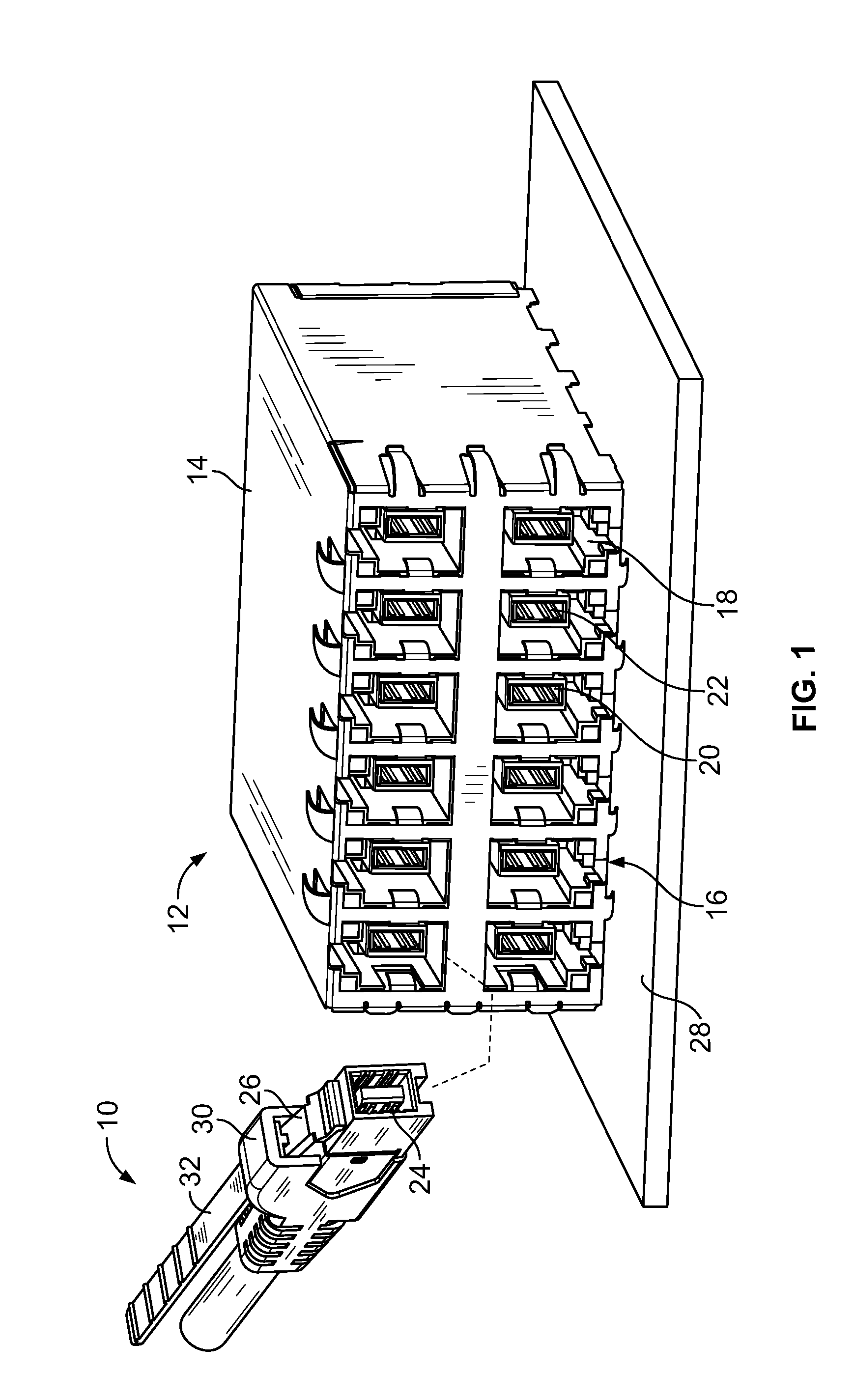
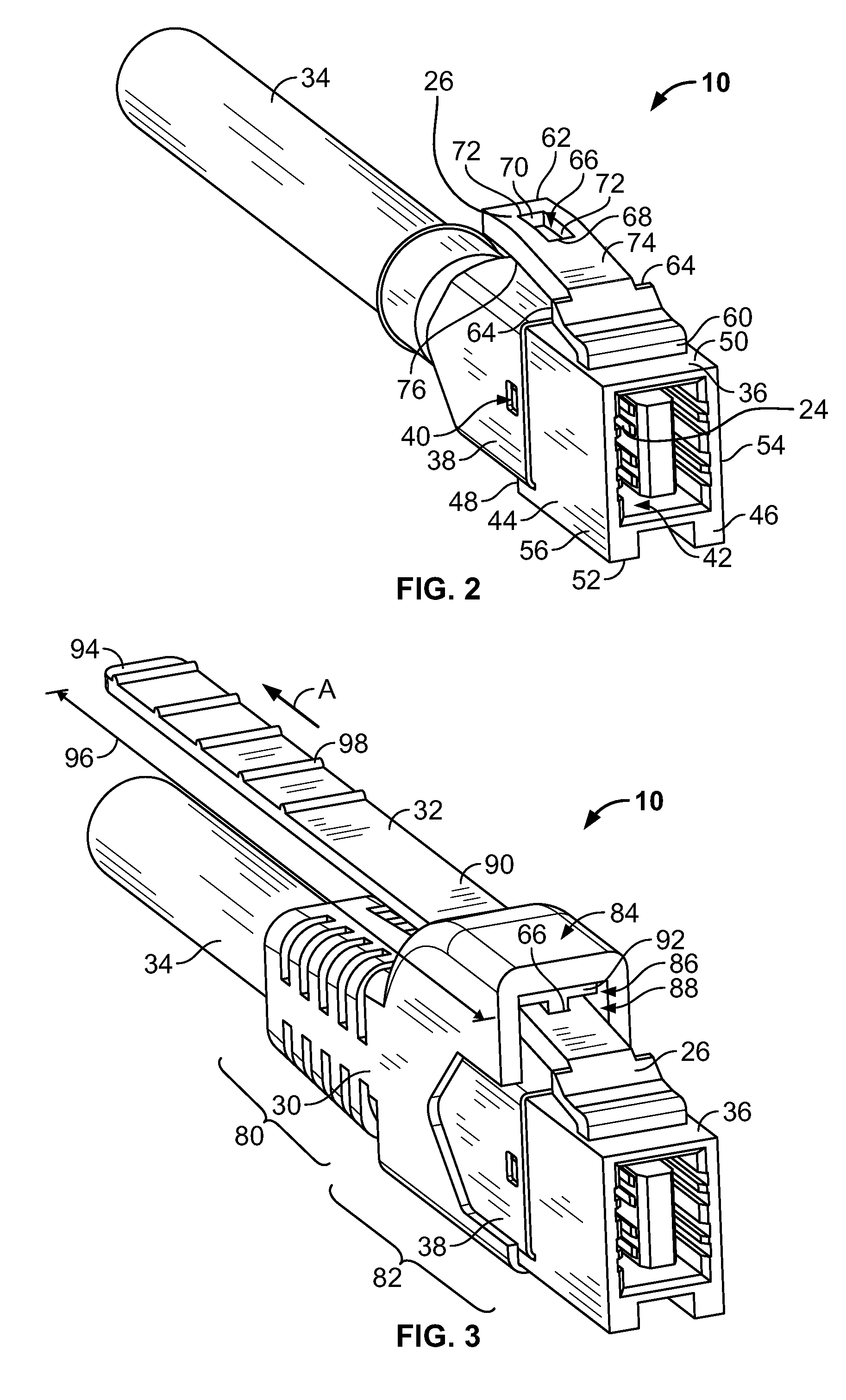
[0014]FIG. 1 is a perspective view of an exemplary electrical connector 10 formed in accordance with an exemplary embodiment. The electrical connector 10 represents a plug connector that may be mated with a mating connector 12, represented by the receptacle connector in FIG. 1. The electrical connector 10 and the mating connector 12 are modular connectors, such as the types of electrical connectors used for connecting telecommunications equipment or computer networking equipment. In the illustrated embodiment, the electrical connector 10 and the mating connector 12 are eight pin, eight conductor (8P8C) modular connectors having signal pairs, however the subject matter described herein also has applicability to other connectors having fewer or greater numbers of pins, conductors and / or signal pairs.
[0015]In an exemplary embodiment, the mating connector 12 includes a housing 14 having multiple communication ports 16 opening to receptacles 18 that receive respective ones of the electri...
PUM
 Login to View More
 Abstract
Description
Claims
Application Information
 Login to View More