
Latching hinged cover
a hinged cover and hinge technology, applied in the field of hinge assembly, can solve the problems of requiring the use of tools or considerable manual effort, affecting the reattachment operation, and exposing the main cabinet section, so as to facilitate the reattachment of the cover, the effect of quick and easy manner
- Summary
- Abstract
- Description
- Claims
- Application Information
AI Technical Summary
Benefits of technology
Problems solved by technology
Method used
Image

Examples
Embodiment Construction
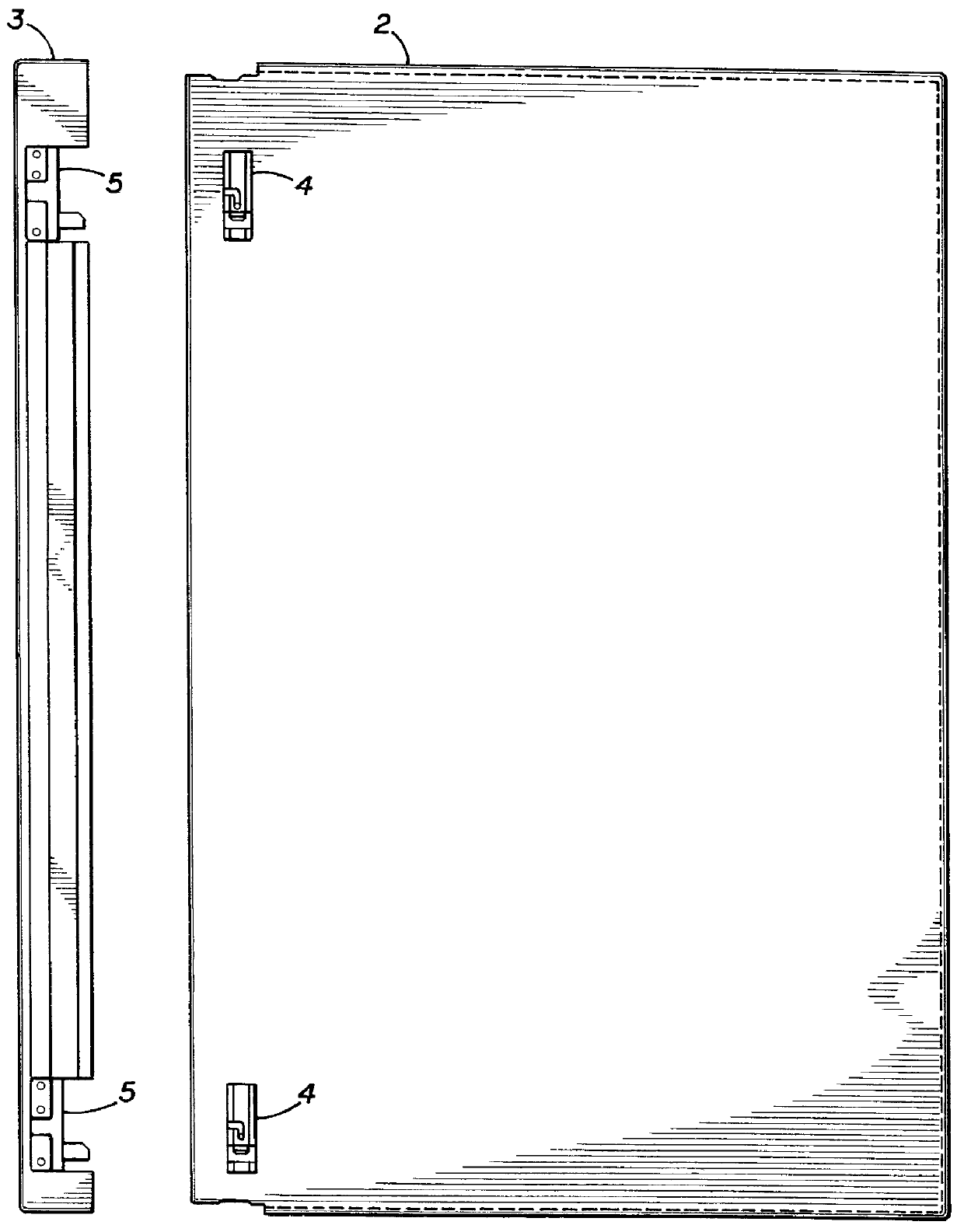
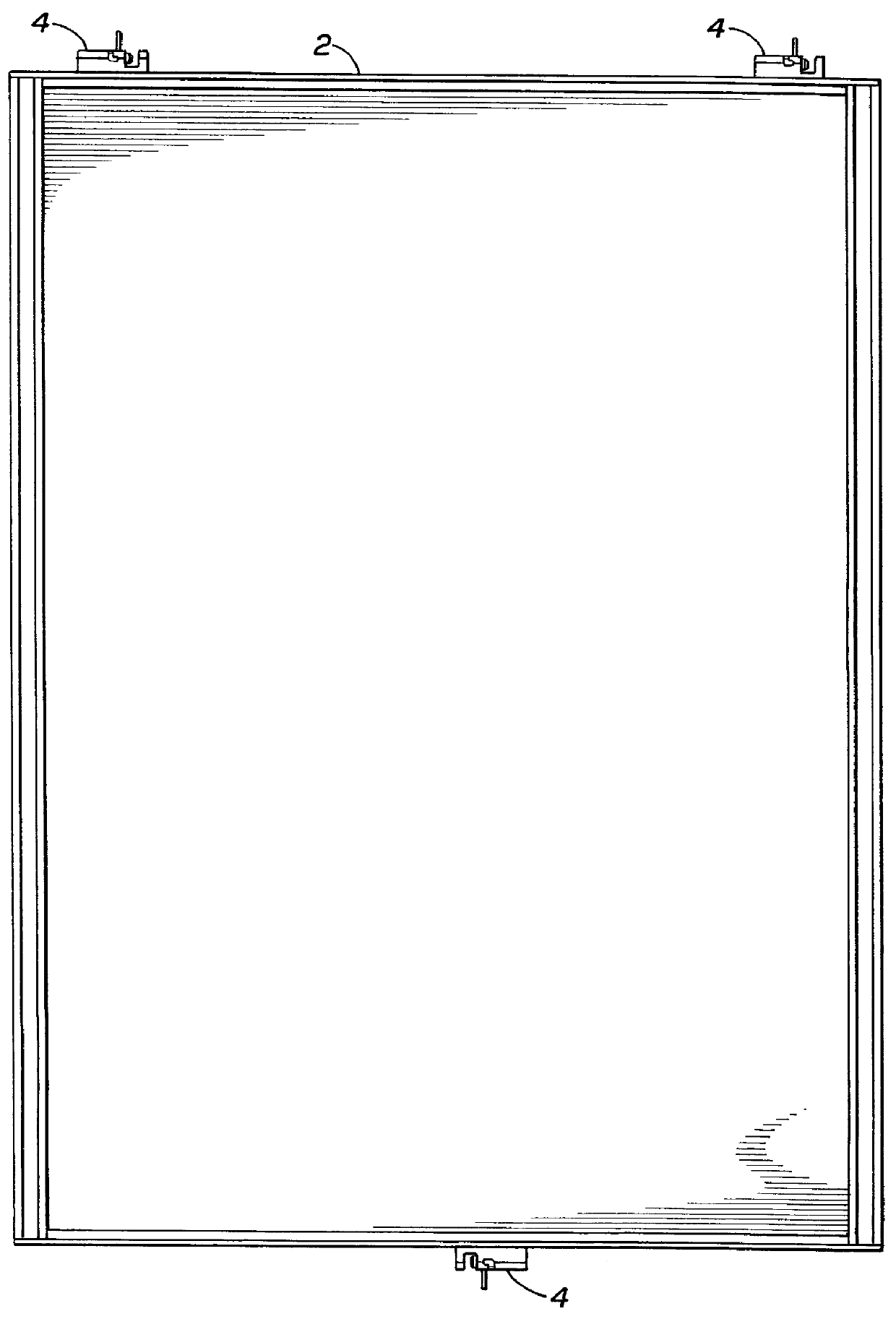
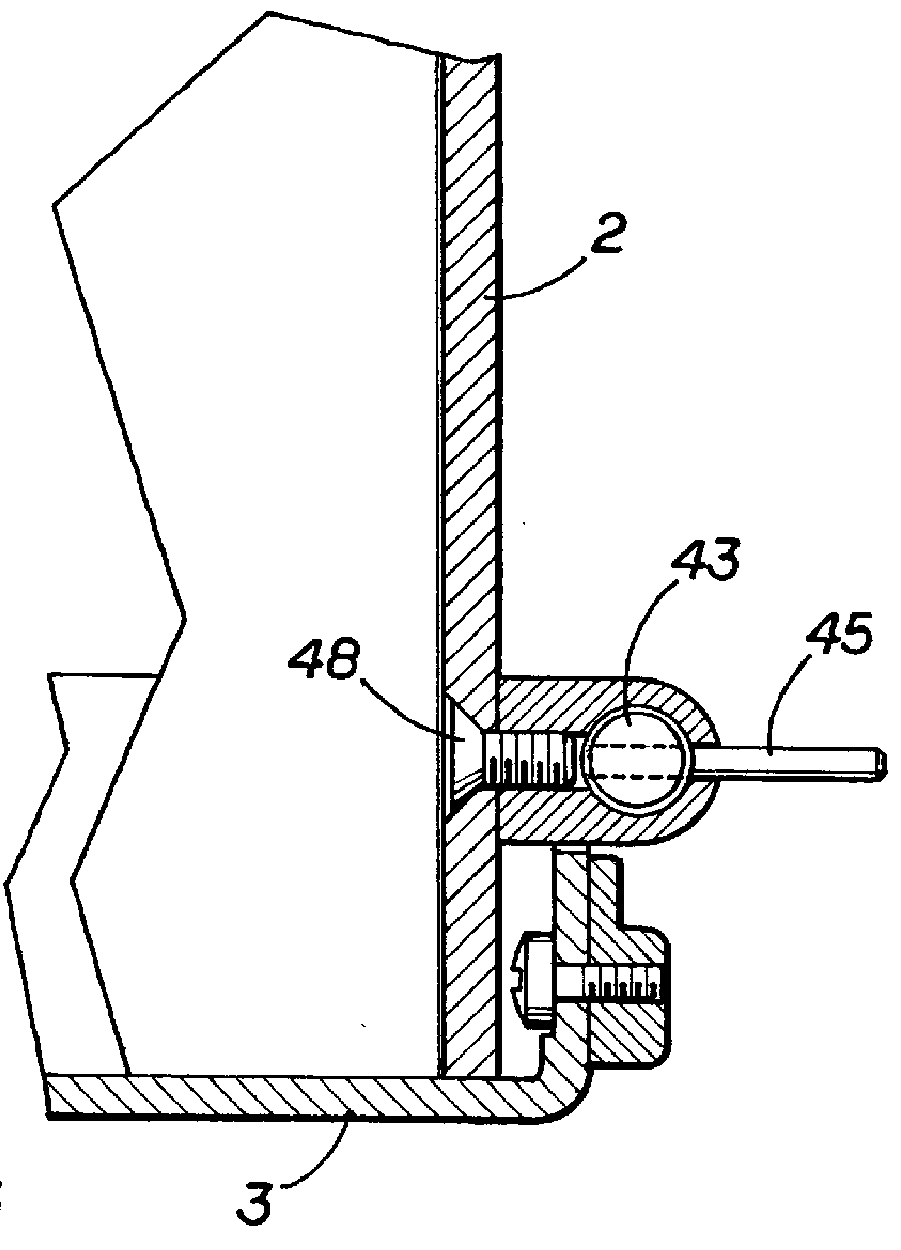
With reference to FIG. 1, there is illustrated a cabinet constituted of a main cabinet section 2 and a cover section 3, which may be either pivotally mounted to the main cabinet section 2, or detached from it, in a quick and convenient manner without the need for tools or screws, bolts or other fastening elements. For this purpose, a hinge assembly is used constructed in accordance with the present invention, as described particularly below, which hinge assembly includes a first part, generally designated 4, secured to the main cabinet section 2, and a second part, generally designated 5, which is secured to the cover section 3. In the example illustrated in FIGS. 1 and 2, the cabinet includes three such hinge assembles, two located at the ends of one edge of the cabinet, and a third located centrally of the opposite edge, as shown particularly in FIG. 2. In such an arrangement, the two hinge assemblies serve to pivotally mount the cover section 3 to the main cabinet section 2, and ...
PUM
 Login to View More
 Abstract
Description
Claims
Application Information
 Login to View More