Downlink activity and double talk probability detector and method for an echo canceler circuit

a technology of downlink activity and probability detector, applied in the field of communication systems, can solve the problems of inability to detect the activity of downlink, the adaptive filter of the echo canceler is typically idle, and the hands-free speaker phone installed in the vehicle may experience significant coupling between the at least one speaker,

US7099458B2Active Publication Date: 2006-08-29CONTINENTAL AUTOMOTIVE SYST INC
6 Cites 24 Cited by

Patent Information

Authority / Receiving Office
US · United States
Patent Type
Patents(United States)
Current Assignee / Owner
Publication Date
2006-08-29

Smart Images

  • Figure 1
    Figure 1
  • Figure 2
    Figure 2
  • Figure 3
    Figure 3
Patent Text Reader

Abstract

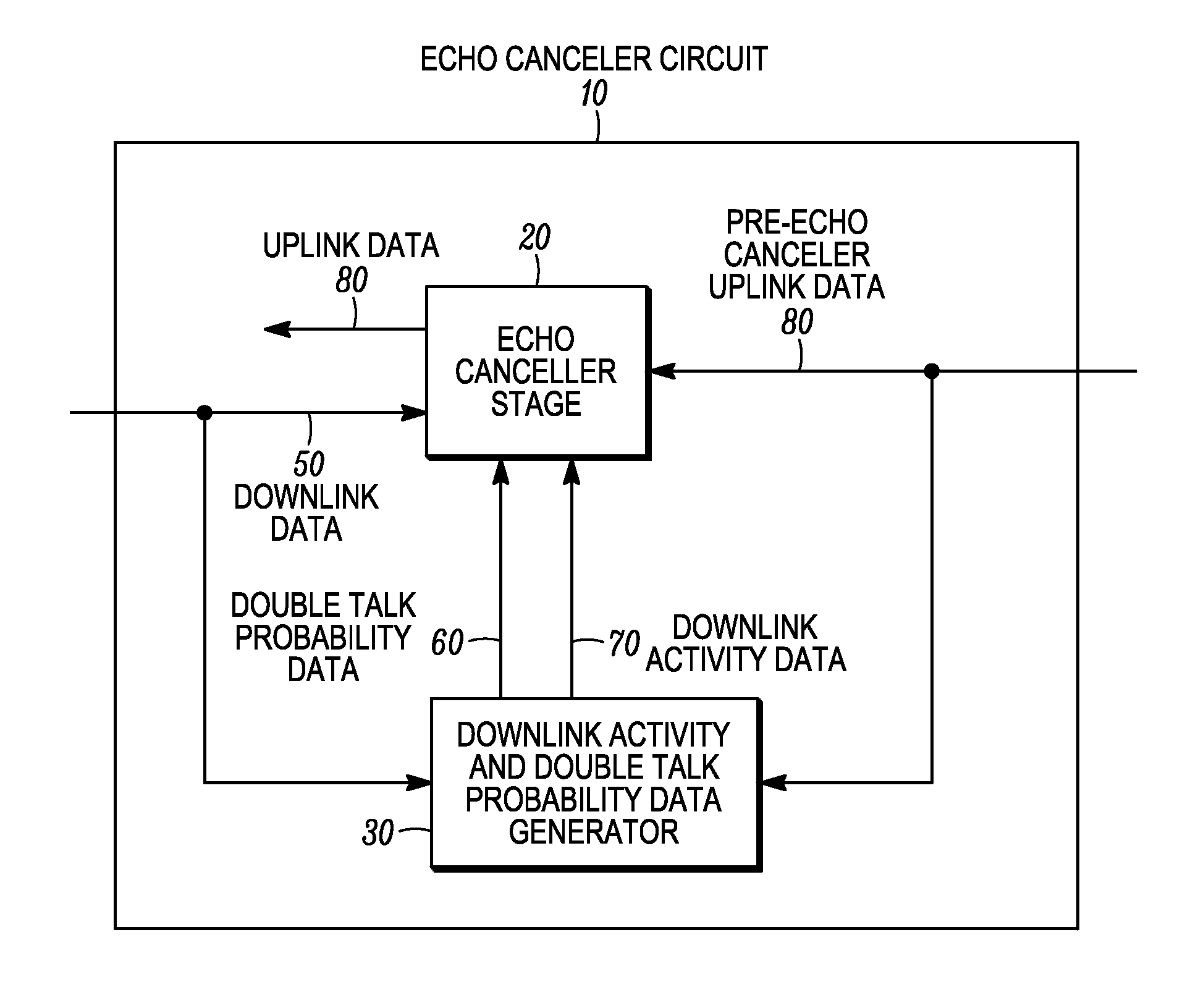
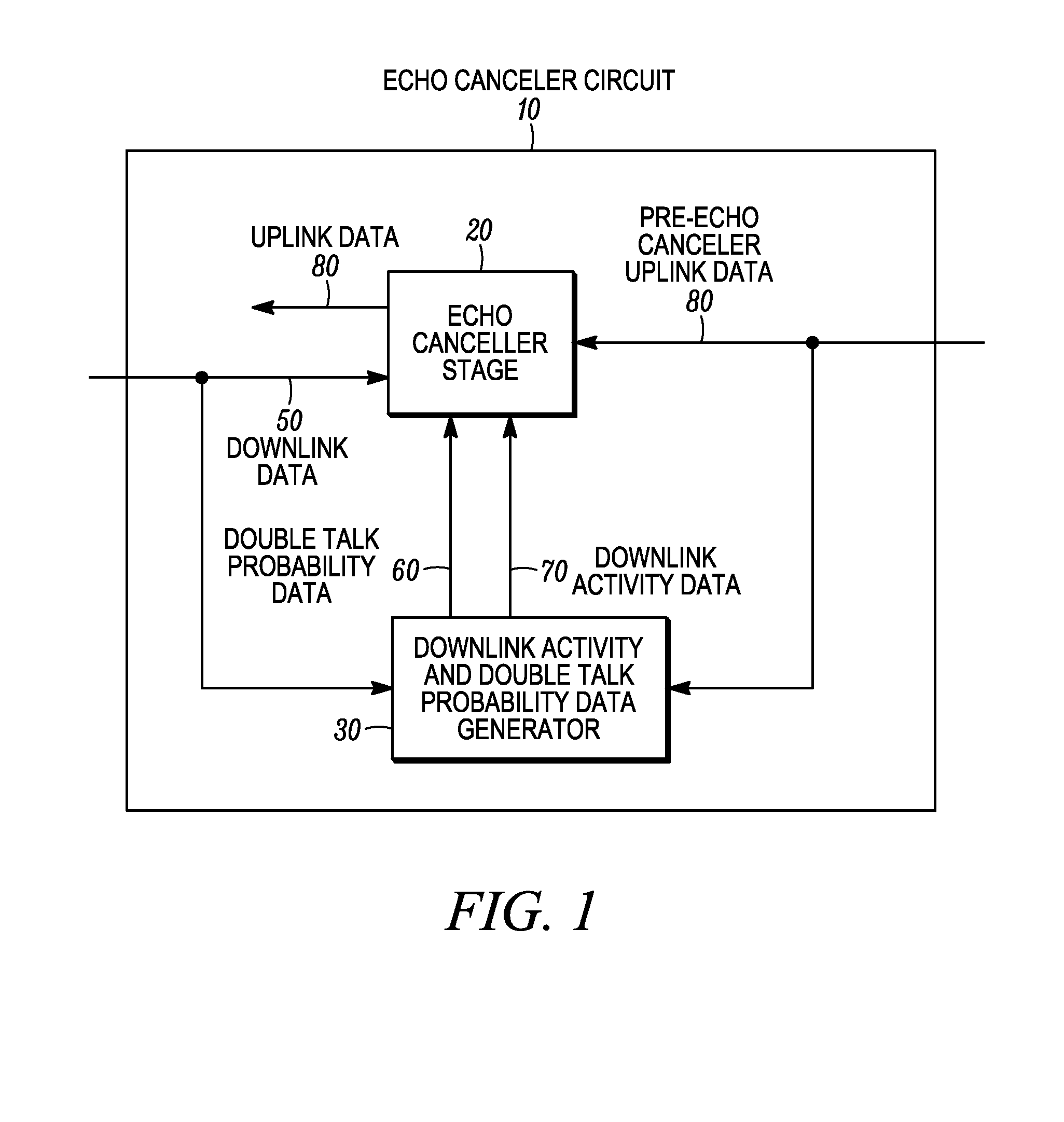
A downlink activity and double talk probability detector and method for an echo canceler circuit (10) improves the stability of an echo canceler adaptive filter (300) and improves the attenuation of post-echo canceler uplink data (388). The echo canceler circuit (10) includes a downlink activity and double talk probability data generator (30) and an echo canceler stage (20). The downlink activity and double talk probability data generator (30) receives pre-echo canceler uplink data (40) and downlink data (50) and in response produces double talk probability data (60) and downlink activity data (70). The echo canceler stage (20) receives the downlink data (50), the pre-echo canceler uplink data (40), the double talk probability data (60) and the downlink activity data (70), and in response produces uplink data (80).
Need to check novelty before this filing date? Find Prior Art

Description

FIELD OF THE INVENTION

[0001] The invention relates generally to communication systems and more particularly to echo cancelers and echo cancellation methods.BACKGROUND OF THE INVENTION

[0002] Echo in a communication system is commonly characterized as the return of a part of a transmitted signal from an end user back to the originator of the transmitted signal after a delay period. As is known in the art, a near end user transmits an uplink signal to a far end user. Conversely, the near end user receives a downlink signal from the far end user. For example, echo at the near end occurs when the near end user originates an uplink signal on an uplink path, and a part of the transmitted signal is reflected at the far end as an echo signal on a downlink path back to the near end. Echo at the far end occurs when the far end user originates a downlink signal on the downlink path, and a part of the transmitted signal is reflected at the near end as an echo signal on the uplink path back to the ...

Examples

Embodiment Construction

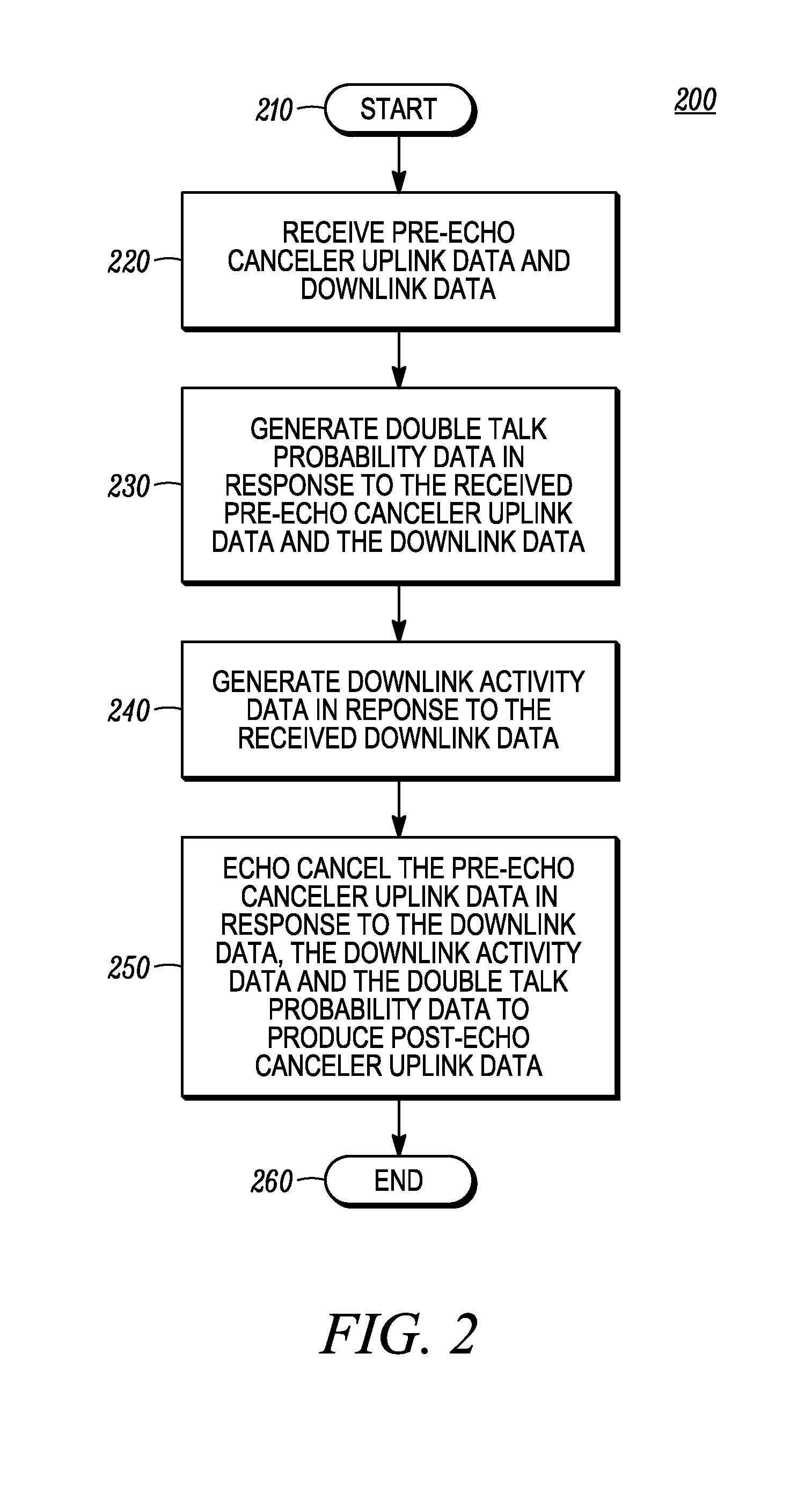
[0018]A downlink activity and double talk probability detector and method for an echo canceler circuit improves the stability of an echo canceler adaptive filter and improves the attenuation of post-echo canceler uplink data. The echo canceler circuit includes a downlink activity and double talk probability data generator and an echo canceler stage. The downlink activity and double talk probability data generator receives pre-echo canceler uplink data and downlink data and in response produces double talk probability data and downlink activity data. The echo canceler stage receives the downlink data, the pre-echo canceler uplink data, the double talk probability data, and the downlink activity data, and in response produces uplink data.

[0019]Among other advantages, the present invention improves the stability of an echo canceler adaptive filter by dynamically varying the rate of adaptation based on double talk probability data, and downlink activity data. For example, the adaptation...