
Method and apparatus for modeling behavior using a probability distrubution function
- Summary
- Abstract
- Description
- Claims
- Application Information
AI Technical Summary
Benefits of technology
Problems solved by technology
Method used
Image

Examples
Embodiment Construction
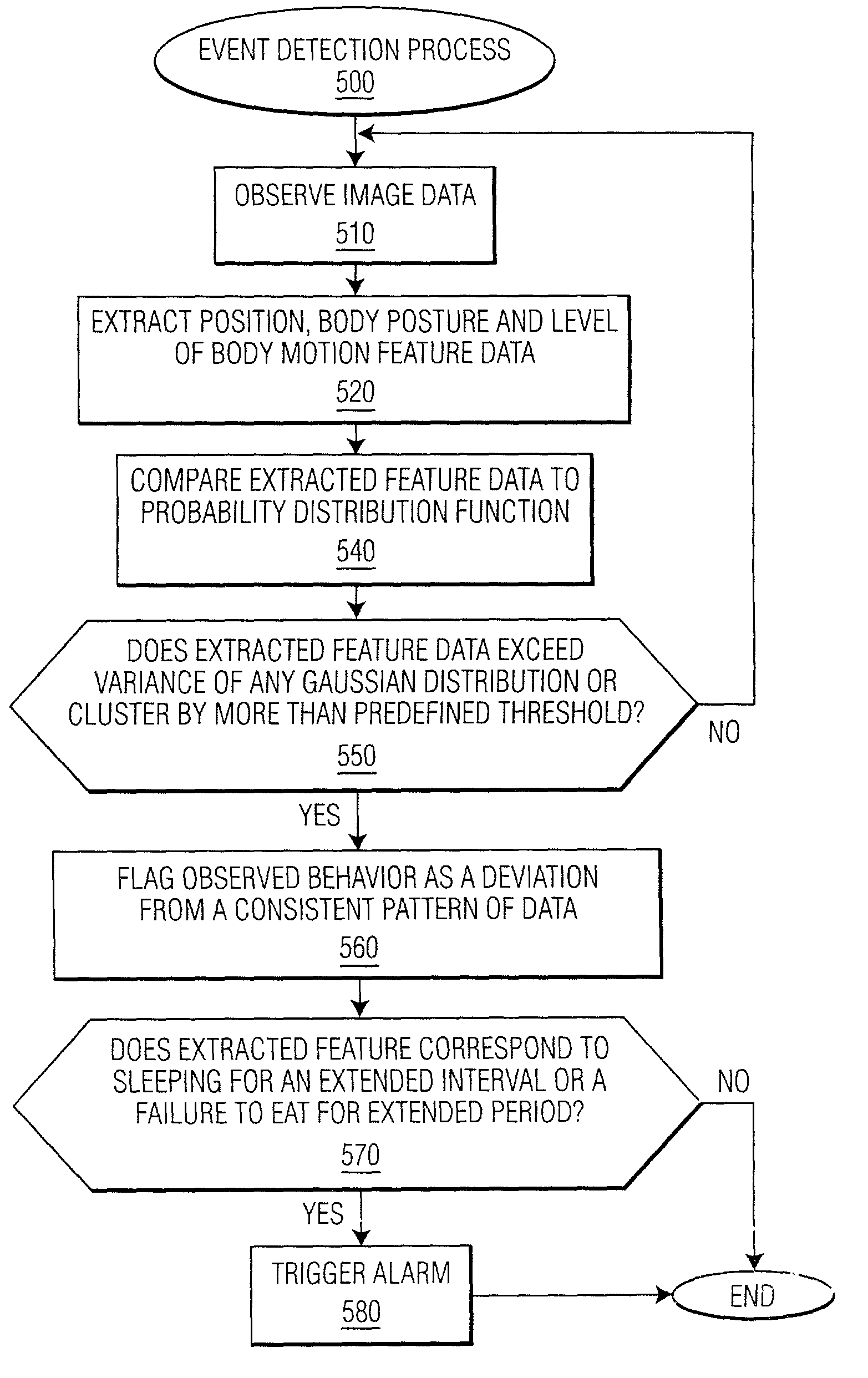
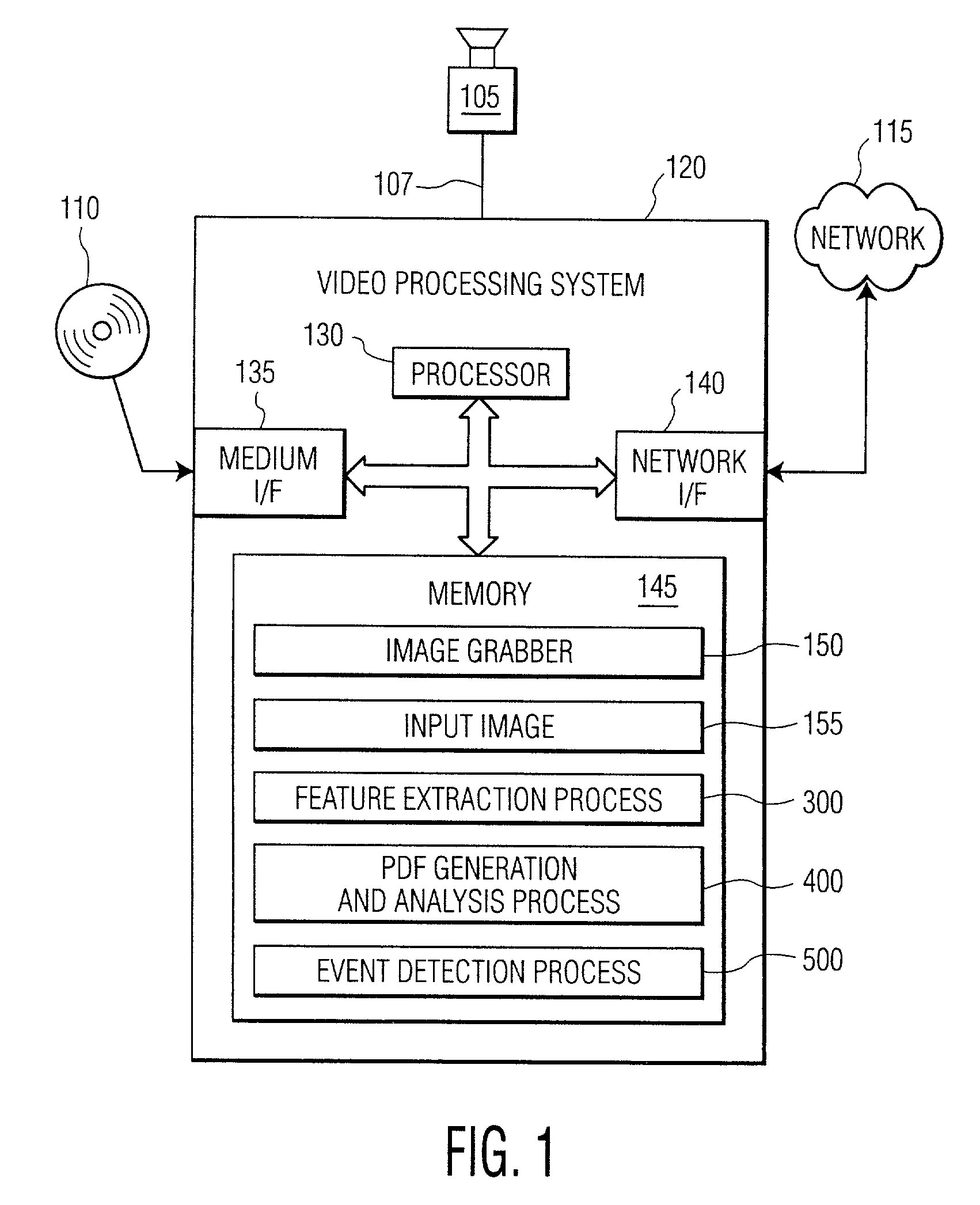
[0017]FIG. 1 illustrates an exemplary video monitoring system 120 in accordance with the present invention. The video monitoring system 120 models patterns of behavior of humans or other animate objects and detects a violation of a repetitive pattern of behavior. For example, the video monitoring system video monitoring system 120 may monitor the sleeping and eating patterns of a human being observed. Thereafter, deviations from such patterns of behavior, such as sleeping for unusual intervals or at unusual times, or eating unusual amounts or at irregular intervals, can be detected to trigger an alarm, if appropriate.
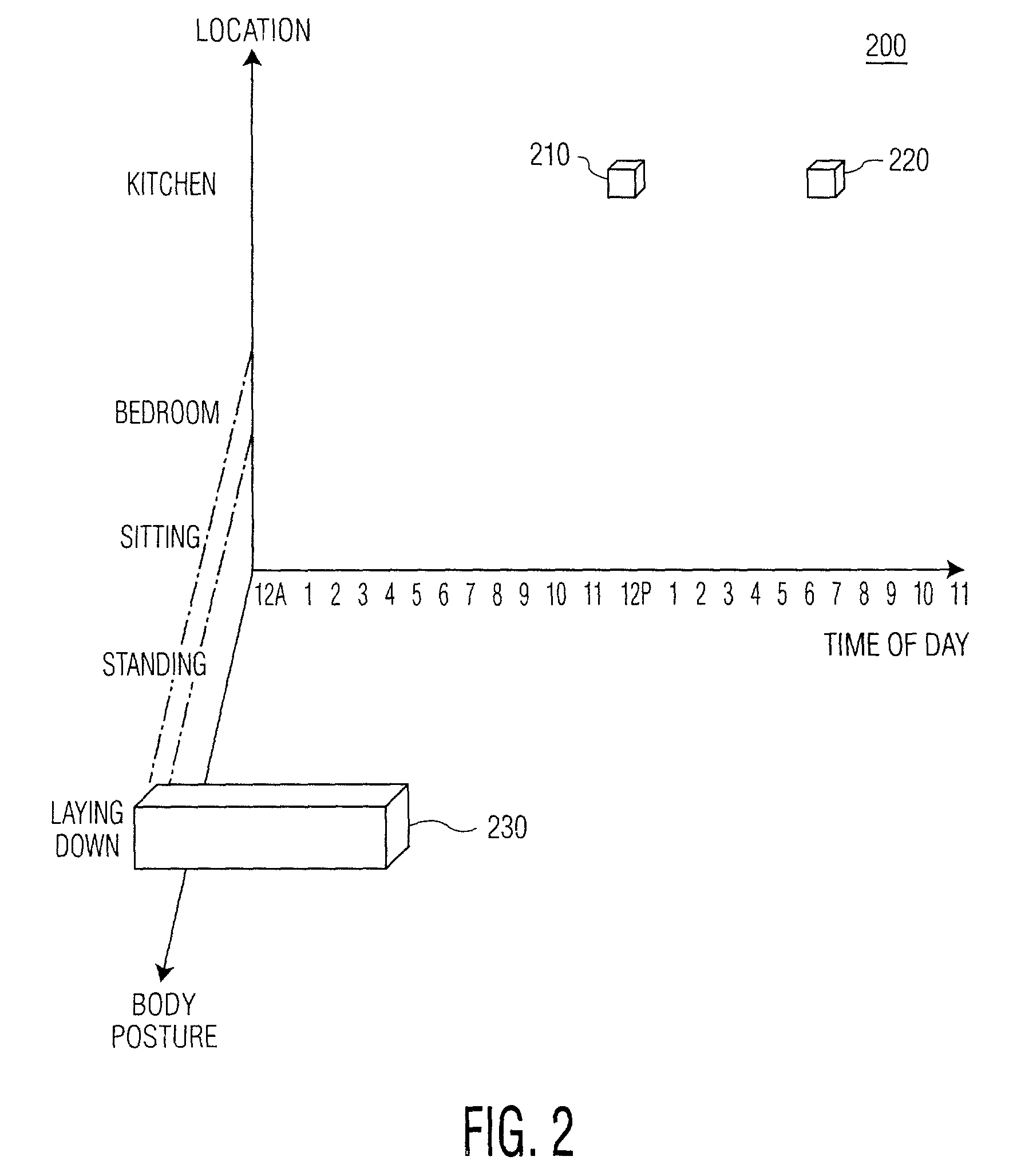
[0018]In one exemplary embodiment, discussed further below, the present invention observes behavior of one or more persons over time and records features of the behavior in a multi-dimensional space. For example, the user behavior can be obtained for a five-dimensional space that includes two dimensions for location (vertical and horizontal), time, body posture and a le...
PUM
 Login to View More
 Abstract
Description
Claims
Application Information
 Login to View More