
Automatic selection of site-IDs for virtual private networks
- Summary
- Abstract
- Description
- Claims
- Application Information
AI Technical Summary
Benefits of technology
Problems solved by technology
Method used
Image

Examples
Embodiment Construction
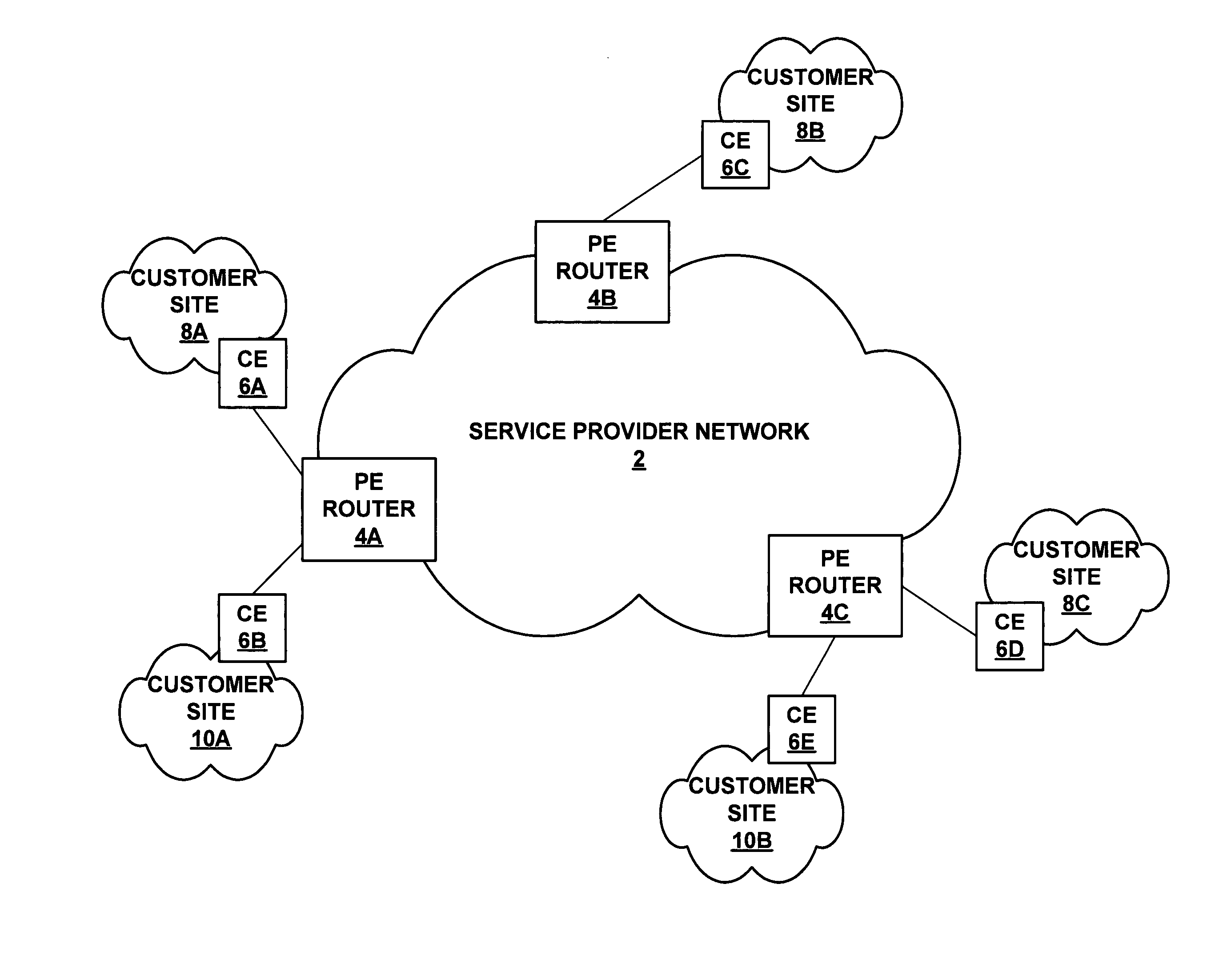
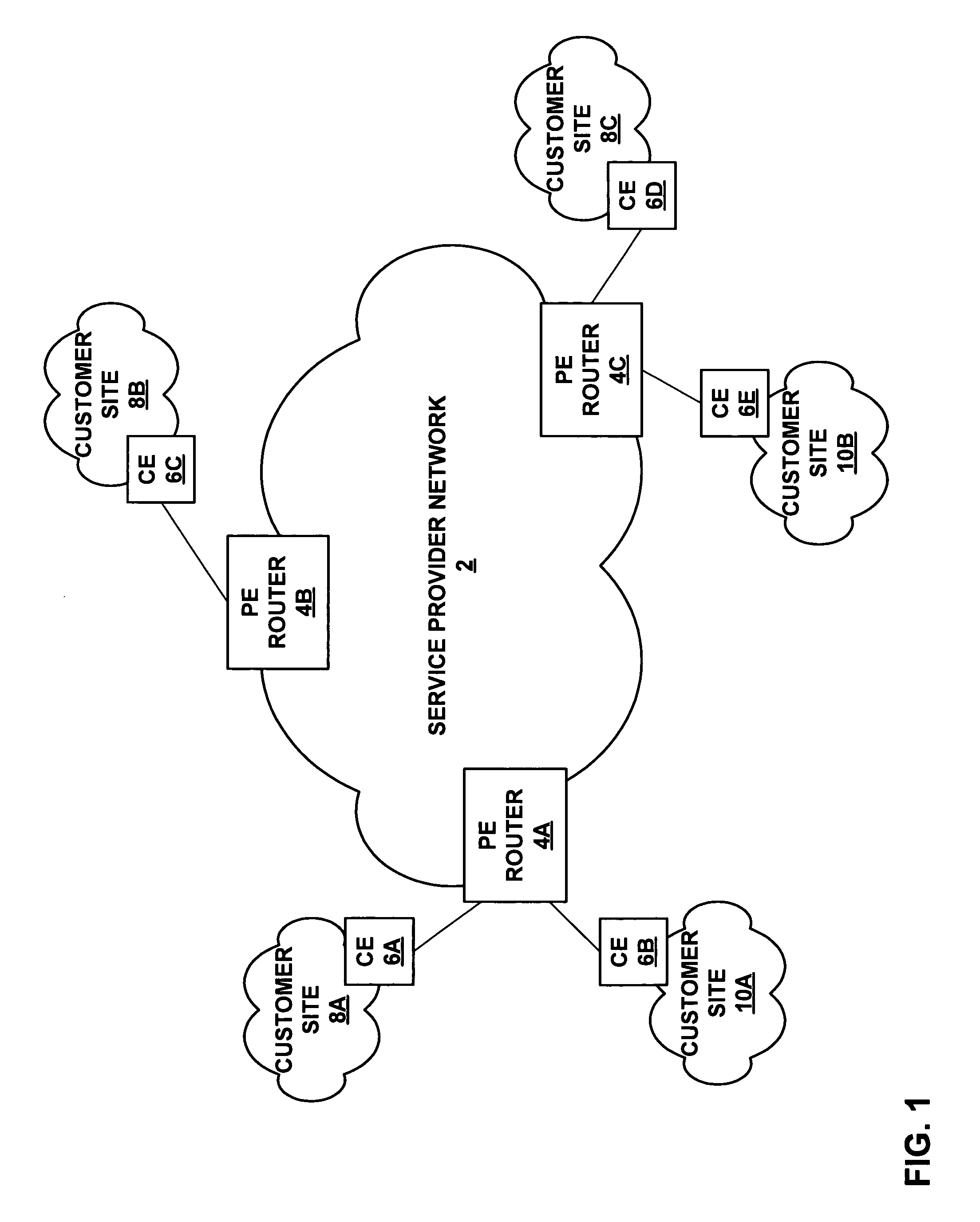
FIG. 1 is a block diagram illustrating an exemplary service provider (SP) network 2 including provider edge (PE) routers 4A-4C (“PE routers 4”) coupled to one or more customer sites. SP network 2 may comprise the Internet or another public network. In some cases, SP network 2 may comprise a multi-protocol label switching (MPLS) network. In the illustrated embodiment, a network service provider establishes virtual private networks (VPNs) over SP network 2 to extend two or more remote customer sites through SP network 2 as if the customer sites are included in the same site. In other embodiments, the VPNs may comprise virtual private local area network (LAN) service (VPLS) domains that transmit layer two (L2) traffic between the customer sites via SP network 2. The VPLS domains may extend two or more remote customer sites through SP network 2 as if the customer sites were included in the same LAN.
The network service provider configures each of PE routers 4 to belong to one or more of ...
PUM
 Login to View More
 Abstract
Description
Claims
Application Information
 Login to View More