
Bone morphogenic protein binding peptide
a morphogenic protein and binding peptide technology, applied in the direction of cyclic peptides, peptide/protein ingredients, unknown materials, etc., can solve the problems of limiting clinical use of bmp-7, for example, the cost of using minimally effective dosages of bmp-7, etc., to induce bone formation, increase the rate and degree, and induce calcification
- Summary
- Abstract
- Description
- Claims
- Application Information
AI Technical Summary
Benefits of technology
Problems solved by technology
Method used
Image

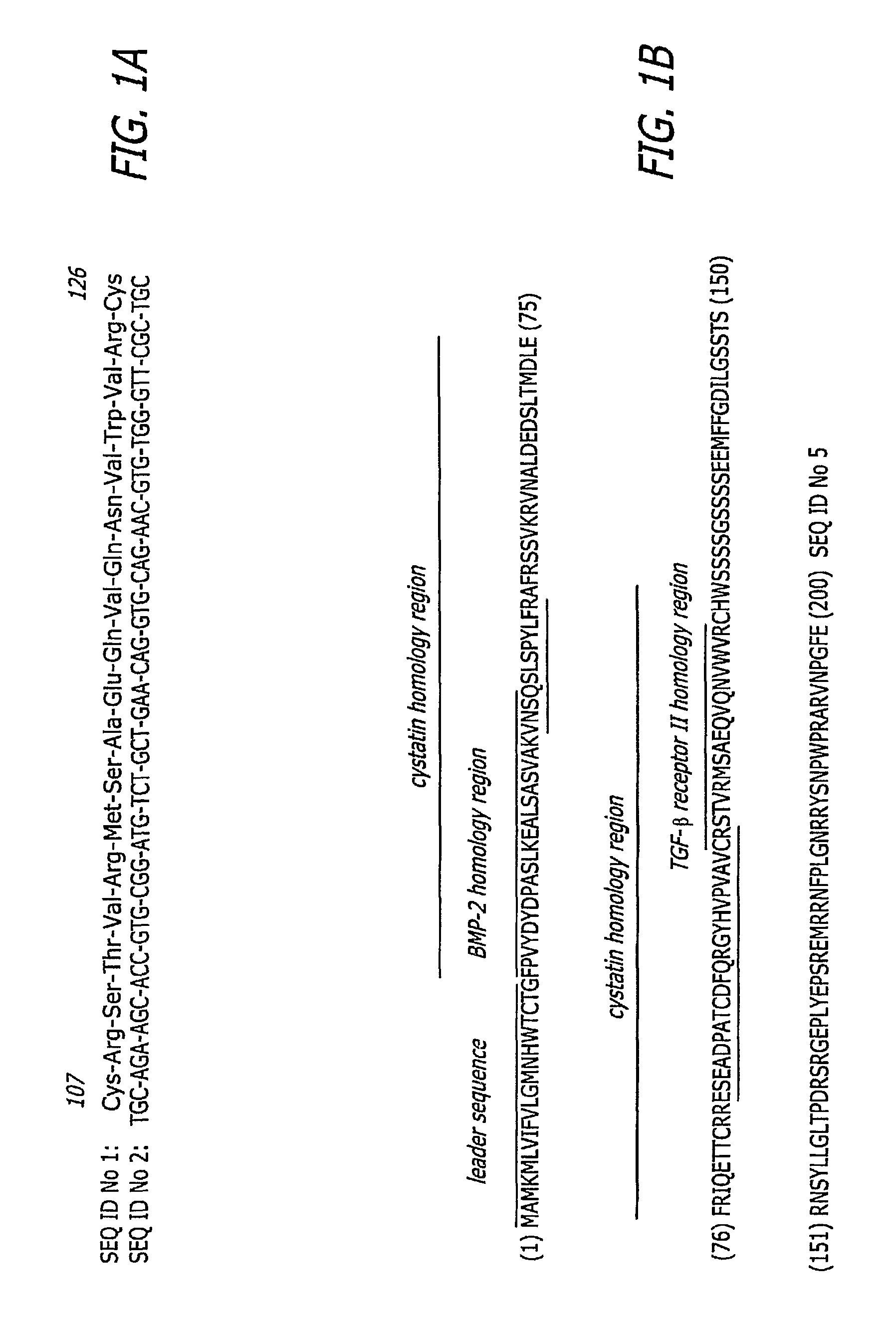
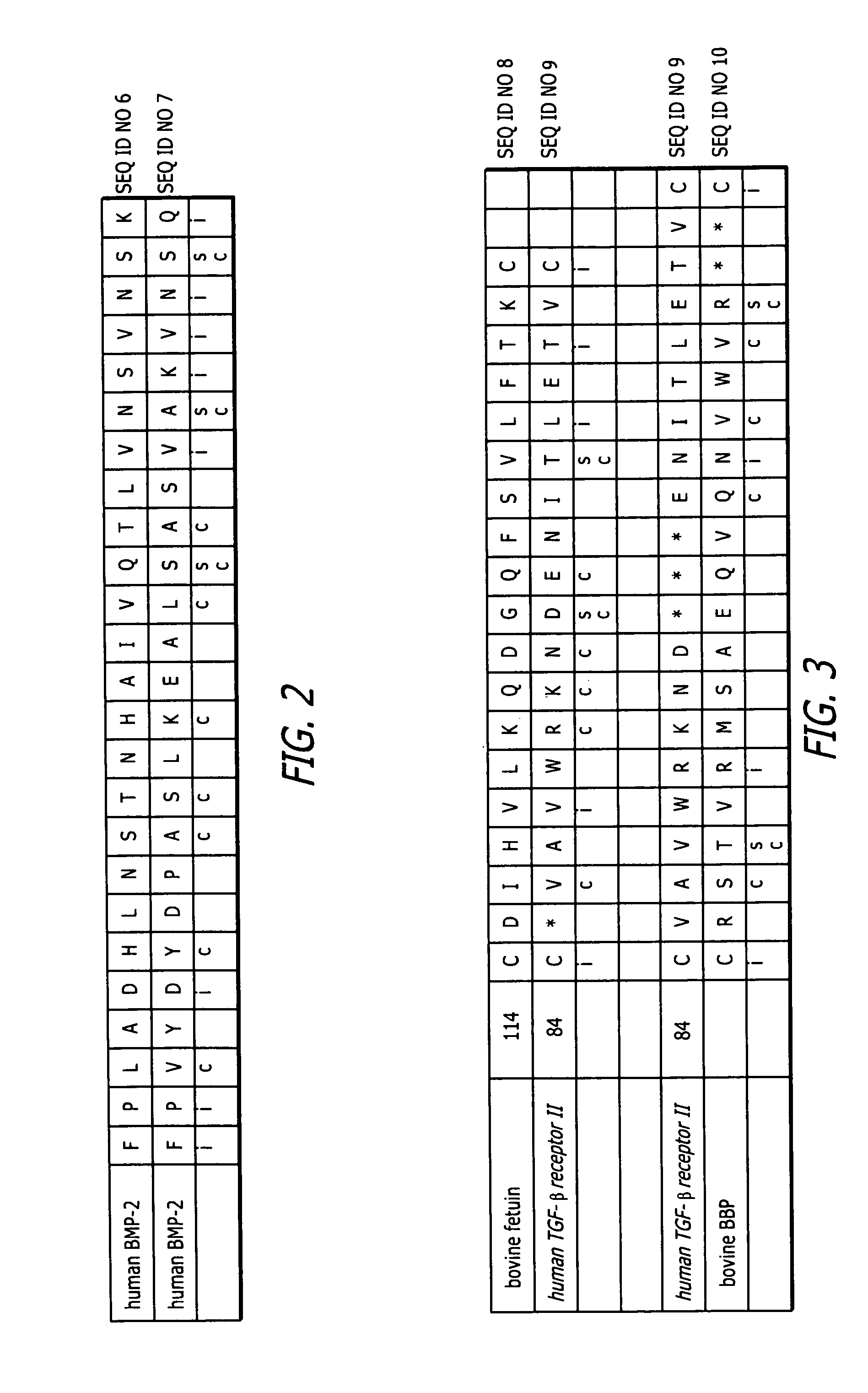
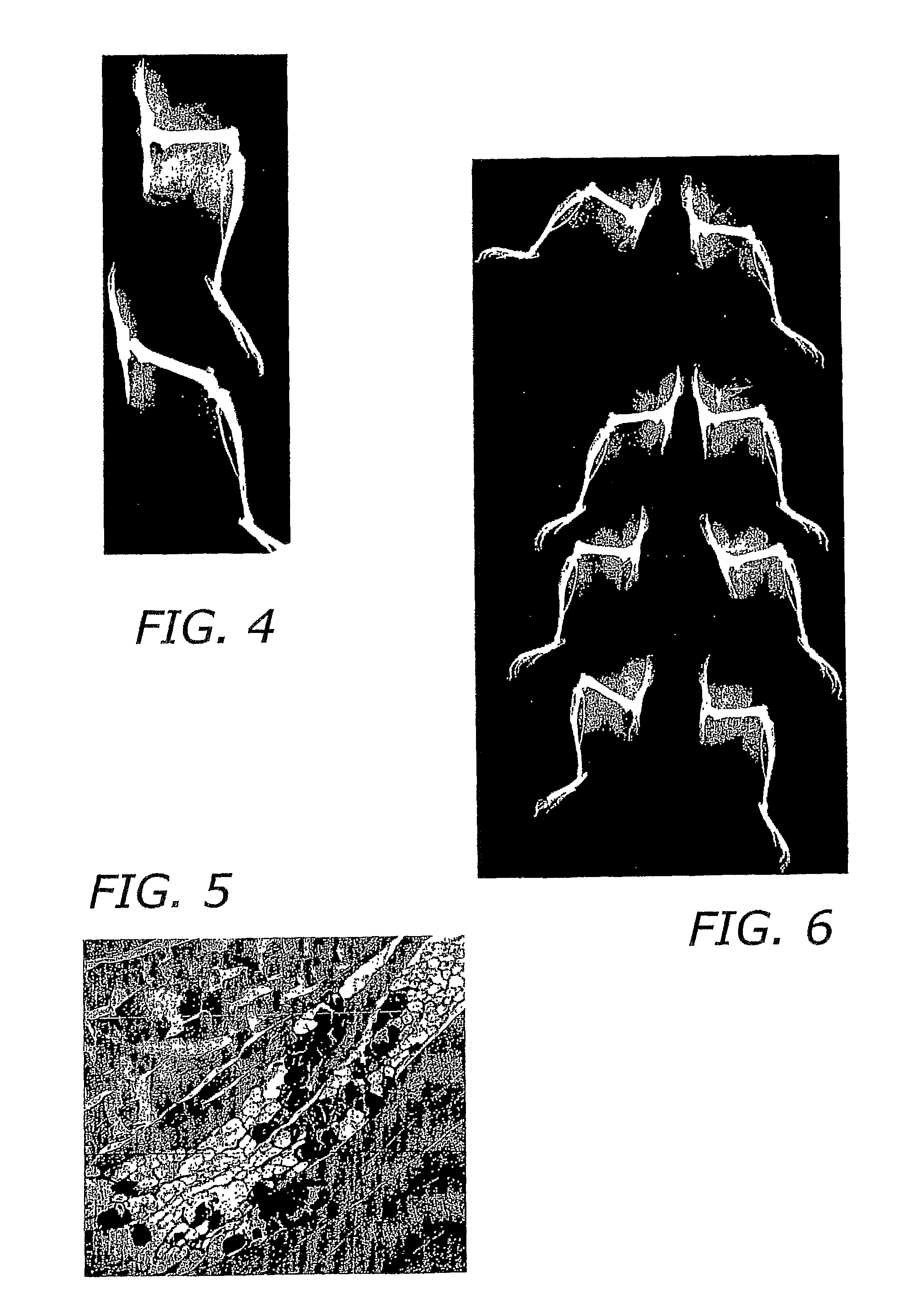
Examples
example 1
Extraction and Separation of Non-Collagenous Bone Proteins (NPCs)
[0068]Methods: NCPs were extracted from defatted, demineralized human cortical bone powder with 4 M GuHCl, 0.5 M CaC12, 2 mM N-ethylmalemide, 0.1 mM benzamidine HCl, and 2 mM NaN3 for 18 hr at 6° C. Residual collagen and citrate-soluble NCPs were extracted by dialysis against 250 mM citrate, pH 3.1 for 24 hours at 6° C. The residue was pelleted by centrifugation (10,000×g at 6° C. for 30 min), defatted with 1:1 (v / v) chloroform: methanol for 24 hr at 23° C., collected by filtration and dried at 22° C. The material was resuspended in 4 M GuHCl, dialyzed against 4 M GuHCl, 0.2% (v / v) Triton X-100, 100 mM Tris-HCl, pH 7.2 for 24 hr at 6° C., then dialyzed against water, and centrifuged at 10,000×g for 30 min at 6° C. The pellet was lyophilized and subsequently separated by hydroxyapatite chromatography.
[0069]Chromatography was conducted using a BioLogico chromatography workstation with a CHT-10 ceramic hydroxyapatite colu...
example 2
In Vivo Activity of BBP
[0076]Methods: The osteogenic activity of material was tested using male Swiss-Weber mice aged 8 to 10 weeks were used (Taconic Farms, Germantown, N.Y.). Prior to the assay, the BBP was solubilized and lyophilized into 2 mg of atelocollagen. The dried material was placed in a #5 gelatin capsule and sterilized by exposure to chloroform vapor. To conduct the assay, mice were anesthetized using 1% isoflurane delivered in oxygen at 2 l / min through a small animal anesthesia machine (VetEquip, Pleasanton, Calif.). Animals were affixed to a surgery board and the fur over the hindquarters shaved. The skin was cleaned with 70% ethanol and a midline incision made over the spine adjacent to the hindquarters. Blunt dissection with scissors was used to expose the quadriceps muscle on one side. A small pouch was made in the muscle using the point of scissors and the #5 capsule containing the test material was inserted into the pouch. The skin was then closed with three 11 m...
example 3
Surface Plasmon Resonance to Determine the Interaction of BMP-2 and the Synthetic Peptide
[0088]Methods: The binding interaction between rhBMP-2 and BBP was characterized using surface plasmon resonance employing a Biacom X instrument (Biacore, Piscataway, N.J.). Buffers and chips for the procedure were obtained from Biacore. RhBMP-2 was dialyzed into 10 mM sodium acetate, pH 5.5 at a concentration of 1 mg / ml. This material was then attached to a CM-5 sensor chip using reagents and procedures supplied by the manufacturer. Running buffer was 10 mM HEPES, pH 7.4, 150 mM NaCl, 3 mM EDTA, 0.005% Surfactant P20. The peptide was dissolved in running buffer at concentrations ranging from 1×10⁻⁵ to 1×10⁻⁴ M. Flow rates from 5 to 50 μl / min and injection volumes of 20 to 100 μl were employed. The regeneration solution was 10 μM glycine-HCl, pH 2.0.
[0089]Results: Results of the surface plasmon resonance studies to determine the interaction between rhBMP-2 and BBP are shown in FIG. 9.
[0090]FIG. ...
PUM
| Property | Measurement | Unit |
|---|---|---|
| pH | aaaaa | aaaaa |
| pH | aaaaa | aaaaa |
| concentration | aaaaa | aaaaa |
Abstract
Description
Claims
Application Information
 Login to View More