Method and apparatus for monitoring user attention with a computer-generated virtual environment

a computer-generated virtual environment and user-perception technology, applied in the field of objects and virtual environment design, can solve the problems of ineffective other advertisements or, worse, offensive to particular demographics, user/customer may not necessarily understand their own reactions to the advertisement/product, and each of the methodologies has certain drawbacks, so as to achieve accurate results.

US8542232B2Active Publication Date: 2013-09-24AVAYA INC
15 Cites 15 Cited by

Patent Information

Authority / Receiving Office
US · United States
Patent Type
Patents(United States)
Current Assignee / Owner
Publication Date
2013-09-24

Smart Images

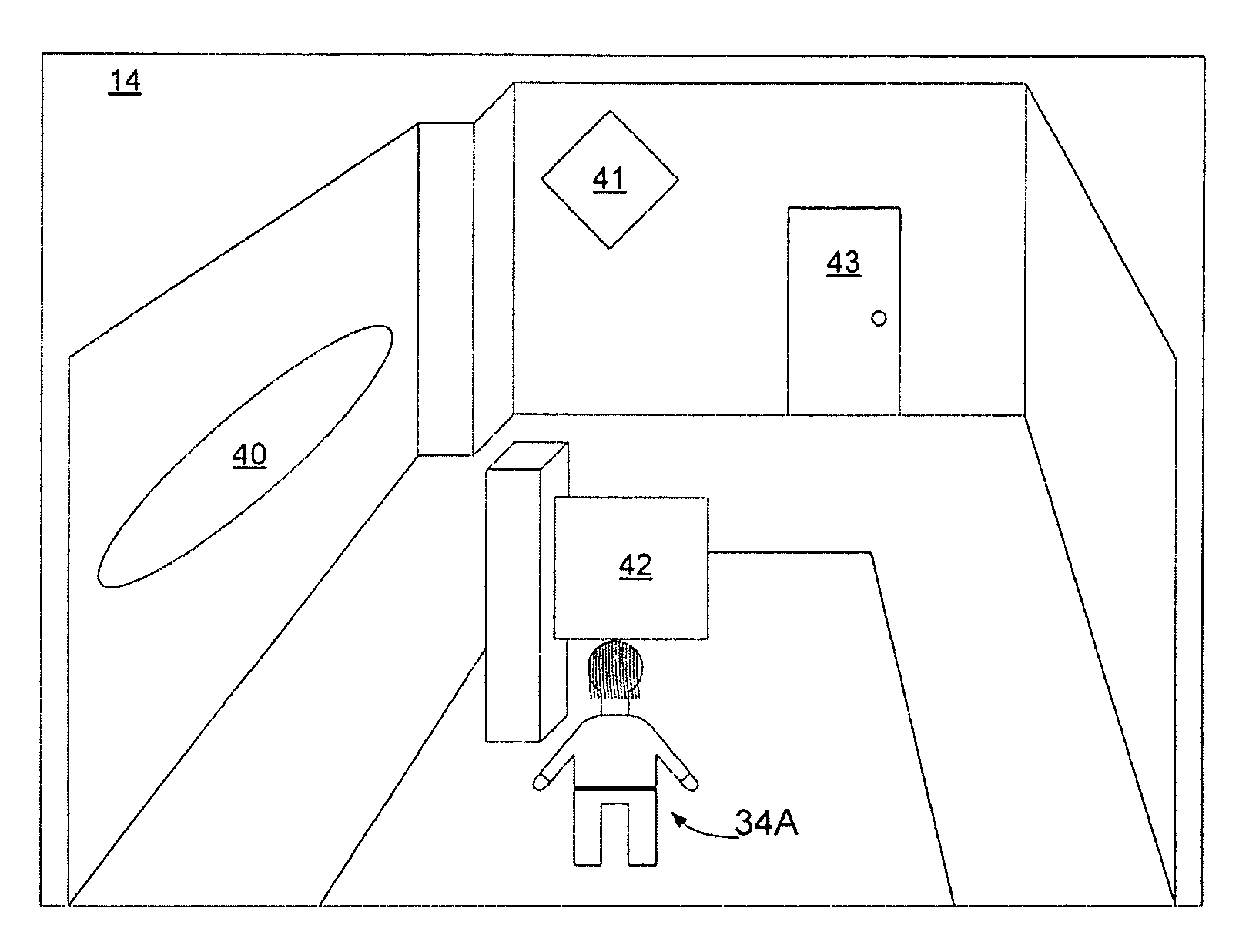
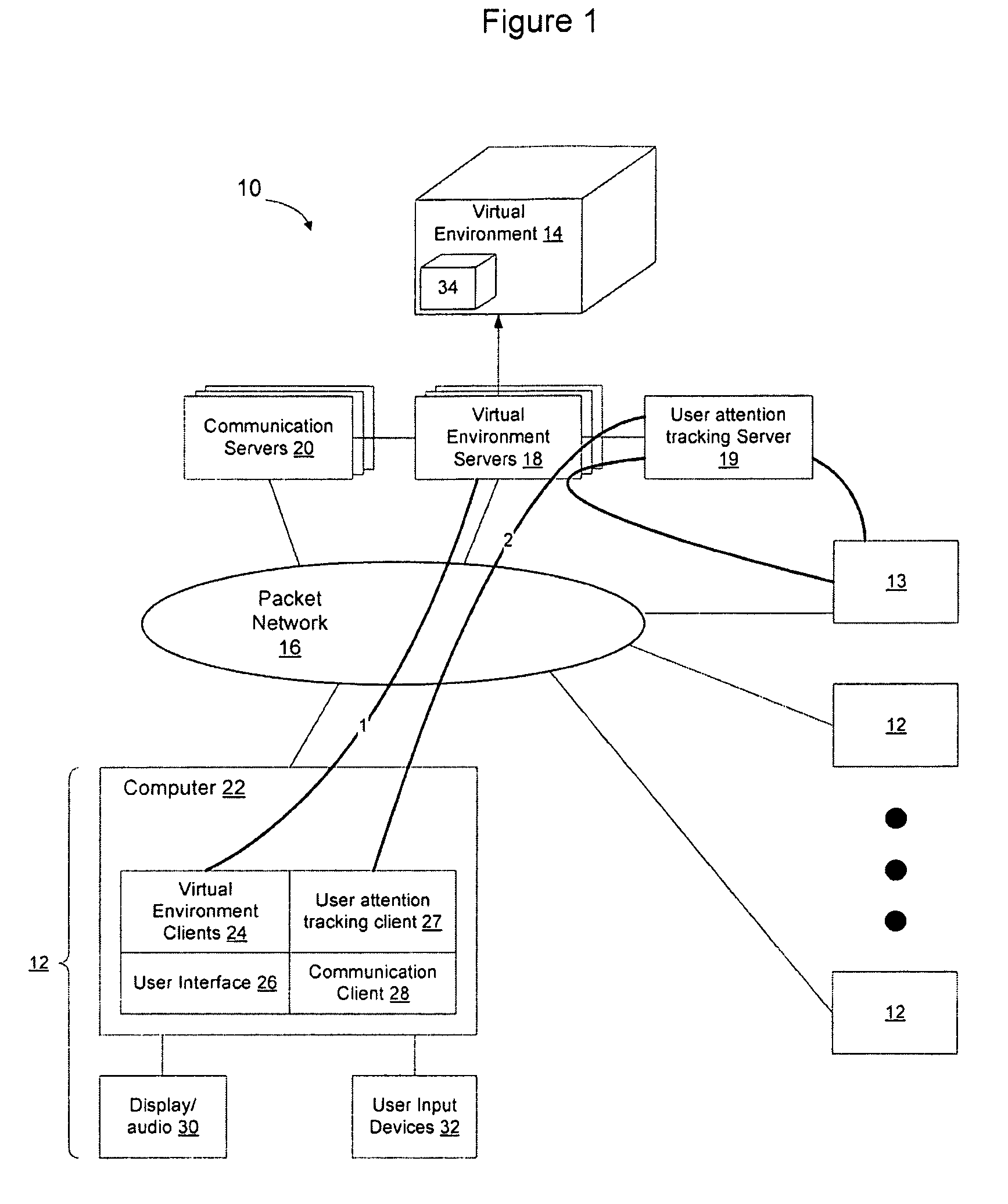
  • Figure 1
    Figure 1
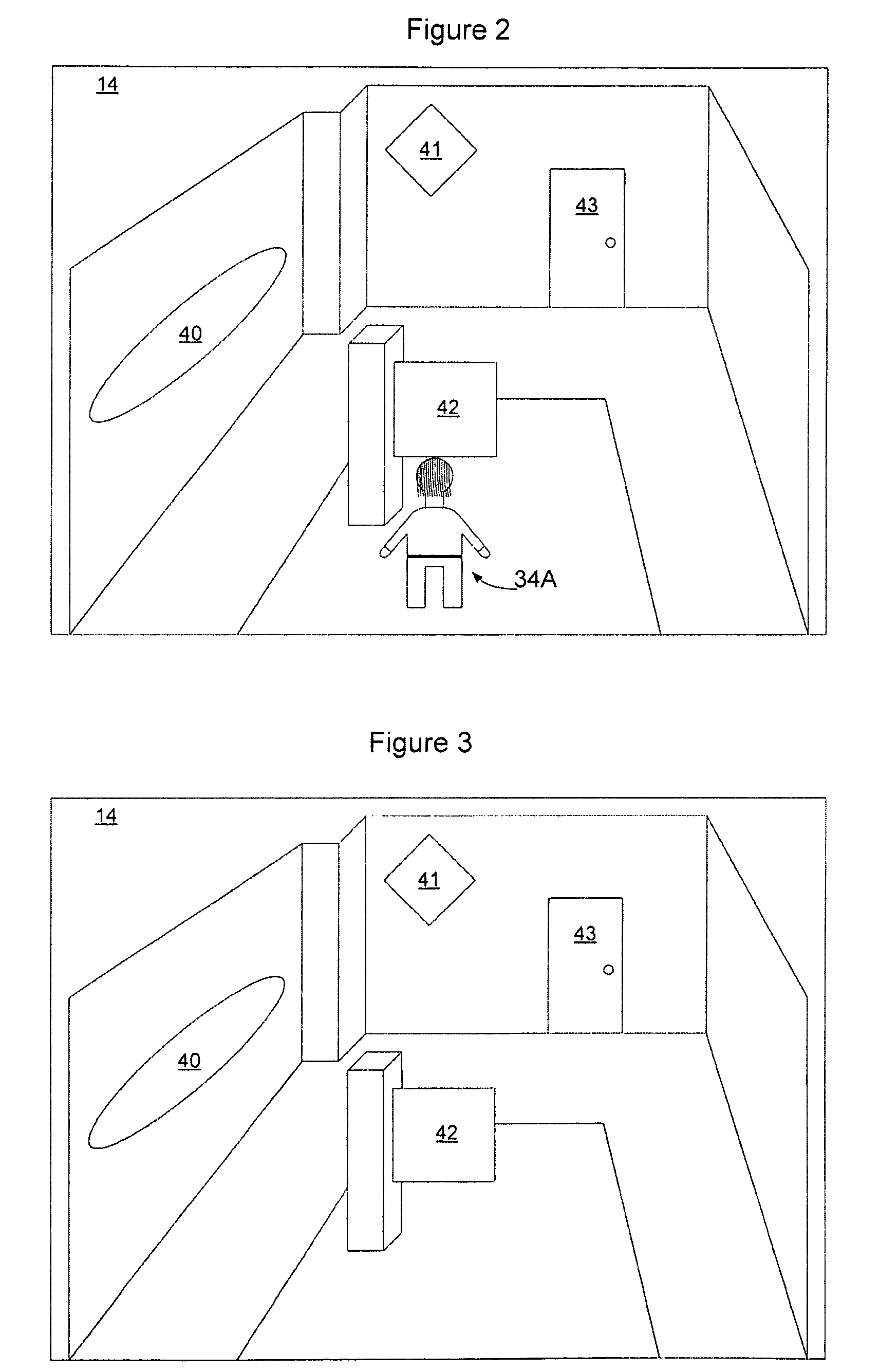
  • Figure 2
    Figure 2
  • Figure 3
    Figure 3
Patent Text Reader

Abstract

Avatars focal points are monitored as the Avatars move within a virtual environment to determine, statistically, where users are looking at in the virtual environment. The Avatar's focal point may be used to control a virtual brush that may paint the virtual environment in an attention monitoring function. A statistical distribution about the focal point is used to affect the coloration, and other known information about the virtual environment may be used to affect the statistics. As attention records from multiple users are collected, they may be overlaid to obtain a very accurate picture of how users are interacting with the virtual environment and with objects in the virtual environment. The attention monitoring function may generate a thermal overlay to the virtual environment to visually show where users tend to focus within the virtual environment. Users' attention on three dimensional and graphic objects may be monitored as well.
Need to check novelty before this filing date? Find Prior Art

Description

CROSS-REFERENCE TO RELATED APPLICATIONS

[0001] NoneBACKGROUND OF THE INVENTION

[0002] 1. Field of the Invention

[0003] The present invention relates to object and virtual environment design and, more particularly, to a method and apparatus for evaluating user perception in a 3D virtual environment.

[0004] 2. Description of the Related Art

[0005] Advertising is ubiquitous. Typically, when a company wants to advertise their product they will either create their own advertising campaign, or hire an advertising agency to create an ad campaign. The advertising agency will generate an advertisement and, if the advertisement is approved by the company, may coordinate placement of the advertisement in the relevant media. Many types of advertising have been created over the years, including: print advertising (newspapers, magazines, brochures, and fliers); broadcast advertising (television radio and the Internet); outdoor advertising (billboards, kiosks, tradeshows and events); and covert advertising ...

Examples

Embodiment Construction

[0021]The following detailed description sets forth numerous specific details to provide a thorough understanding of the invention. However, those skilled in the art will appreciate that the invention may be practiced without these specific details. In other instances, well-known methods, procedures, components, protocols, algorithms, and circuits have not been described in detail so as not to obscure the invention.

[0022]Virtual environments simulate actual or fantasy 3-D environments, and allow for many participants to interact with each other and with constructs in the environment via remotely-located clients. In a virtual environment, an actual or fantasy universe is simulated within a computer processor / memory. Multiple people may participate in the virtual environment through a computer network, such as a local area network or a wide area network such as the Internet. Each player selects an “Avatar” which is often a three-dimensional representation of a person or other object t...