Adaptive differential propagation of soap messages

a technology of soap messages and differential propagation, applied in the field of computer networks, can solve problems such as not addressing the problem of message classification

US8621016B2Inactive Publication Date: 2013-12-31INT BUSINESS MASCH CORP +1
7 Cites 0 Cited by

Patent Information

Authority / Receiving Office
US · United States
Patent Type
Patents(United States)
Current Assignee / Owner
Publication Date
2013-12-31
Estimated Expiration
Not applicable · inactive patent

Smart Images

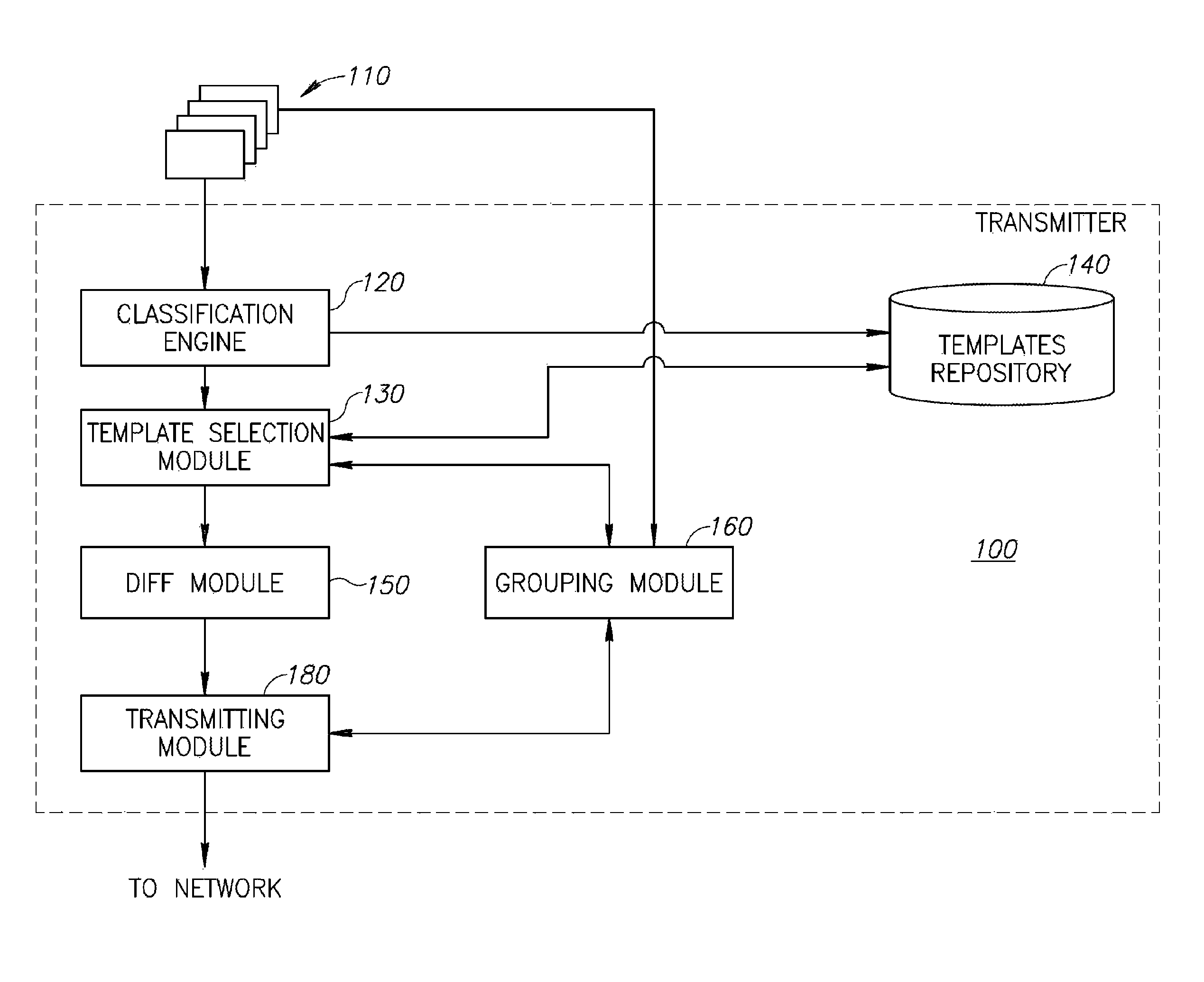
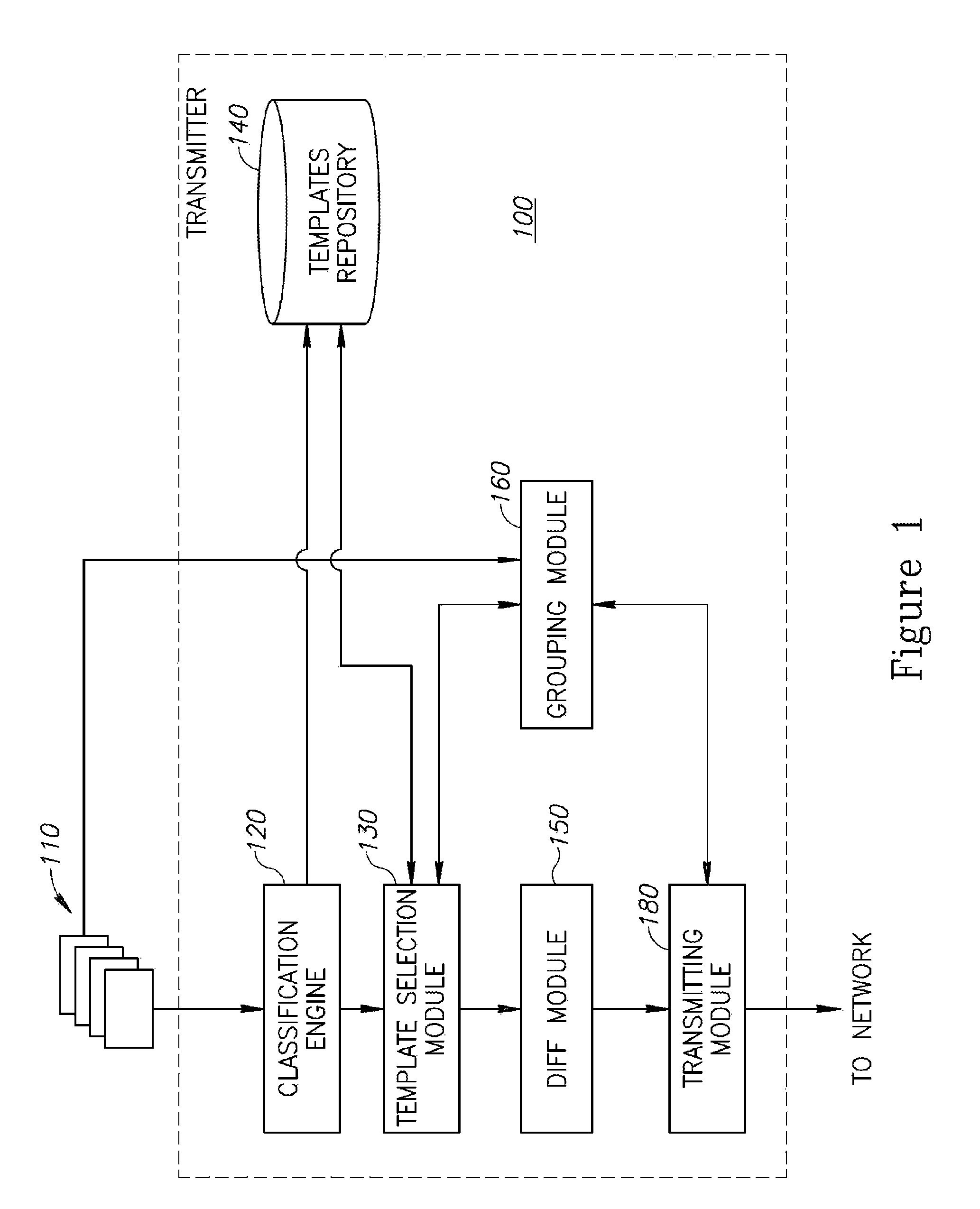
  • Figure 1
    Figure 1
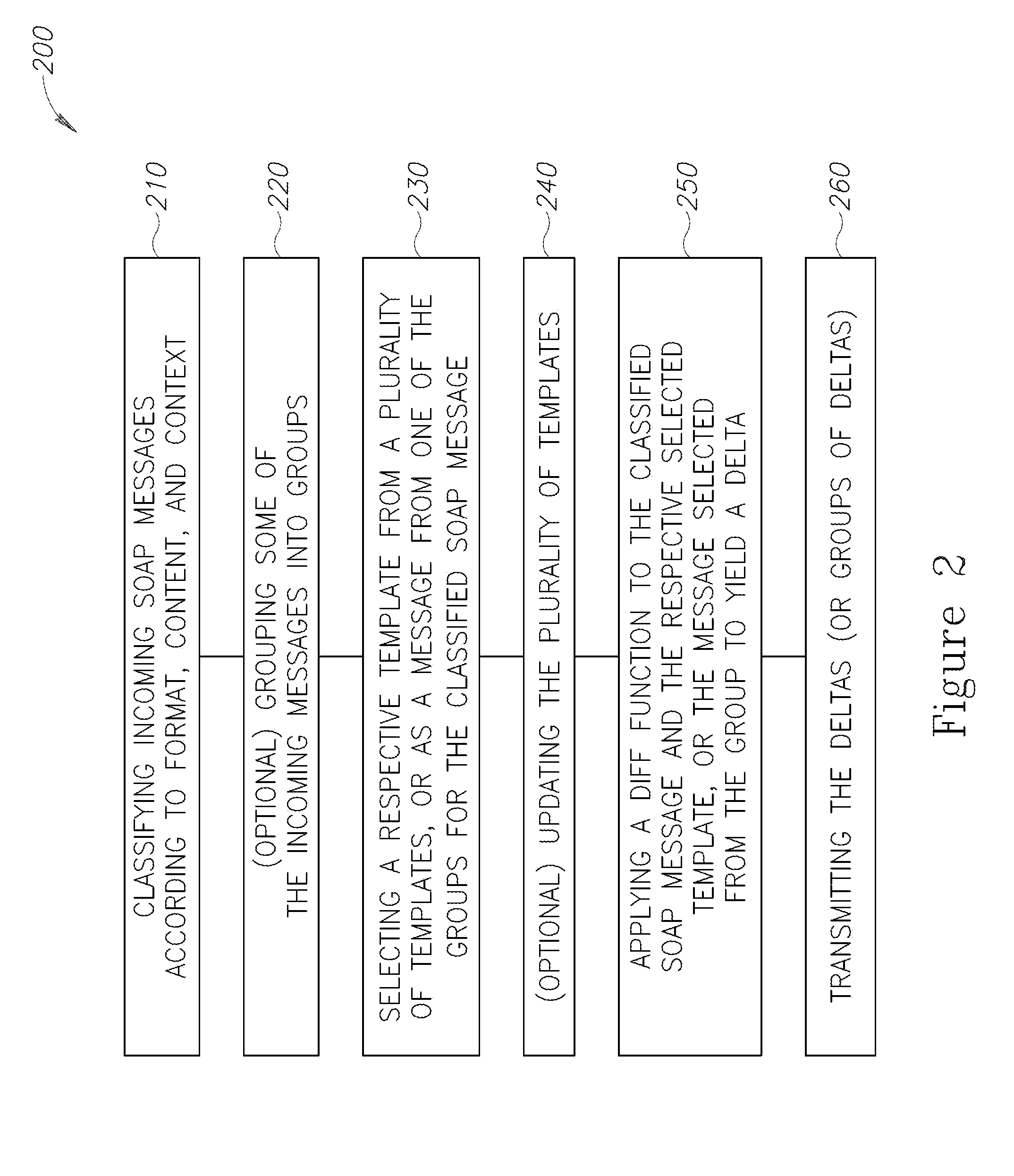
  • Figure 2
    Figure 2
  • Figure 3
    Figure 3
Patent Text Reader

Abstract

A method of adaptive differential propagation of Simple Object Access Protocol (SOAP) messages is provided herein. The method includes the following stages: classifying incoming SOAP messages according to at least one of: structure, content, and context thereof; selecting a corresponding template out of a plurality of templates for each classified SOAP message such that the selected template minimized a specified diff function applied to the classified SOAP message and the selected template; applying the specified diff function to the SOAP message and the selected template to yield a respective delta; and encapsulating a template identifier with the respective delta, wherein the template identifier is uniquely associated with the selected template, to yield an outgoing SOAP message.
Need to check novelty before this filing date? Find Prior Art

Description

BACKGROUND

[0001] 1. Technical Field

[0002] The present invention relates to computer networks and more particularly, to propagation of messages over computer networks.

[0003] 2. Discussion of the Related Art

[0004] In computer network communication, the size of SOAP (previously known as “Simple Object Access Protocol”) messages is a well-known performance bottleneck in contemporary SOA (Service-Oriented Architecture). The existing methods of differential encoding apply to message structure rather than the content and context thereof. Consequently, they do not address the issue of message classification according to message content.

[0005] Differential serialization and de-serialization of SOAP message are also known in the art. Differential serialization and de-serialization are concerned with minimizing serialization and de-serialization latency rather than reducing the size of the SOAP message.BRIEF SUMMARY

[0006] One aspect of the invention provides a method that includes: optionally groupi...

Examples

Embodiment Construction

[0016]Prior to setting forth the detailed description, it may be helpful to set forth definitions of certain terms that will be used hereinafter.

[0017]The term “Extensible Markup Language” or “XML” as used herein in this application refers to a set of rules for encoding documents electronically. XML's design goals emphasize simplicity, generality, and usability over the Internet. It is a textual data format, with strong support via Unicode for the languages of the world. Although XML's design focuses on documents, it is widely used for the representation of arbitrary data structures, for example in web services.

[0018]The term “Web Services Description Language” or “WSDL” as used herein in this application refers to an XML-based language that provides a model for describing Web services. Web services are typically application programming interfaces (API) or web APIs that can be accessed over a network, such as the Internet, and executed on a remote system hosting the requested servic...