
Gene engineering process of preparing human hair papilla cell protein HSPC016 and its expression vector and engineering bacterium
A technology of dermal papilla cells and genetic engineering, applied in the field of genetic engineering preparation of human dermal papilla cell HSPC016 protein, expression vector and engineering bacteria, can solve problems such as unclear
Patent Information
- Authority / Receiving Office
- CN · China
- Patent Type
- Applications(China)
- Current Assignee / Owner
- Publication Date
- 2007-11-07
- Estimated Expiration
- Not applicable · inactive patent
Smart Images
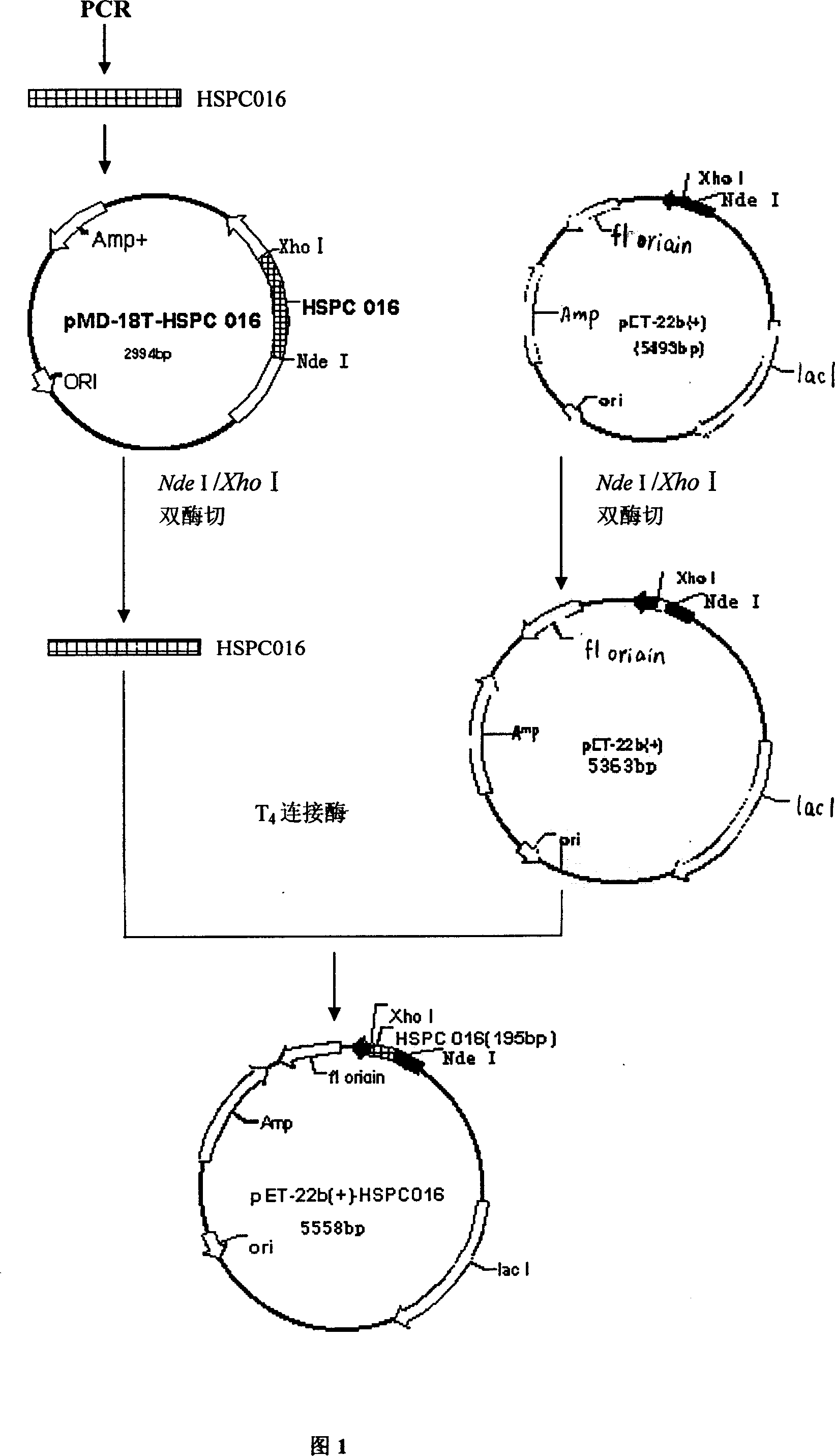
Figure 1 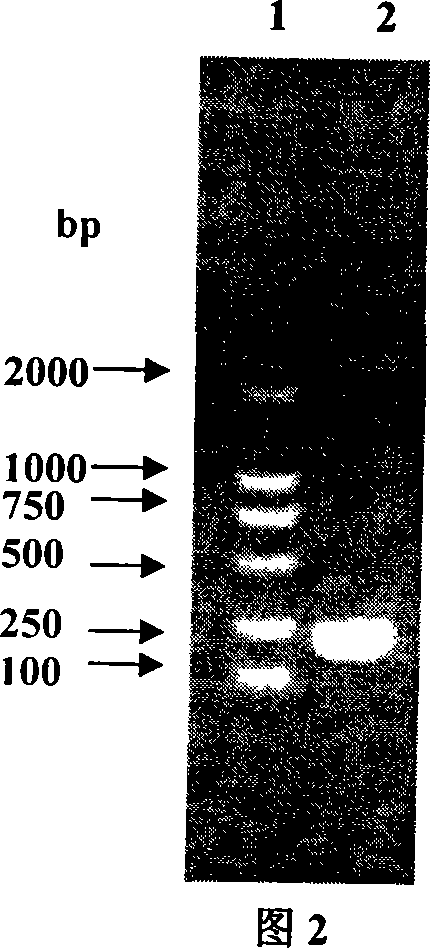
Figure 2 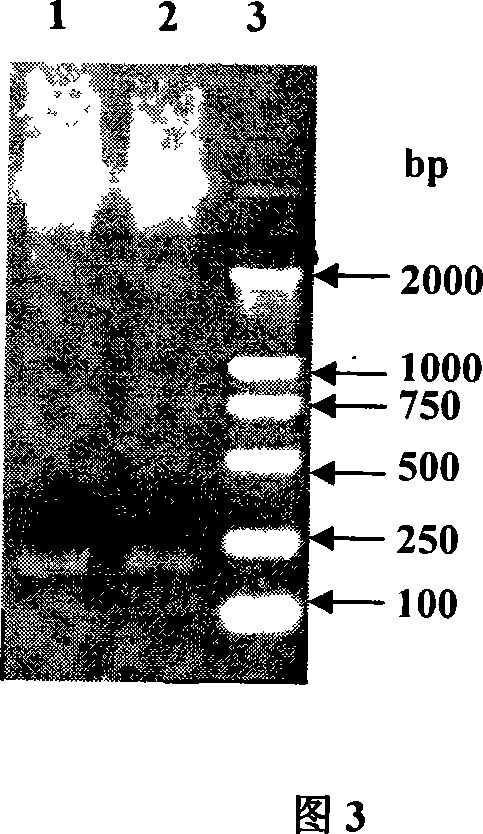
Figure 3
Abstract
Description
technical field
[0001] The present invention relates to the field of producing protein or polypeptide drugs by DNA recombination technology, specifically, the present invention relates to the method of genetic engineering preparation of human dermal papilla cell HSPC016 (hematopoietic stem / progenitor cells, HSPC) protein, and also relates to related expression vectors and Engineering bacteria. Background technique
[0002] The hair follicle is an important skin appendage, the main body of the hair. Hair has important physiological functions such as regulating body temperature, excreting metabolites, and buffering external mechanical pressure. For humans, it also has sociological significance such as aesthetics, dressing, and feature recognition. Hyper-hair or less-hair caused by abnormal growth of hair follicles will not only affect the normal function of hair physiology, but also cause psychological pressure to more and more patients and directl...
Examples
Embodiment 1
[0032] Example 1 Cloning of the coding gene of human dermal papilla cell HSPC016:
[0033] 1. Design and synthesis of primers
[0034] The 195 bp ORF sequence was determined from the HSPC016 gene nucleotide sequence published by GenBank. According to the restriction site search and primer design principles, the primers were designed as follows:
[0035] P1 5'-CATATGTCCGGCCGCGAAGGT-3'(Nde I)
[0036] P2: 5'-CTCGAGCTTTTTGCCAGATTTCT-3'(XhoI)
[0037] Primers were designed, analyzed and evaluated with Primer Premier 5.0 software, synthesized by Shanghai Boya Biotechnology Co., Ltd., and purified by PAGE.
[0038] 2. PCR amplification of the target gene:
[0039] Template preparation: 5ml of pcDNA3.1(+) / HSPC016 overnight culture solution was centrifuged at 10000rpm for 5min to remove the supernatant, added 0.5ml of double distilled water, mixed well and boiled for 10min, after the same centrifugation, the supernatant was taken as template.
[0040] The PCR amplification reactio...
Embodiment 2
[0063] Example 2 Construction and screening of recombinant plasmid pET-22b(+) / HSPC016
[0064] 1. Construction of pMD18-T / HSPC016
[0065] (1) Ligation reaction
[0066] After the PCR product of HSPC016 was recovered by DNA gel, the nucleic acid content of the recovered product was detected by ultraviolet spectrophotometer: 200ng / μl, pMD18-T vector: 50ng / μl, control insert DNA: 50ng / μl. According to the principle that the molar ratio of exogenous fragments to carrier is generally 1:2-10, the ligation reaction system is designed as follows:
[0067] Destination Fragment Connection:
[0068] HSPC016 (200ng / μl) 1μl
[0069] pMD18-T (50ng / μl) 1μl
[0070] wxya 2 O 3 μl
[0071] ligation solution 5μl
[0072] Total volume 10μl
[0073] Control insert DNA connection:
[0074] Control insert DNA (50ng / μl) 1μl
[0075] pMD18-T (50ng / μl) 1μl
[0076] wxya 2 O 3 μl
[0077] ligation solution 5μl
[0078] total volume 10μl
[0079] Connect at 16°C for 16h.
[0080] (2) Tr...
Embodiment 3
[0156] Example 3 Expression of pET-22b(+) / HSPC016 in E.coli BL21(DE3)
[0157] 1. Expression of HSPC016
[0158] 1. Construction of pET-22b(+) / HSPC016 / BL21(DE3) engineering strain
[0159](1) Preparation of competent BL21 (DE3), the operation is the same as the preparation of DH5α competent.
[0160] (2) The positive recombinant pET-22b(+) / HSPC016 was transformed into competent BL21(DE3), and the operation was the same as before.
[0161] by Amp + Resistance screening and Nde I / Xho I double enzyme digestion identification confirmed that the recombinant plasmid had been successfully transferred into BL21(DE3).
[0162] 2. SDS-PAGE detection of the expression of the target protein HSPC016
[0163] (1) Induction of recombinant engineered bacteria
[0164] Inoculate recombinant engineered bacteria into 3ml Amp + In LB medium, culture overnight at 37°C on a shaker. The next day, the overnight cultured recombinant engineered bacteria were transferred to 20ml Amp at a ratio of...