
Method for preventing PCR pollution by using restriction endonucleases
A technology of restriction endonucleases and polymerases, applied in biochemical equipment and methods, microbial determination/inspection, DNA/RNA fragments, etc., can solve the disadvantage of long fragment amplification, increase probe hybridization, molecular cloning downstream The difficulty and cumbersomeness of the experiment, the reduction of PCR efficiency, etc.
Patent Information
- Authority / Receiving Office
- CN · China
- Patent Type
- Applications(China)
- Current Assignee / Owner
- Publication Date
- 2010-07-07
- Estimated Expiration
- Not applicable · inactive patent
Smart Images
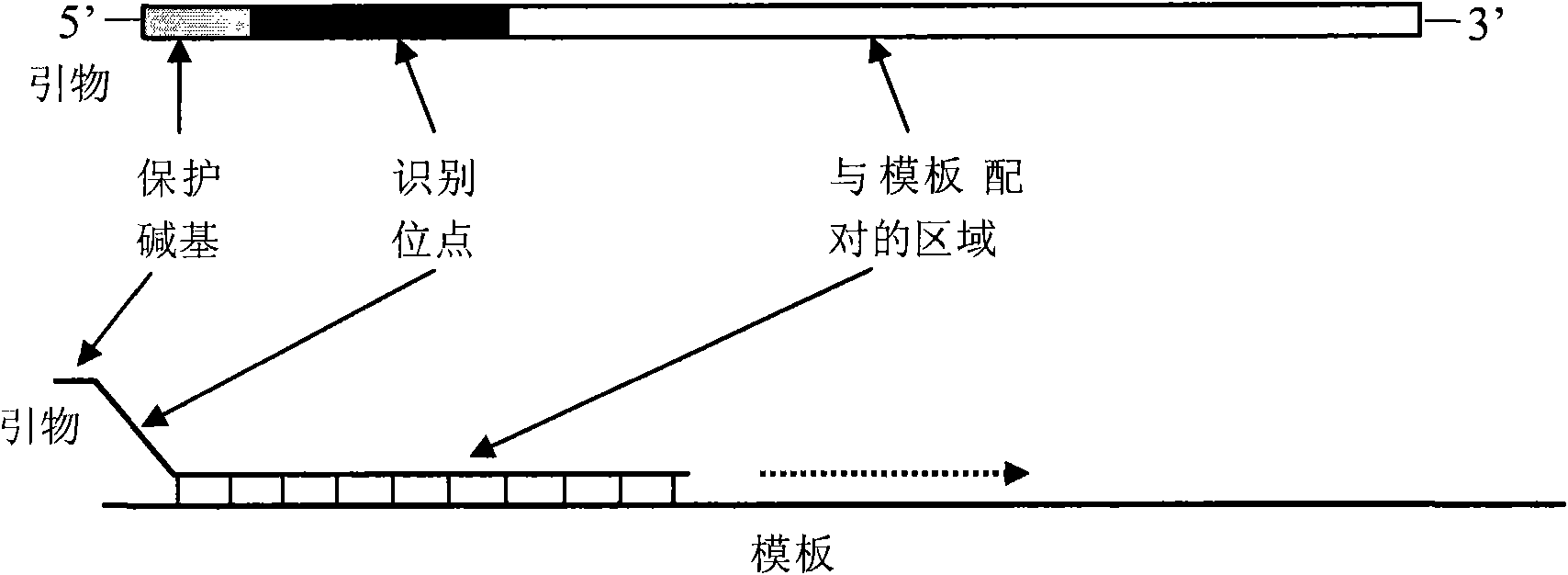
Figure 1 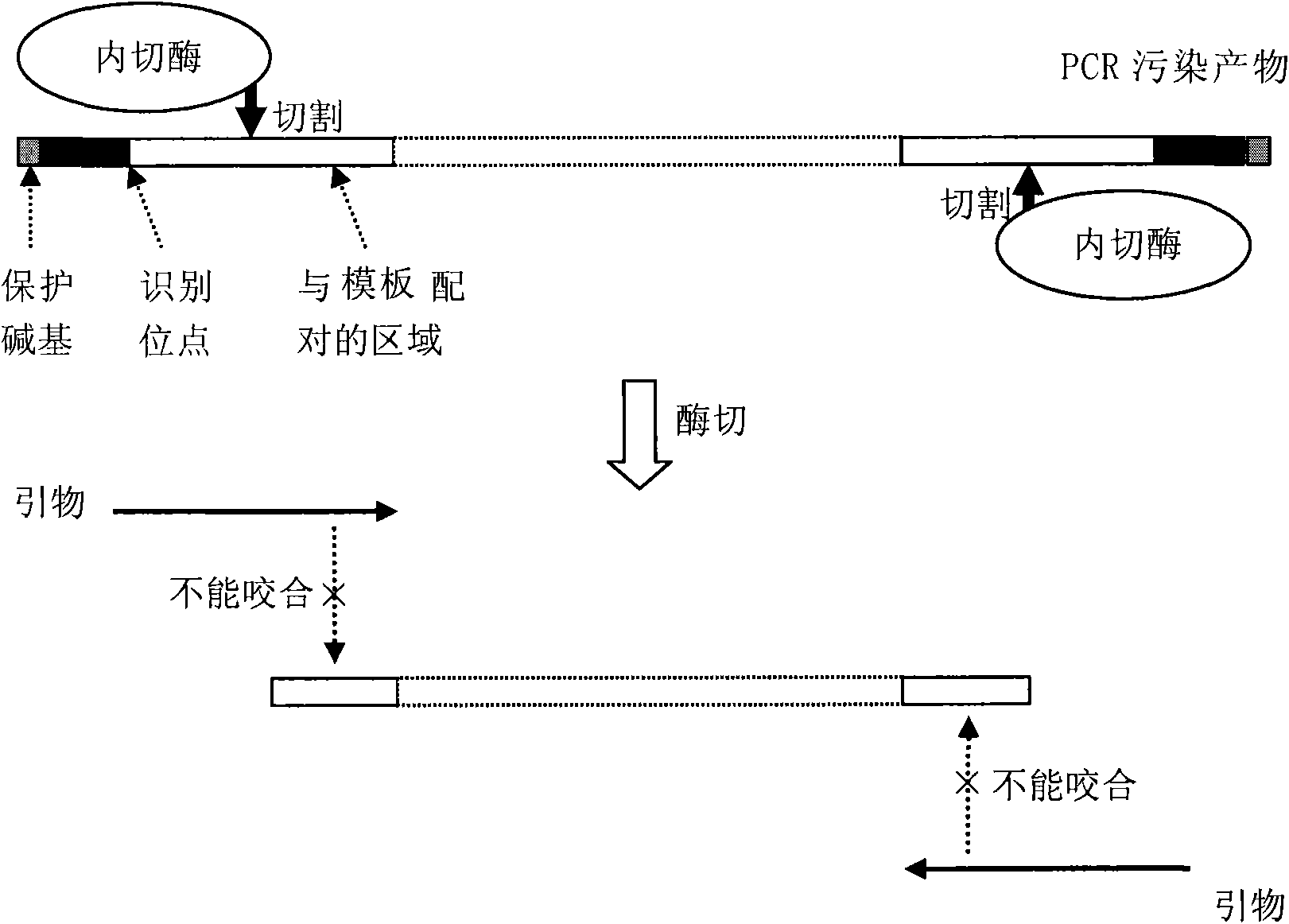
Figure 2 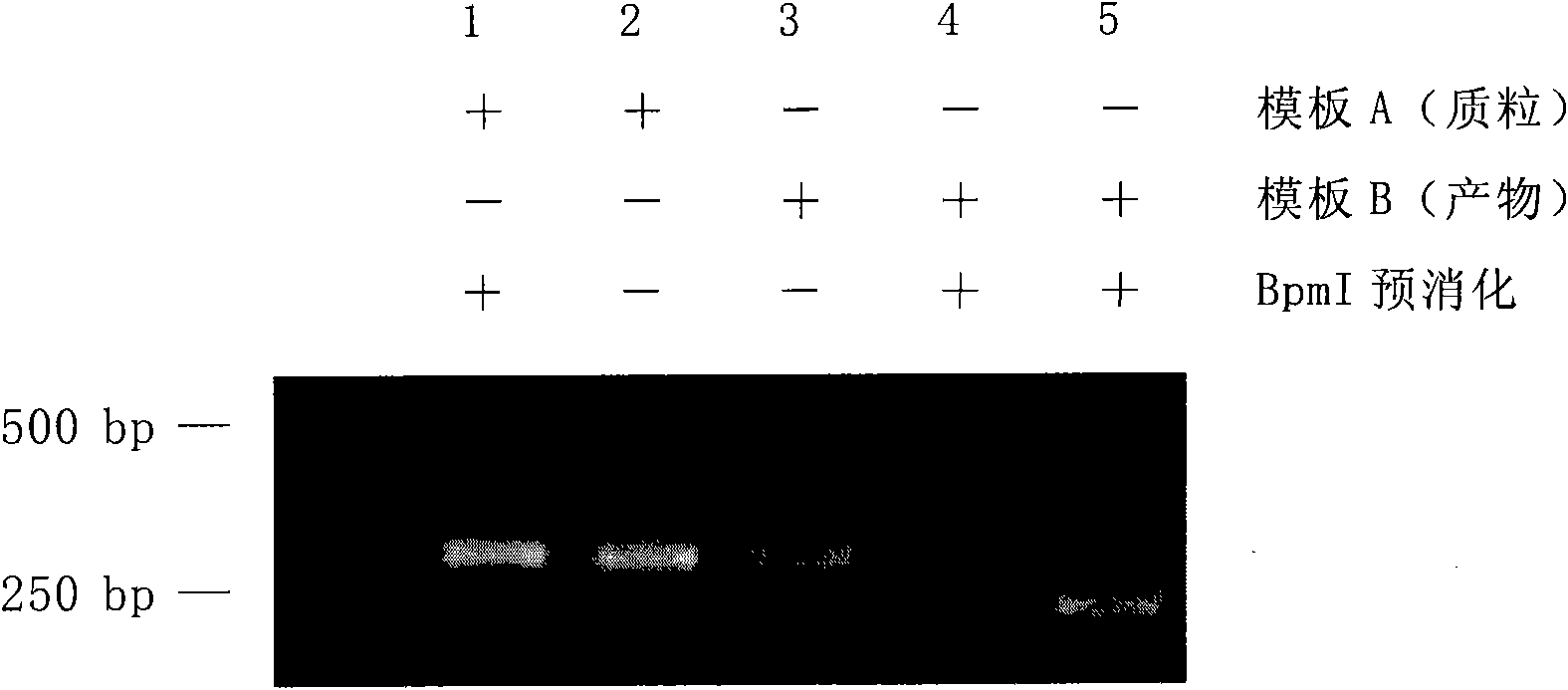
Figure 3
Abstract
Description
Technical field
[0001] The present invention relates to the field of detection, and more specifically to a method for preventing PCR contamination by using restriction enzymes. Background technique
[0002] PCR is a very common method for amplifying DNA fragments in molecular biology, with extremely high sensitivity. However, PCR reactions are often contaminated, resulting in false positive results, which is the biggest problem faced by PCR methods.
[0003] A common cause of false positive PCR is the contamination of PCR products. When a laboratory (such as a hospital laboratory) performs detection through a specific PCR reaction several times or repeatedly (for example, the detection template is the subject's genomic DNA), then a normal PCR product will be obtained in the PCR reaction of the positive sample . However, these positive PCR products are likely to remain on the desk, container, instrument, or other places in the laboratory, and will be mixed into the PCR reaction s...
Examples
Embodiment 1
[0089] Amplification of exon-4 sequence of human p53 gene
[0090] The sequence of human p53 gene exon-4 is shown in SEQ ID NO:1.
[0091] tcccc gatgatttgatgctgtc cccggacgatattgaacaatggttcactgaagacccaggtccagatgaagctcccagaatgccagaggctgctccccgcgtggcccctgcaccagcagctcctacaccggcggcccctgcaccagccccctcctggcccctgtcatcttctgtcccttcccagaaactactaccagggcag ggtttccgtctgggcttct tgcattctggga g(SEQ ID NO: 1)
[0092] Note: The bold part is the outer primer binding position, and the underlined part is the inner primer binding position
[0093] In this embodiment, the detection purpose is to use human genomic DNA as a template to amplify the fragment of exon-4 of the human p53 gene.
[0094] In this embodiment, since there is no Bpm I restriction site in SEQ ID NO:1, the type IIS restriction endonuclease Bpm I is selected to prevent PCR contamination (of course, for SEQ ID NO:1, it can also be Use IIS type restriction endonucleases Alw I, Bci VI, Bsa I, BsmA I, Hga I, Hph I, MmeI, etc.).
[0095] 1. D...
Embodiment 2
[0134] Amplification of exon-4 sequence of human p53 gene
[0135] Example 1 was repeated, the only difference was that the commercially available pSK-p53 plasmid (A) containing the exon-4 fragment of the human p53 gene in Example 1 was replaced with human genomic DNA extracted by conventional methods.
[0136] The results also showed that after digesting the previous PCR contaminants with IIS restriction endonuclease Bpm I, the false positives caused by PCR contaminants can be effectively reduced or even eliminated.
Embodiment 3
[0138] Amplification of human DAPK gene
[0139] Example 2 is repeated, the difference lies in: the detection object in this example is the human DAPK gene, and its length is 1707 bp. Therefore, the type IIS restriction endonuclease used is Fok I, and the primers used are as follows:
[0140] Forward primer: 5’-ATT GGATG AGGTTGCCACGCTCCACTA-3' (SEQ ID NO: 6)
[0141] Reverse primer: 5’-AAT GGATG CGCCTCACTGGGAGCAATC-3' (SEQ ID NO: 7)
[0142] The underlined part is the recognition site of Fok I enzyme
[0143] The restriction site of Fok I is 5’...GGATG(N) 9 …3’
[0144] 3’...CCTAC(N) 13 …5
[0145] Use the human genomic DNA extracted by conventional methods (A) or the previous PCR product (B) (contaminants) diluted 10000 times as templates, and add or not add IIS restriction endonuclease Fok I to the system for PCR reaction. Among them, the pH value of the PCR reaction system is 8.4.
[0146] The results showed that after digesting the previous PCR contaminants with IIS ...