
Method for selecting molecular marker for goat yeaning traits
A molecular marker and goat technology, applied in biochemical equipment and methods, microbial measurement/inspection, etc., can solve the problems of expensive detection, cumbersome operation, and non-existence, so as to speed up breeding progress, improve selection efficiency, and accurately estimate Effect
Patent Information
- Authority / Receiving Office
- CN · China
- Patent Type
- Patents(China)
- Current Assignee / Owner
- Publication Date
- 2012-08-29
- Estimated Expiration
- Not applicable · inactive patent
Smart Images
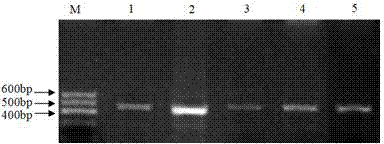
Figure 1 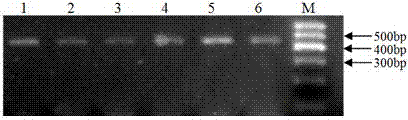
Figure 2 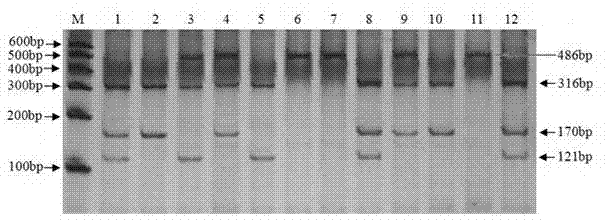
Figure 3
Abstract
Description
technical field
[0001] The invention belongs to the field of molecular genetics, and specifically relates to a molecular marker selection method for lambing traits of goats. The method adopts detection of mutation polymorphisms of goat stem cell factor (Kit ligand, KITL) gene intron 1 and 6 bases, and Analysis of its effect on litter size showed that the SNPs of KITL gene detected by primers P1 and P2 could be used as molecular markers for lambing traits selection in goats. Background technique
[0002] With the rapid development of molecular biology technology, especially the advent of Polymerase Chain Reaction (Polymerase Chain Reaction) technology and the improvement of electrophoresis technology, various molecular genetic marker technologies have emerged. Breeding of varieties provides new ways and methods. In particular, the combination of molecular marker technology and conventional breeding technology has given birth to a brand-new selection method - marker-assisted ...
Examples
Embodiment Construction
[0037] A. PCR amplification of intron 1 and 6 of KITL gene and detection of its polymorphism
[0038] 1. Collection and processing of goat blood samples
[0039] Take 5 mL of goat blood sample, add 0.2 μL of ACD (2.4 g of citric acid; 6.6 g of trisodium citrate; 7.35 g of glucose; dilute to 50 mL, autoclave) for anticoagulation, slowly invert 3 times and put it in an ice box, Store at -80°C for later use.
[0040] In this example, a total of 681 ewe blood samples from 3 goat populations were used, specifically: 290 blood samples of Xinong Saneng sheep, collected from Qianyang Saneng sheep breeding farm in Shaanxi Province; 193 blood samples of Guanzhong dairy goats, collected from Shaanxi Zhouzhi Green New Century Biological Co., Ltd.; 198 Boer goat blood samples were collected from the Boer goat breeding farm in Linyou County, Shaanxi.
[0041] 2. Extraction and purification of genomic DNA from blood samples
[0042] 1) Thaw the frozen blood sample at room temperatur...