
Method for determining PPCPs (Pharmaceutical and Personal Care Products) in water by LPME (Liquid-phase Micro Extraction) technology
A technology for measuring water and extraction, which is applied in the preparation of test samples, measuring devices, instruments, etc., can solve the problems of weak extraction ability, lack, and easy volatility of PPCPs, and achieve high viscosity, simple equipment, and easy cleaning. Effect
Patent Information
- Authority / Receiving Office
- CN · China
- Patent Type
- Applications(China)
- Current Assignee / Owner
- Publication Date
- 2011-03-30
- Estimated Expiration
- Not applicable · inactive patent
Smart Images
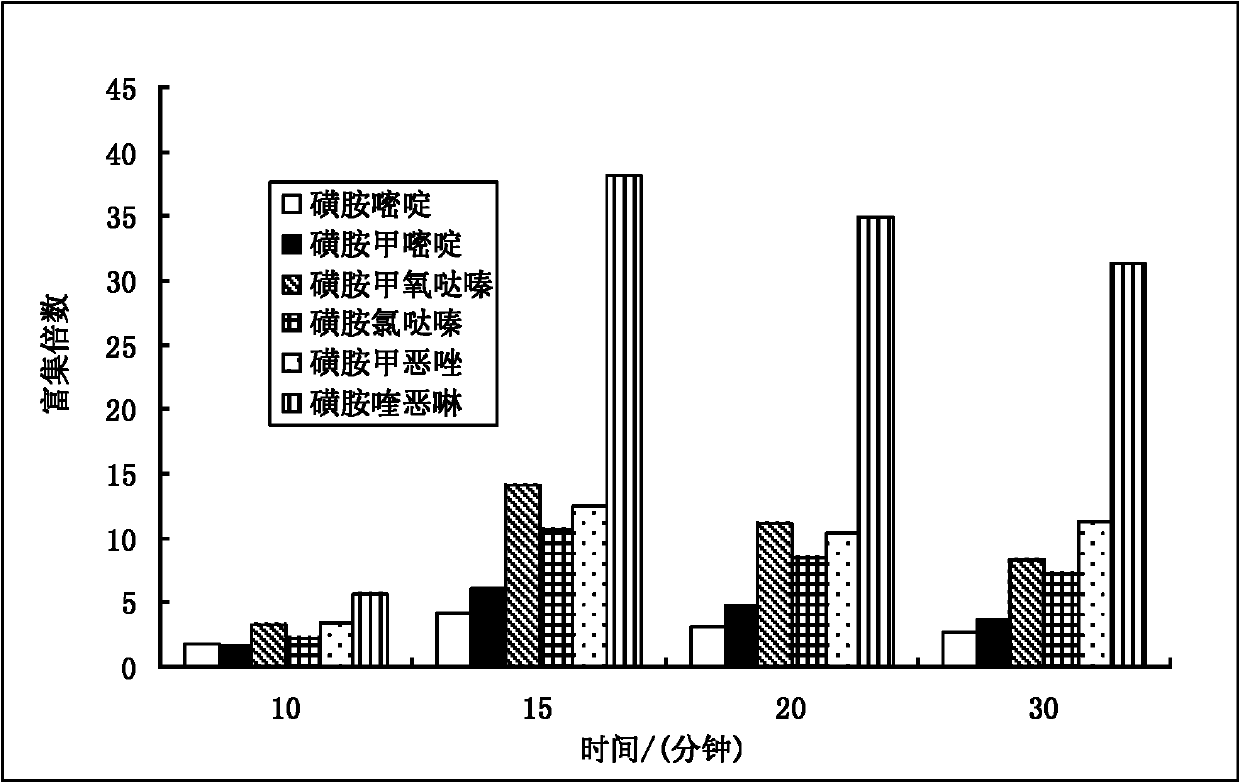
Figure 1 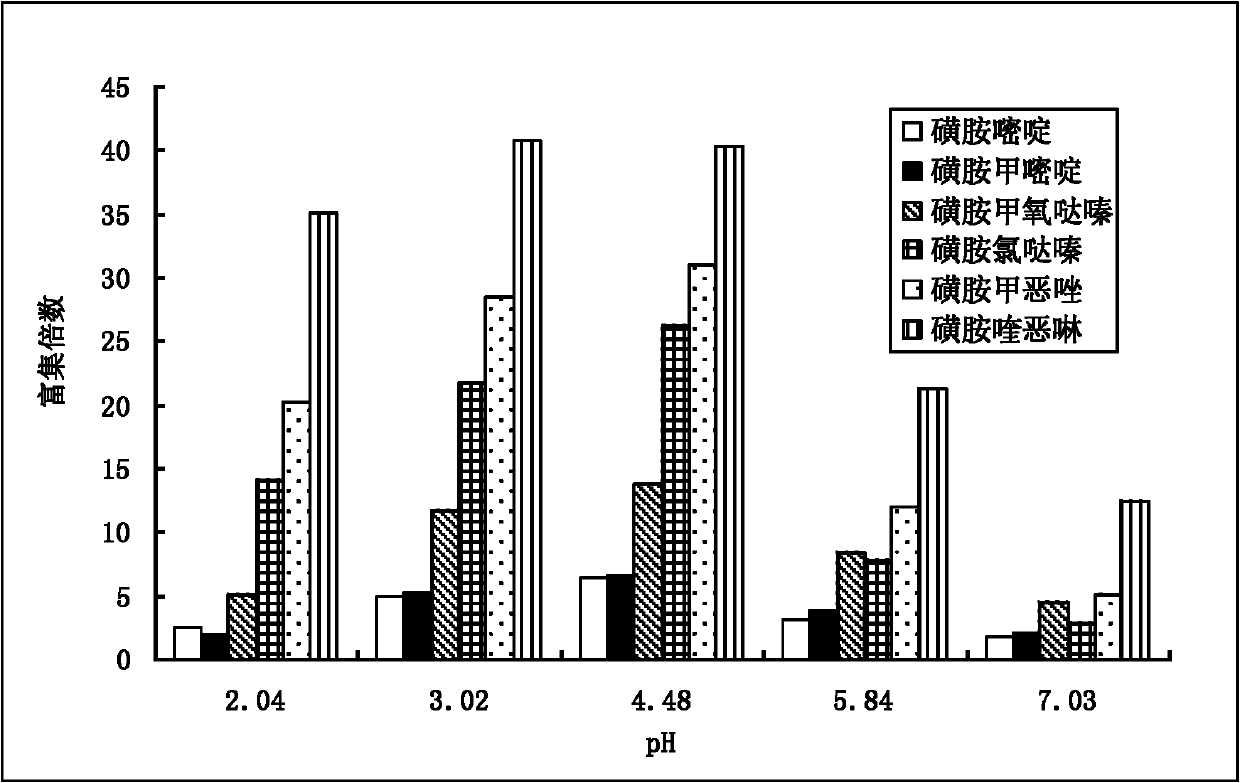
Figure 2 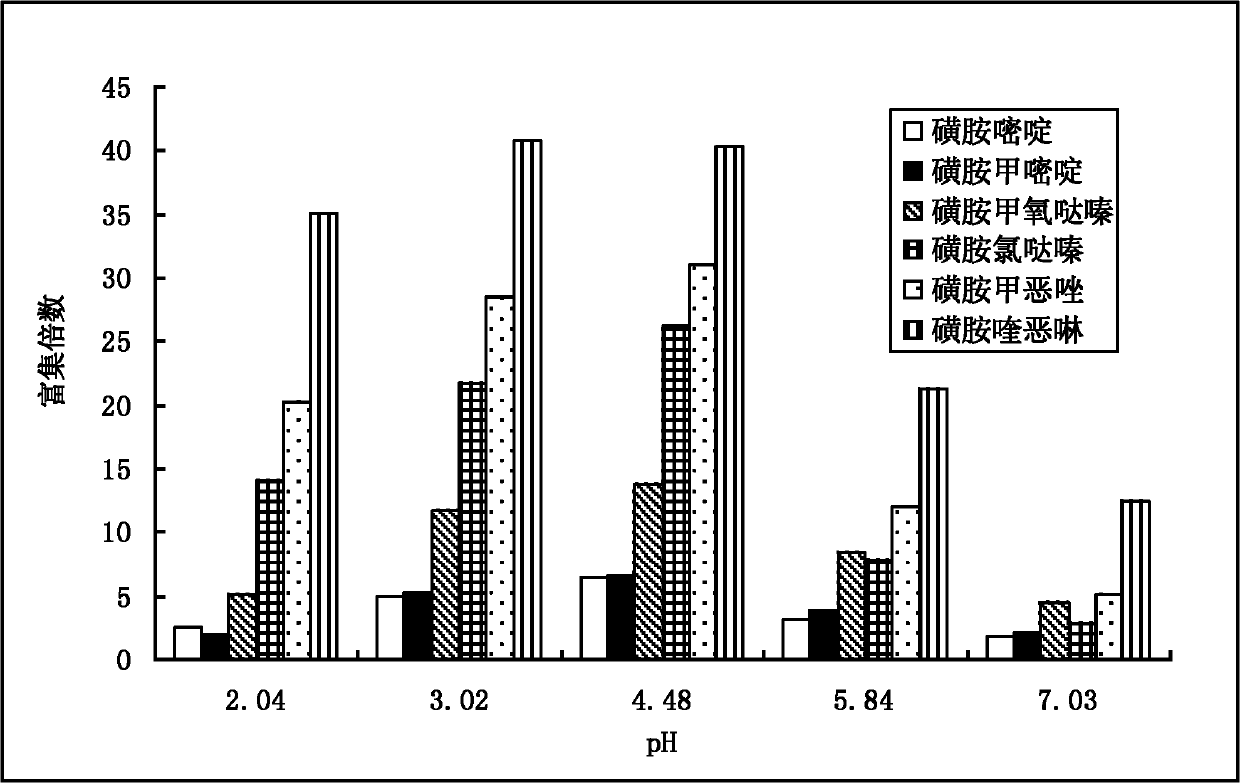
Figure 3
Abstract
Description
technical field
[0001] The invention belongs to the field of environmental protection and relates to a method for measuring pharmaceuticals and personal care products (PPCPs) in water. Background technique
[0002] Environmental samples often have complex matrices, many interference factors in direct analysis, and the concentration of target analytes is very low. Pretreatment is required to achieve the separation and enrichment of target analytes, so as to meet the requirements of corresponding analytical instruments. Pretreatment is a crucial link in the analysis process of environmental samples, which is directly related to the accuracy of the measurement results. Traditional environmental sample pretreatment techniques, such as liquid-liquid extraction and Soxhlet extraction, often need to consume a large amount of volatile toxic organic solvents, and the processing costs are high, which is not conducive to the health of researchers, but also pollutes the environment. Co...
Examples
Embodiment 1
[0036] A single drop liquid phase microextraction device was used.
[0037] Using ionic liquids [C 8 MIM]PF 6 (1-octyl-3-methylimidazolium hexafluorophosphate) as the extractant.
[0038] The sample solution is a mixed solution of 5 kinds of sulfonamides, sulfadiazine, sulfamethazine, sulfamethazine, sulfamethoxine and sulfachloropyridazine prepared in the laboratory, and the concentration is 1 ppm respectively.
[0039] (1) Adjust the pH of the sample solution to 6.0 with 1% dilute hydrochloric acid, without adding sodium chloride solution or solid, so that the salinity of the sample solution is 0.
[0040] (2) Take 15 mL of sample solution and put it in a brown sample bottle, put it into a stirring magnet, draw 10 μL of ionic liquid 1-octyl-3-methylimidazolium hexafluorophosphate with a liquid phase sampling needle, and pass through the sealing cap , a Teflon tube is placed on the needle cover to allow the droplet to hang more stably. Then dip the sampling needle into th...
Embodiment 2
[0047] A single drop liquid phase microextraction device was used.
[0048] Using ionic liquids [C 8 MIM]PF 6 (1-octyl-3-methylimidazolium hexafluorophosphate) as the extractant.
[0049] The sample solution is a mixed solution of 6 kinds of sulfonamides, sulfadiazine, sulfamethazine, sulfamethoxazole, sulfachloropyridazine, sulfamethoxypyridazine and sulfaquinoxaline, prepared in the laboratory, with a concentration of 1 ppm respectively.
[0050] (1) The pH of the sample solution was adjusted to 3.0 with concentrated hydrochloric acid and 1% dilute hydrochloric acid, and the concentration of salt in the sample solution was adjusted to 18 g / L with NaCl solid.
[0051] (2) Take 15 mL of sample solution and put it in a brown sample bottle, put it into a stirring magnet, draw 10 μL of ionic liquid 1-octyl-3-methylimidazolium hexafluorophosphate with a liquid phase sampling needle, and pass through the sealing cap , a Teflon tube is placed on the needle cover to allow the drop...
Embodiment 3
[0058] A single drop liquid phase microextraction device was used.
[0059] Using ionic liquids [C 8 MIM]PF 6 (1-octyl-3-methylimidazolium hexafluorophosphate) as the extractant.
[0060] The pH was adjusted to 4.5 with 1% dilute hydrochloric acid, and the concentration of salt in the sample solution was adjusted to 36 g / L with KCl solid. Other steps and conditions were the same as in Example 2, and liquid phase microextraction was carried out.
[0061] Through manual injection into liquid chromatography analysis and detection, the liquid chromatography detection results are shown in Table 1. The conditions of liquid chromatography are: chromatographic column, TC-C18, inner diameter 5μm, 4.6×150mm; mobile phase ratio, acetonitrile / water=20 / 80; column oven temperature, 25°C; flow rate set to 1ml / min; UV-visible Detector, the detection wavelength is set to 265nm.
[0062] Table 3 liquid chromatography detection detection results
[0063] substance