
Manufacture method for rock samples
A technology of rock sample and production method, which is applied in the field of test sample production, can solve problems such as troubles, and achieve fast results
Patent Information
- Authority / Receiving Office
- CN · China
- Current Assignee / Owner
- Publication Date
- 2011-08-31
- Estimated Expiration
- Not applicable · inactive patent
Smart Images
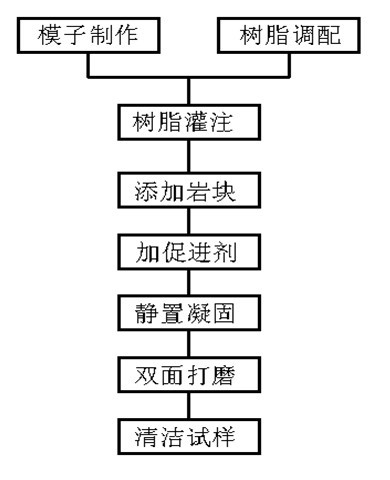
Figure 1 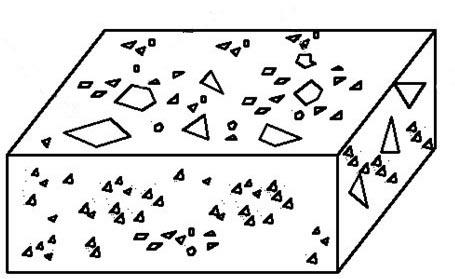
Figure 2 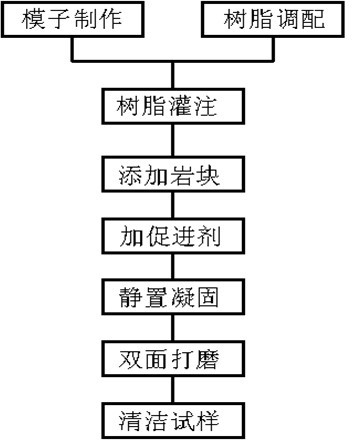
Figure 3
Abstract
Description
technical field
[0001] The invention relates to a method for making a test sample, in particular to a method for making a rock sample. Background technique
[0002] In traditional geotechnical engineering testing, the preparation of samples has always been a complicated and indispensable process. Rock samples have gone through a series of complicated work from mining to grinding, and then putting them on the test bench. For some rare rocks and relatively broken rocks, it is difficult to get whole rocks. In this way, the inability to collect enough samples directly leads to the inability to carry out the test.
[0003] In addition, in the traditional determination of the basic mechanical properties of rocks, larger rocks are often used, and then processed to be suitable for instrumental determination. With the development of modern testing technology, especially the emergence of new test methods represented by micro-penetration (point load test, micro-indentation test), th...
Examples
Embodiment 1
[0030] (1) Make a thin plexiglass plate into a cuboid mold with an upper opening. The size of the cuboid mold is L×W×H=40cm×40cm×15cm, which can be bonded with glue.
[0031] (2) Mix epoxy resin and amine curing agent in a certain proportion to form a certain volume of fluid, pour it into the mold, and then immediately pour the irregular rock blocks into the mold.
[0032] (3) Stand for a period of time, waiting for the resin to fully solidify.
[0033] (4) After the resin is solidified, put the mold filled with resin on the grinder for grinding. When grinding, grind both sides of the mold at the same time, and when there are more rock smooth surfaces on the grinding surface, the grinding can be stopped.
[0034] (5) Wipe off the debris on the grinding surface so that the surface of the rock can be clearly seen, so that the sample is completed.
Embodiment 2
[0036] (1) Make a thin plexiglass plate into a cylindrical mold with an upper opening. The size of the cylindrical mold is R×H=20cm×15cm, which can be bonded with glue.
[0037] (2) Mix epoxy resin and amine curing agent in a certain proportion to form a certain volume of fluid, pour it into the mold, and then immediately pour the irregular rock blocks into the mold.
[0038] (3) Stand for a period of time, waiting for the resin to fully solidify.
[0039] (4) After the resin is solidified, put the mold filled with resin on the grinder for grinding. When grinding, grind both sides of the mold at the same time, and when there are more rock smooth surfaces on the grinding surface, the grinding can be stopped.
[0040] (5) Wipe off the debris on the grinding surface so that the surface of the rock can be clearly seen, so that the sample is completed.