
A high-yielding glucosamine engineering bacterium and its construction method through homologous recombination knockout of manx
A technology of glucosamine and genetically engineered bacteria, applied in the field of bioengineering, can solve the problems of low conversion efficiency of chitin hydrolysis, not yet reached industrialized production, and high product cost, and achieve low production cost, high production intensity, and low environmental pollution. Effect
Patent Information
- Authority / Receiving Office
- CN · China
- Patent Type
- Applications(China)
- Current Assignee / Owner
- Publication Date
- 2011-12-21
Smart Images
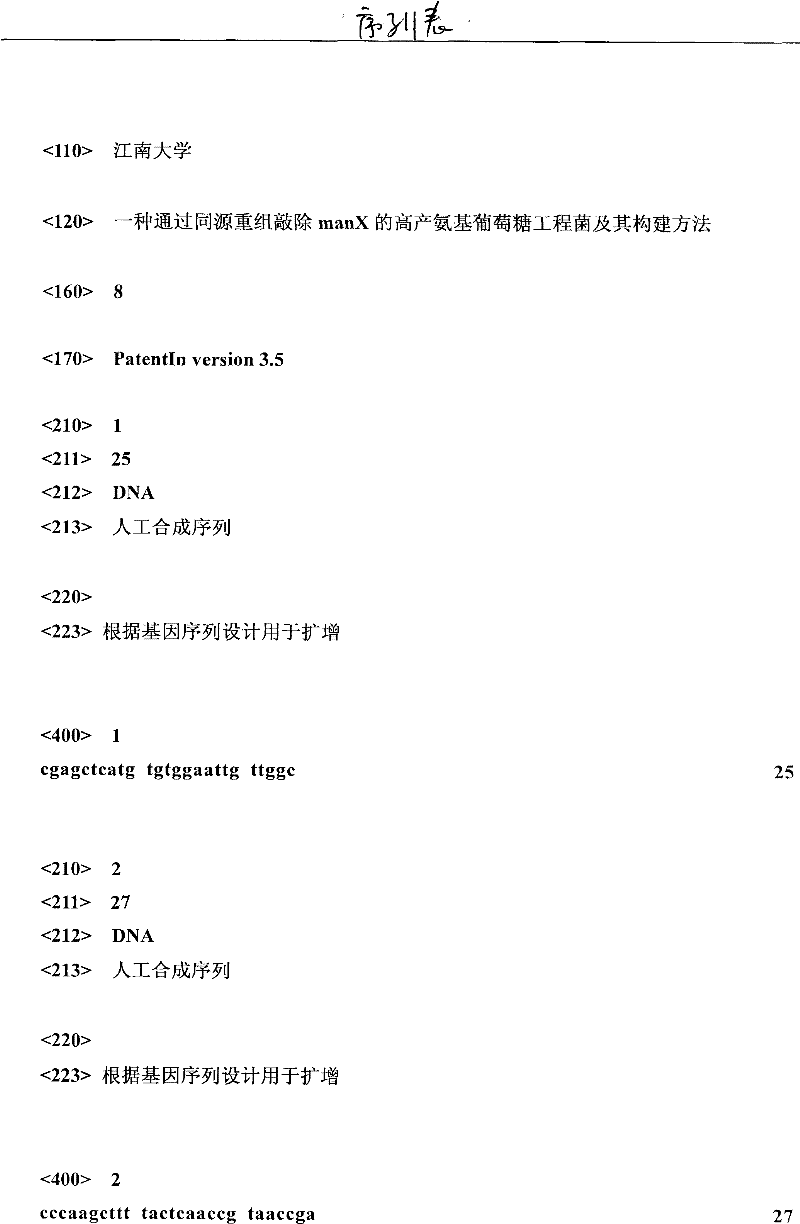
Figure 1 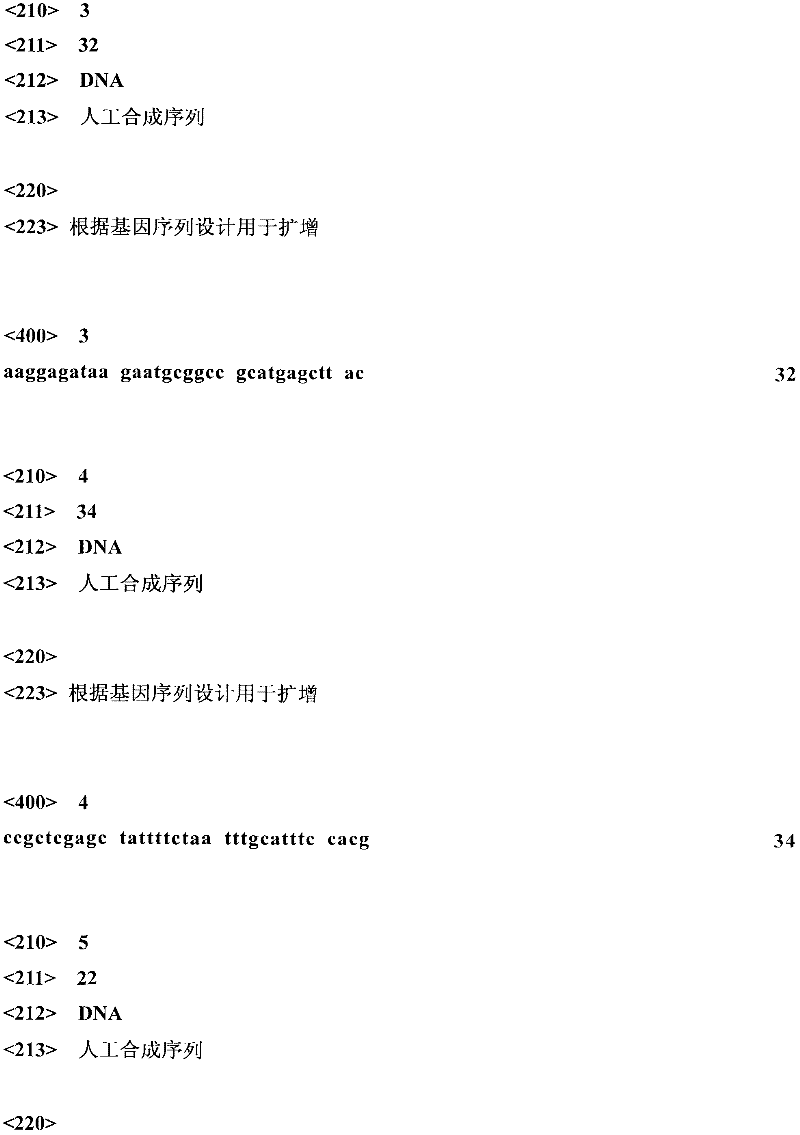
Figure 2 
Figure 3
Abstract
Description
technical field
[0001] The invention relates to a glucosamine-producing genetically engineered bacterium and a construction method thereof, belonging to the technical field of bioengineering. Background technique
[0002] Glucosamine (Glucosamine, 2-amino-2-deoxy-D-glucose) is a compound in which a hydroxyl group of glucose is replaced by an amino group. It exists in almost all organisms, including bacteria, yeast, filamentous fungi, plants and animals, and is the main component of glycoproteins and proteoglycans. Glucosamine can specifically act on articular cartilage, restore the normal metabolic function of chondrocytes, stimulate chondrocytes to produce proteoglycans with normal polymer structure, inhibit enzymes that damage cartilage, and delay the pathological process and disease of osteoarthritis progression, improved joint mobility, and pain relief. Therefore, it is mostly used clinically for the treatment of osteoarthritis. In addition, glucosamine also has liver...
Examples
Embodiment Construction
[0015] 1. Construction of recombinant plasmid pET-28a(+)-glmS-gna1
[0016] Primers used to amplify the glmS gene:
[0017] Upstream: 5'-C GA GCT C AT GTG TGG AAT TGT TGG C-3' (underlined sequence indicates restriction endonuclease recognition site Sac I)
[0018] Downstream: 5'-CCC AAG CTT TTA CTC AAC CGT AAC CGA-3' (the underlined sequence represents the restriction enzyme site Hind III).
[0019] Glucosamine synthase gene glmS was obtained by PCR using E. coli BL21 (DE3) genome (GenBank No. CP001509.3) as a template. Digest the glmS gene fragment and pET-28a(+) with restriction endonucleases Sac I and Hind III, and insert the glmS gene fragment into the Sac I and Hind III sites of plasmid pET-28a(+) by ligation reaction In between, the recombinant plasmid pET-28a(+)-glmS was obtained.
[0020] Primers used to amplify the gna1 gene:
[0021] Upstream: 5'-AAGGAGATAAGAAT GCGGCCGC ATGAGCTTAC-3' (underlined sequence indicates restriction endonuclease recognition site No...