
Method and device for electrolysis of self-cleaning composite graphite electrode
An electrolysis method and composite electrode technology, applied in the field of electrochemical electrolysis, can solve the problems of rising current or voltage, affecting electrolysis efficiency, increasing power consumption, etc., so as to reduce concentration polarization, avoid power consumption, and reduce electrolysis energy consumption. Effect
Patent Information
- Authority / Receiving Office
- CN · China
- Patent Type
- Applications(China)
- Current Assignee / Owner
- Publication Date
- 2013-01-16
- Estimated Expiration
- Not applicable · inactive patent
Smart Images
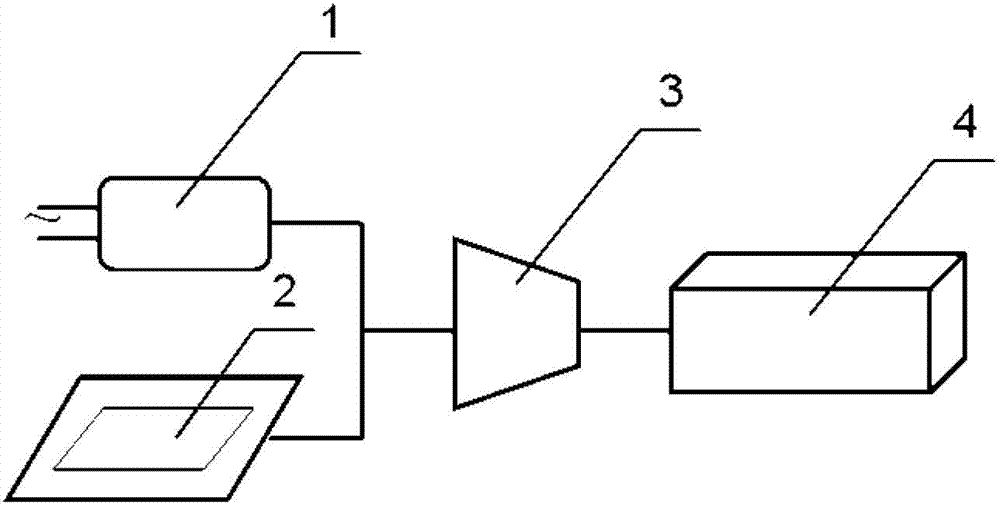
Figure 1
Abstract
Description
technical field
[0001] The invention relates to the technical field of electrochemical electrolysis, in particular to a self-cleaning composite electrode electrolysis method and device. technical background
[0002] The basic principle of electrochemical electrolysis water treatment technology is to generate hydroxyl radicals (OH), ozone (O 3 ), hydrogen peroxide (H 2 o 2 ), hypochlorite (ClO - ), Chlorine (Cl 2 ) or atomic oxygen and other strong oxidants, and then degrade the pollutants in the wastewater. Electrochemical electrolysis technology is an advanced oxidation technology. As an "environmentally friendly technology", electrochemical electrolysis treatment has been widely studied and applied in the treatment of some refractory biodegradable pollutants. As a cleaning treatment process, electrochemical electrolysis is highly flexible and can be applied alone or in combination with other treatment methods.
[0003] Electrochemical electrolysis is an oxidation-red...
Examples
Embodiment 1
[0038] As shown in the attached figure, the self-cleaning composite electrode electrolysis adopts a periodic steering electrolysis device. The electrolysis device includes: an electrolytic cell, a cycle steering controller, and a DC power supply system. The positive and negative electrodes of the electrolytic cell are graphite, and the thickness is 5mm. It is a flat plate structure , there is a graphite repolarization in the middle, the outer diameter of the particles is about 1.5mm, and they are piled up in bulk. The distance between the insoluble metal electrode plates in the electrolytic cell is 10mm, and the distance between the graphite repolarization and the positive and negative electrode plates in the middle is 1mm, using plastic wire The grid is isolated so that the repolarization cannot contact the positive and negative electrodes. The cycle steering controller realizes the cyclic operation of energization-disconnection-steering energization-disconnection. The cycle s...
Embodiment 2
[0044] The difference from Example 1 is that the thickness of the positive and negative electrode plates is 8 mm, the outer diameter of graphite particles is about 3.5 mm, the distance between the electrode plates is 50 mm, and the distance between the repolarization electrode and the positive and negative electrode plates set in the middle is 2 mm.
[0045] Electrolysis method steps: 1) Use 15% sodium hydroxide solution to adjust the pH value to 3, and use sodium sulfate to adjust the conductivity to 0.7S / m; 2) The steering cycle is 80 seconds, and the ratio of disconnection time to power-on time is 1: 4; 3) Current density 10A / m 2 .
[0046] After 10 hours of electrolysis, the electrode was taken out, rinsed and dried with deionized water, and observed with an electron microscope at 5000 times. It can be seen that one side of the electrode is the same as the new electrode, and the other side has polymer adsorption. The positive and negative poles of the electrode are switch...
Embodiment 3
[0048]The difference from Example 1 is that the thickness of the positive and negative electrode plates is 15 mm, the outer diameter of graphite particles is about 5 mm, the distance between the electrode plates is 100 mm, and the distance between the repolarization electrode and the positive and negative electrode plates set in the middle is 3 mm.
[0049] Dye industrial wastewater, COD is 2465mg / L, conductivity of electrolyzed material is 2308μs / cm, pH value is 4.6.
[0050] Electrolysis method steps: 1) Do not adjust the pH value, use sodium sulfate to adjust the conductivity to 0.3S / m; 2) The steering cycle is 120 seconds, and the ratio of disconnection time to power-on time is 1:2; 3) Current density is 15A / m 2 .
[0051] After 4 hours of electrolysis, take out the material and replace it with a new one. After repeating 5 times, take out the electrode, rinse and dry it with deionized water, and observe it with an electron microscope at 5000 times. It can be seen that one ...