
Comprehensive utilization method of lignocellulose biomass
A technology of lignocellulose and biomass, which is applied in the field of comprehensive utilization of cellulose, hemicellulose and lignin in lignocellulosic biomass, can solve the problems of high furfural, relatively harsh pH requirements, and neglect of lignin extraction effect, etc. To achieve the effect of improving extraction rate and maximizing resource utilization
Patent Information
- Authority / Receiving Office
- CN · China
- Patent Type
- Applications(China)
- Current Assignee / Owner
- Publication Date
- 2013-04-17
Smart Images
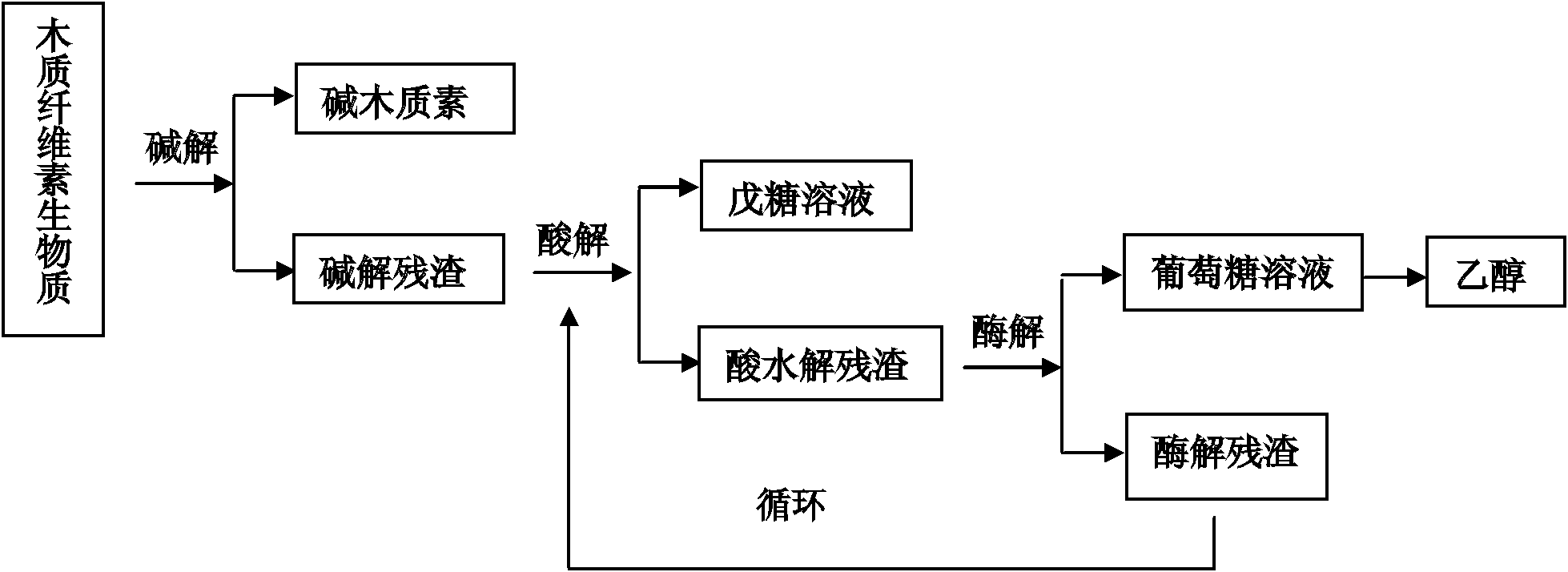
Figure 1 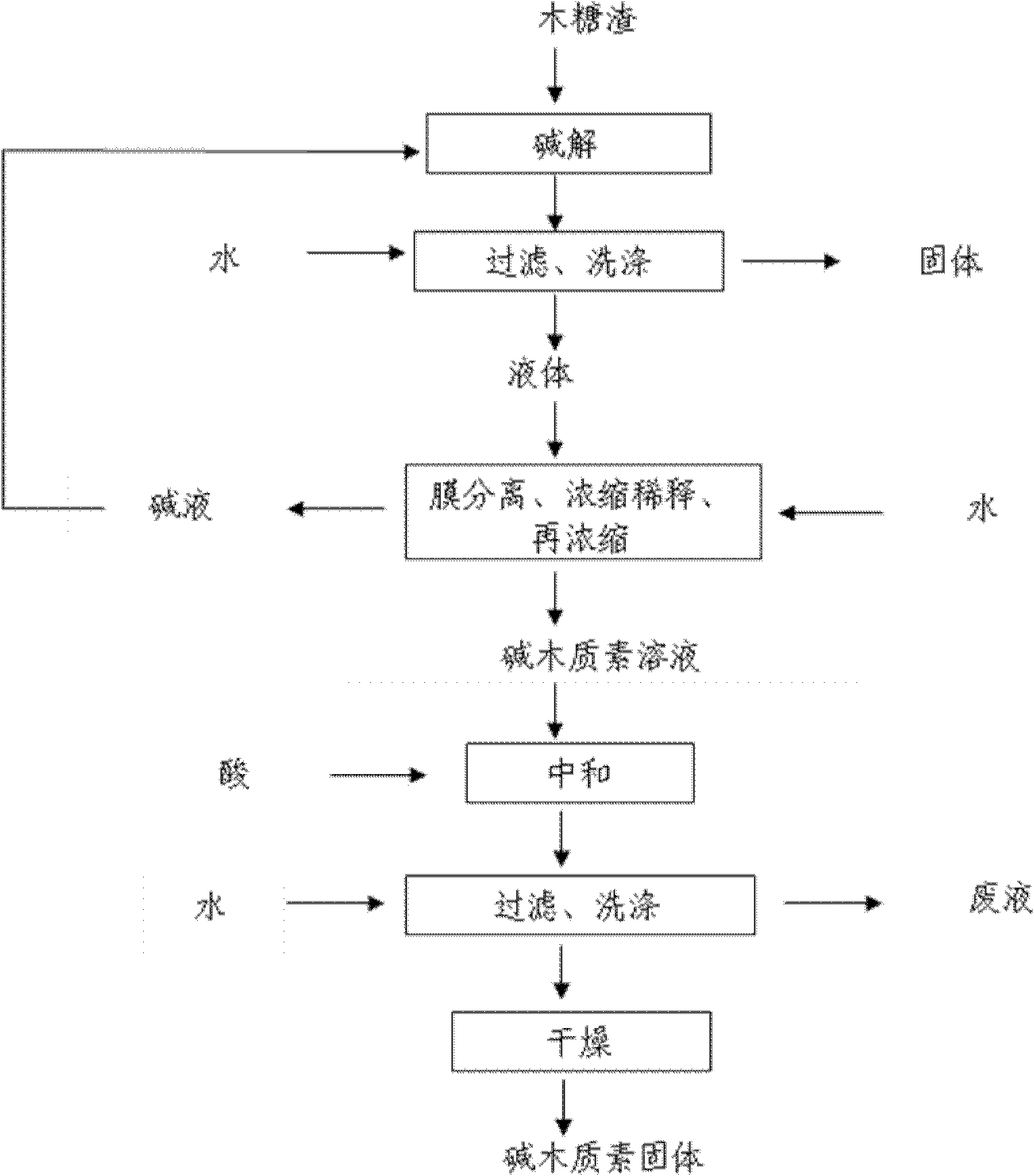
Figure 2 
Figure 3
Abstract
Description
technical field
[0001] The invention relates to a method for comprehensively utilizing lignocellulosic biomass, in particular to a method for comprehensively utilizing cellulose, hemicellulose and lignin in lignocellulosic biomass. Background technique
[0002] With the depletion of fossil fuel resources and the increasing environmental pollution, the use of renewable energy as a substitute for petrochemical products has become increasingly important. Fuel ethanol is the main form of biomass liquid energy and the most likely substitute for fossil fuels. At present, the world's ethanol production mainly uses starches (corn, cassava, etc.) and sugars (sugar cane, sugar beets, etc.) as raw materials for fermentation. The technology of producing ethanol by microbial fermentation is mature, but the high cost of raw materials restricts the industrial application of grain fermentation to produce ethanol. At the same time, there are disadvantages such as competition with people for...
Examples
Embodiment 1
[0067] (1) Alkali solution to extract alkali lignin
[0068] 10.65kg of corncobs (mass composition: moisture 6.12%, cellulose 35.19%, hemicellulose 32.01%, lignin 23.7%, other 2.95%, the same below) are pulverized and then mixed with alkali solution, wherein the volume of liquid and solid The ratio is 5: 1, the concentration of sodium hydroxide is 3%, then the temperature is raised to 70° C., after 1 hour of cooking and alkali hydrolysis, the alkali hydrolysis residue and alkali lignin solution are separated, and the alkali hydrolysis residue is washed with 10 kg of water. The cleaning solution is combined with the alkali lignin solution; 23.77kg of alkali hydrolysis residue (moisture content is about 65%) and 46.22kg of alkali lignin solution are finally obtained; after the alkali lignin solution is separated and concentrated by membrane equipment, add 10kg of water to dilute , Concentrate again, finally obtain 4.57kg of alkali lignin concentrate, and reclaim 51.65kg of alkal...
Embodiment 2
[0085] (1) Alkali solution to extract alkali lignin
[0086]Raw material and method are identical with embodiment 1 step (1), difference is, liquid-solid volume ratio is 20: 1, the concentration of sodium hydroxide is 0.8%, the temperature of alkali solution treatment is 100 ℃, and the time is 2 hours. Finally, 23.61kg of alkali hydrolysis residue (with a water content of about 65%) and 4.56kg of alkali lignin concentrate were obtained, and 201.79kg of alkali liquor was recovered. The solid content of the concentrated solution is 25.3%, the alkali lignin content of the concentrated solution is 23.8%, the residual alkali content of the concentrated solution is 0.7%, and the ash content of the concentrated solution is 1.5%. The content of is 0.63%, and the recovery rate of alkali is 80%. The extraction rate of alkali lignin is 43%.
[0087] (2) acid hydrolysis
[0088] Get all the alkali hydrolysis residues obtained by the alkali solution treatment in the present embodiment (...
Embodiment 3
[0096] (1) Alkali solution to extract alkali lignin
[0097] Raw material and method are identical with embodiment 1 step (1), and difference is, liquid-solid volume ratio is 10: 1, and the concentration of sodium hydroxide is 5%, and the temperature of alkaline solution treatment is 40 ℃, and the time is 6 hours. Finally, 24.44kg of alkali hydrolysis residue (with a water content of about 65%) and 4.2kg of alkali lignin concentrate were obtained, and 96.68kg of alkali liquor was recovered. The solid content of the concentrated solution is 25.7%, the alkali lignin content of the concentrated solution is 24.1%, the residual alkali content of the concentrated solution is 0.6%, and the ash content of the concentrated solution is 1.6%. The content is 4.34%, and the recovery rate of alkali is 84%. The extraction rate of alkali lignin is 40%.
[0098] Optionally, the obtained alkali lignin solution can be adjusted to pH 3 with 10% sulfuric acid, filtered, washed and dried to obtai...