
Parallel implementation method of real-time brush ink diffusion model based on GPU
A technology of diffusion model and implementation method, which is applied in the direction of image data processing, special data processing applications, instruments, etc., can solve the problems of interference efficiency, being restricted by remainder, poor real-time performance, etc., and achieve the effect of improving real-time performance
Patent Information
- Authority / Receiving Office
- CN · China
- Patent Type
- Patents(China)
- Current Assignee / Owner
- Publication Date
- 2016-09-07
Smart Images
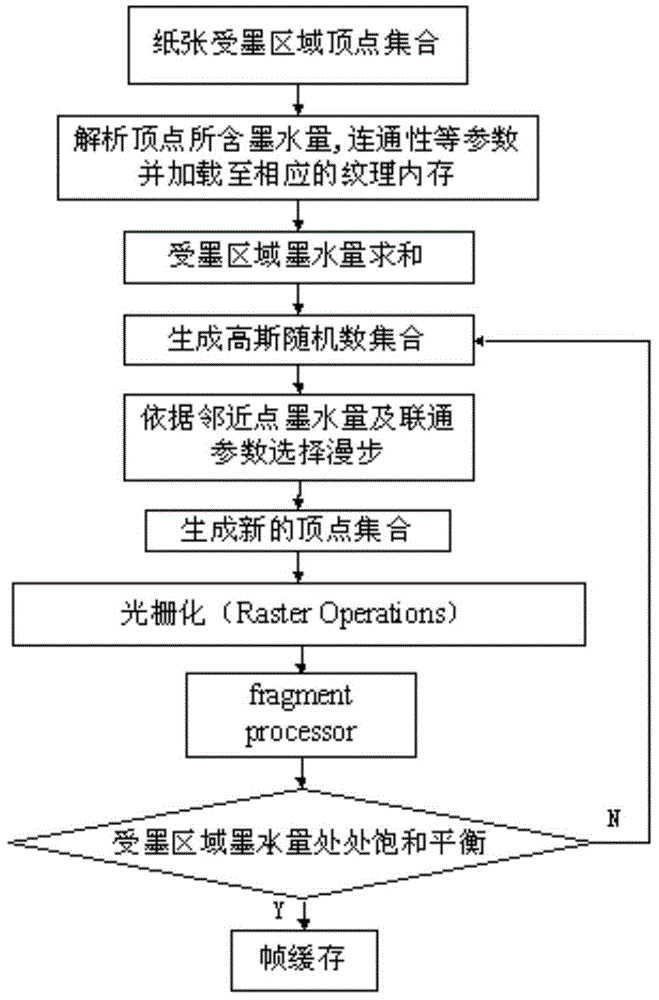
Figure 1 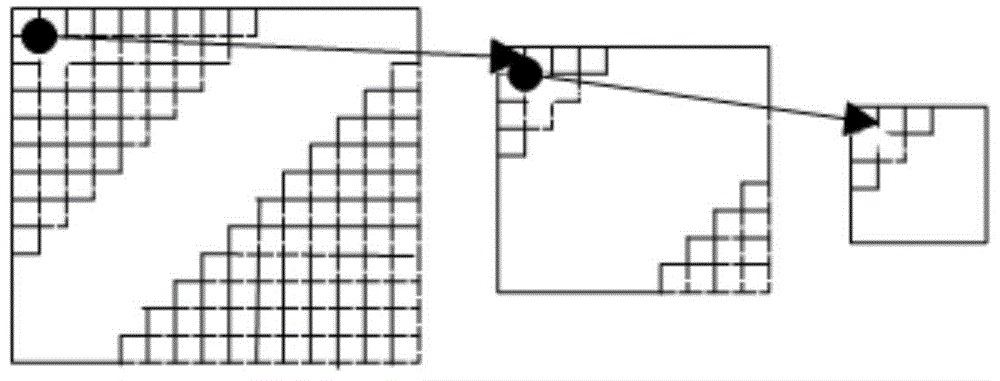
Figure 2 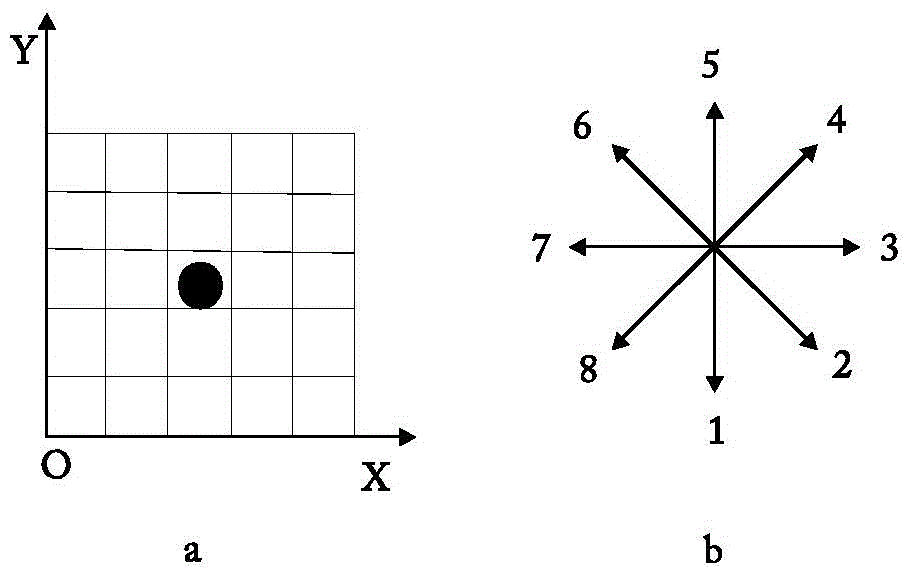
Figure 3
Abstract
Description
technical field
[0001] The invention relates to a parallel realization method of a real-time brush ink diffusion model, in particular to a parallel realization method of a GPU-based real-time brush ink diffusion model. Background technique
[0002] Ink rendering essentially belongs to the category of fluid visualization, including visualization simulations of clouds, deformable surface bodies (such as cloth), and water molecule flow. The key to ink rendering is to simulate the diffusion of complex and disordered ink molecules on paper. This diffusion phenomenon occurs concurrently and randomly in the ink-receiving area of the entire paper, and with the repetition and interlacing of brush strokes in the ink-receiving area more and more complicated. Physically-based fluid simulation methods can produce realistic visualization effects. In terms of effects alone, using physically-based fluid simulation methods should be the best choice. However, the ink diffusion in the pain...
Examples
Embodiment Construction
[0021] refer to Figure 1-3 . The parallel realization method of the real-time brush ink diffusion model based on GPU of the present invention specifically comprises the following steps:
[0022] 1. Take the set of points in the ink-receiving area of the paper as the input for GPU processing. The virtual paper is meshed and loaded into the texture memory as a texture. Each unit of the texture memory is called a texel, and each texel on the texture corresponds to a pixel of the virtual paper. Each texel in the texture memory has three components, which correspond to the coordinates of the virtual paper point, the current ink volume, and the current connectivity, forming a mapping relationship between the virtual paper and the texture. Then it enters the first vertex processing program core (Vertex program), which sums the amount of ink on the ink receiving area of the virtual paper.
[0023] In the GPU stream processing mode, the ink volume sum reduction operation is r...