
Bacillus megaterium nitrate reductase catalysis-electron transfer subunit coexpression carrier
A technology of Bacillus megaterium and co-expression vectors, applied in the field of genetic engineering, can solve problems such as soil nitrogen loss, failure to meet the requirements of environmental restoration, and groundwater pollution
Patent Information
- Authority / Receiving Office
- CN · China
- Patent Type
- Applications(China)
- Current Assignee / Owner
- Publication Date
- 2014-02-12
- Estimated Expiration
- Not applicable · inactive patent
Smart Images
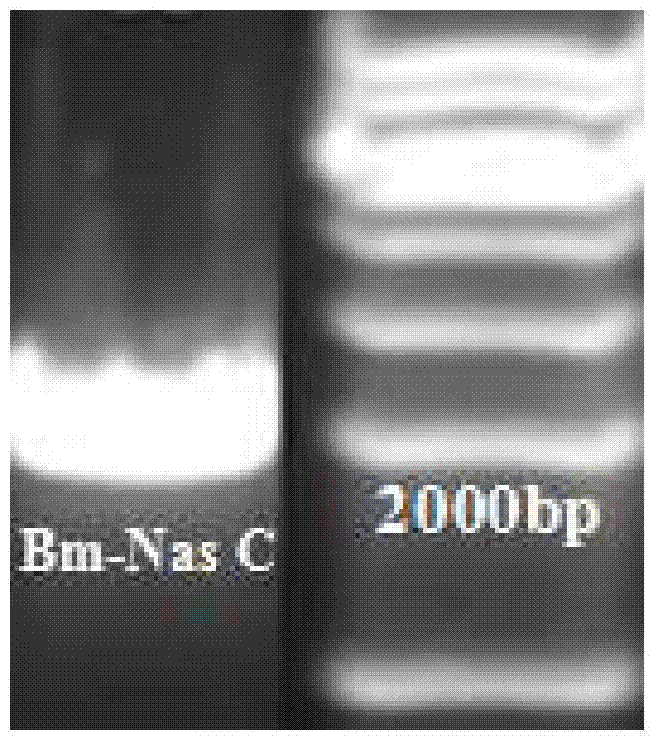
Figure 1 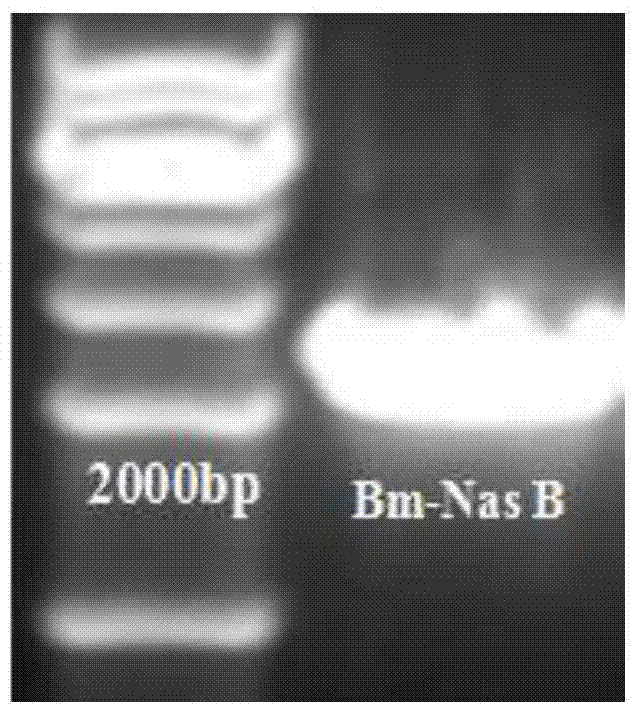
Figure 2 
Figure 3
Abstract
Description
technical field
[0001] The present invention relates to a method in the technical field of genetic engineering, specifically a nitrate reductase catalytic-electron transfer subunit gene sequence, a recombinant vector containing the gene, a recombinant bacterium, and the expression of the gene produced by the recombinant bacterium products and their applications. Background technique
[0002] With the development of facility agriculture, the cultivation area continues to expand, and the use of nitrogen fertilizers has increased significantly, greatly exceeding the demand of plants. Because the nitrate in the soil is not absorbed and transformed by the plants in time, a large amount of salt accumulates in the plants and the soil, resulting in secondary salinization of the protected cultivation soil.
[0003] Studies have shown that HCO removal in protected cultivation secondary salinized soil 3 - Outside, Na + 、K + , Ca 2+ , Mg 2+ , Cl - , SO 4 2- , NO 3 - have dif...
Examples
Embodiment 1
[0020] Cultivation of Bacillus megaterium NCT-2
[0021] Bacillus megaterium NCT-2 was isolated from a greenhouse cultivated in Chongming Island, Shanghai for 12-15 years. The preservation number is CGMCC NO.4698. No. 3, No. 1 Yard, Beichen West Road, District, Institute of Microbiology, China; date of preservation is March 21, 2011. The bacteria were inoculated in LB liquid medium and cultured at 32°C for OD 600 To about 1.5, the bacteria were collected by centrifugation and used to extract the genomic DNA of the bacteria.
[0022] The components of the LB liquid medium are: 10 g of peptone, 5 g of yeast extract, 10 g of NaCl, 1 L of deionized water, and pH 6.8-7.2. LB solid medium is 15-20g agar added on the basis of LB liquid medium.
Embodiment 2
[0024] Sequence verification of nitrate reductase catalytic subunit gene (Bm-Nas B)
[0025] According to the results of whole genome sequencing, design PCR primers:
[0026] Forward primer Nas B-F: 5′-ATGACGAAACAAAAGCTAATATTAA-3′
[0027] Reverse primer Nas B-R: 5′-TATAATAAATATGTGATTGCACGAG-3′
[0028] Using the genomic DNA of Bacillus megaterium NCT-2 as a template, the above two pairs of primers were used for amplification. The PCR conditions were: pre-denaturation at 94°C for 5 min; denaturation at 94°C for 45 s, annealing at 53°C for 30 s, extension at 72°C for 90 s; and final extension at 72°C for 10 min after 30 cycles.
[0029] The PCR amplification product was detected by electrophoresis, and the result showed that the obtained fragment was about 2.4kb; then the PCR product was gel-cut and recovered, connected to the pMD19-T vector and sent to the company for sequencing. The nucleotide sequence obtained after sequencing is consistent with the genome sequencing resu...
Embodiment 3
[0031] Sequence verification of nitrate reductase electron transfer subunit gene (Bm-Nas C)
[0032] According to the results of whole genome sequencing, design PCR primers:
[0033] Forward primer Nas C-F: 5′-ATGACTGAGATGCTATTGAAATATT-3′
[0034] Reverse primer Nas C-R: 5′-TAATAGCTGCTTCTTTTTACAGAAG-3′
[0035] Using the genomic DNA of Bacillus megaterium NCT-2 as a template, the above two pairs of primers were used for amplification. The PCR conditions were: pre-denaturation at 95°C for 3 min; denaturation at 95°C for 30 s, annealing at 53°C for 30 s, extension at 72°C for 75 s; and final extension at 72°C for 10 min after 30 cycles.
[0036] The PCR amplification product was detected by electrophoresis, and the result showed that the obtained fragment was about 2.1kb; then the PCR product was gel-cut and recovered, connected to the pMD19-T vector and sent to the company for sequencing. The nucleotide sequence obtained after sequencing is consistent with the genome sequenc...