
Sequences of primer for identifying fusarium solani and/or fusarium oxysporum, kit and method thereof
A technology for Fusarium solanacearum and Fusarium oxysporum, which is applied in the field of molecular biology and can solve the problems of identification failure and different quantities.
Patent Information
- Authority / Receiving Office
- CN · China
- Patent Type
- Applications(China)
- Current Assignee / Owner
- Publication Date
- 2015-01-07
Smart Images
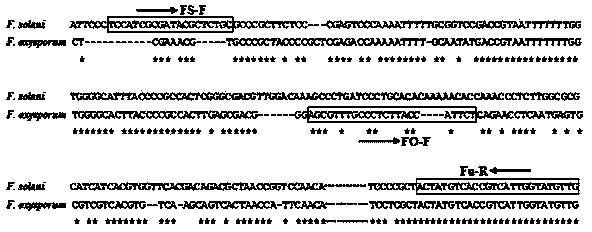
Figure 1 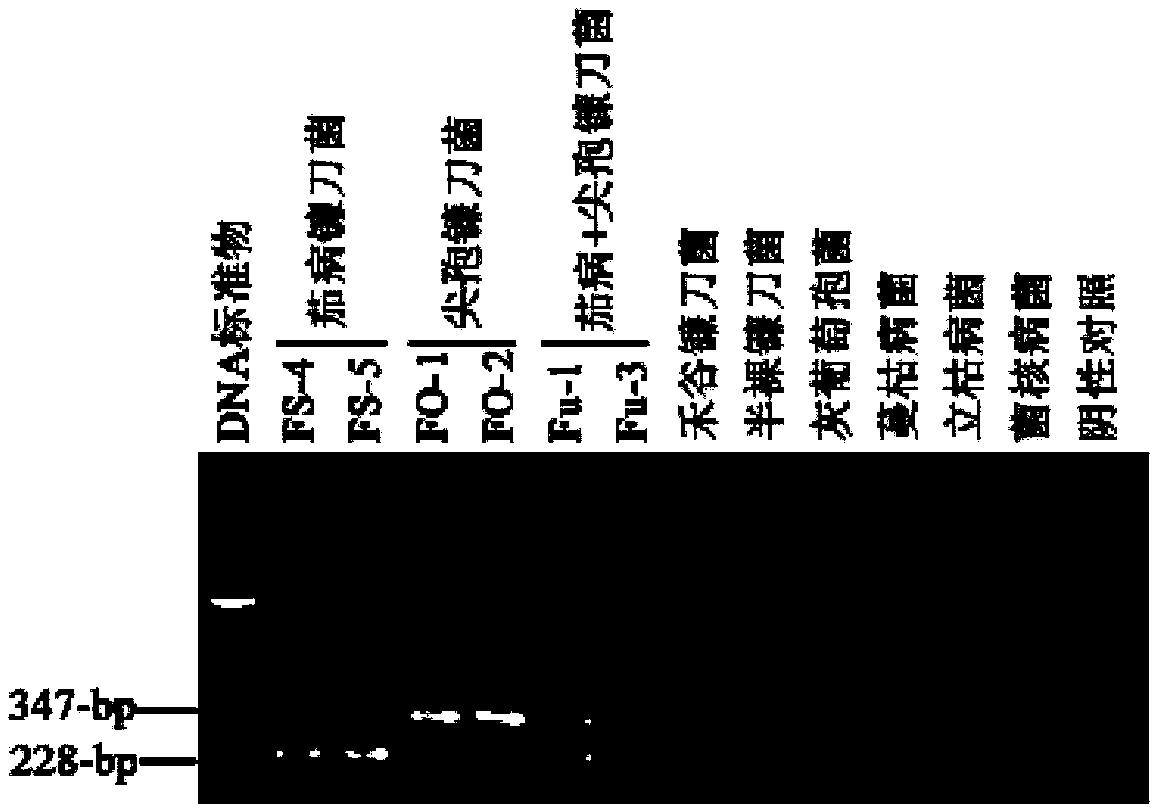
Figure 2 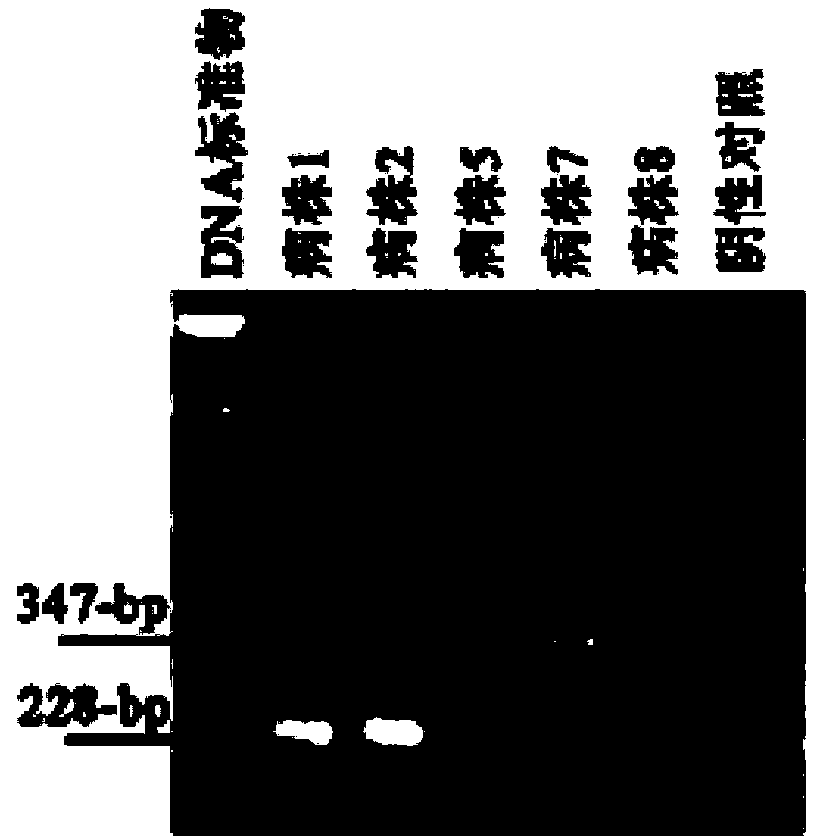
Figure 3
Abstract
Description
technical field
[0001] The invention relates to the field of molecular biology, and develops a primer sequence, a kit and an identification method capable of rapidly identifying Fusarium solani or / and Fusarium oxysporum. Background technique
[0002] Fusarium wilt of melons is a worldwide soil-borne vascular disease, which poses a serious threat to the yield and quality of melons. The loss rate of continuous cropping plots reaches more than 30%, and serious plots even fail. Melon wilt is caused by Fusarium oxysporum, which can be divided into seven specialized types according to different hosts on melons. The pathogen can survive on soil and plant residues for a long time, and can occur throughout the growth period of the plant. Once the disease occurs, it is difficult to eradicate, and the application of chemical agents is also difficult to achieve the effect of disease control. With the rapid development of protected sweet melon production, melon root rot has gradually be...
Examples
Embodiment Construction
[0026] The present invention is illustrated in detail below through specific embodiments, but the present invention is not limited to the following examples.
[0027] Strain Selection
[0028] 2 Fusarium solani FS-4 and FS-5, 2 F. oxysporum FO-1 and FO-2, F. graminearum, Fusarium half-naked (F. semimitectum), Botrytis cinerea, Didymella bryoniae, Rhizoctonia solani and Sclerotinia sclerotiorum.
[0029] The above-mentioned strains are all preserved in the Vegetable Research Institute of Ningbo Academy of Agricultural Sciences, and can also be obtained from diseased strains such as melons by means of isolation and purification of pathogenic fungi. And the laboratory can generally be separated.
[0030] DNA extraction
[0031] Among the present invention, Fusarium solani, Fusarium oxysporum and other pathogenic fungi all adopt the easy and fast mycelium DNA extraction method, and concrete operation steps are as follows:
[0032] Use a sterilized toothpick to scrape about 100...