
Electromagnetic Balance Accelerometer
An acceleration sensor, balanced technology, applied in the direction of acceleration measurement using inertial force, etc., can solve the problems of poor impact resistance of flexible pendulum acceleration sensor, support body is easily affected by resistance, etc., to achieve no inter-axis interference, anti The effect of high impact performance and high zero position stability
Patent Information
- Authority / Receiving Office
- CN · China
- Patent Type
- Patents(China)
- Current Assignee / Owner
- Publication Date
- 2016-09-14
- Estimated Expiration
- Not applicable · inactive patent
Smart Images
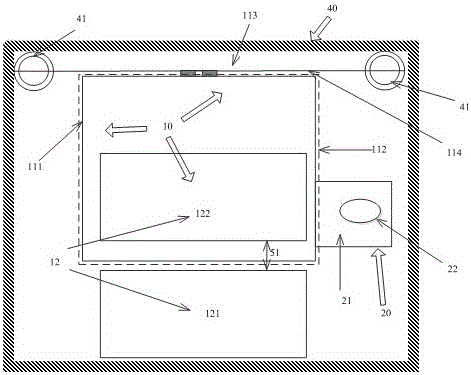
Figure 1 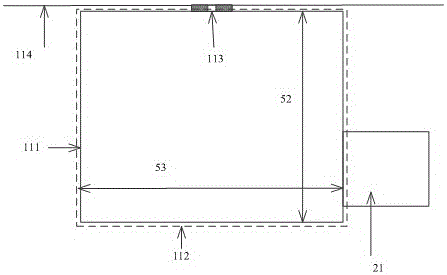
Figure 2 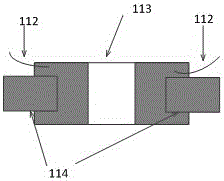
Figure 3
Abstract
Description
technical field
[0001] The invention relates to an acceleration sensor, in particular to a closed-loop feedback control suspension wire supporting electromagnetic balance acceleration sensor based on differential displacement detection. Background technique
[0002] Traditional acceleration sensors are divided into piezoelectric, piezoresistive, capacitive, pendulum and so on. The piezoelectric acceleration sensor is a self-generating sensor, the output charge is proportional to the input acceleration, the relative size is small, and the life is long, but the signal needs to be greatly amplified, the sensor body is easily affected by temperature, and the zero bias is not ideal; The resistive type requires an external power supply to provide excitation, the measurement frequency can be as low as 0HZ, it can withstand high impact and has no zero bias, but the minimum resolution is relatively unsatisfactory; the capacitance area of the capacitive acceleration sensor is limite...
Examples
Embodiment Construction
[0017] Below in conjunction with accompanying drawing, the work of the present invention is described in detail.
[0018] Such as figure 1 Shown is the top view of the electromagnetic balance acceleration sensor of the present invention. The electromagnetic balance acceleration sensor includes: a torquer stator (12) composed of permanent magnet groups (121, 122), a coil slot (111), a mover coil (112), a wiring board (113), a foil wire (114) and a displacement metal The torquer mover (11) composed of sheet (21), the torquer stator (12) and the torquer mover (11) form the torquer system (10). A signal sensing system (20) composed of a displacement metal sheet (21), a sensing coil (22) and a sinusoidal excitation signal generating circuit (23), a servo amplification system (30), and an external support structure (40). The permanent magnet groups (121, 122) are directly fixed on the external support structure (40) through the magnet fixing frame, and a distance (51) as small as ...