
A kind of synthetic method of aluminum-containing polycarbosilane
A technology of polycarbosilane and a synthesis method, which is applied to the synthesis field of aluminum-containing polycarbosilane, can solve the problems of inability to perform according to the set metering, unfavorable fiber properties, unfavorable non-melting and the like, and is suitable for large-scale production and technological operation. Simple, highly reactive effects
Patent Information
- Authority / Receiving Office
- CN · China
- Patent Type
- Patents(China)
- Current Assignee / Owner
- Publication Date
- 2016-09-21
Smart Images
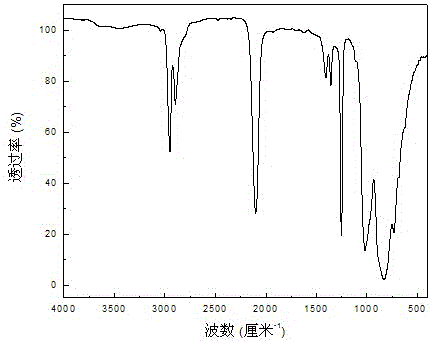
Figure 1 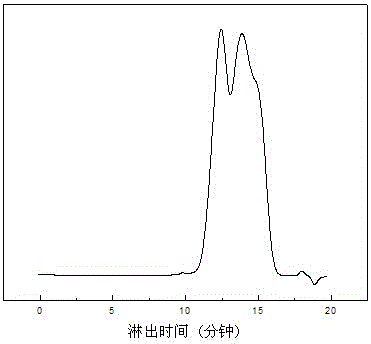
Figure 2 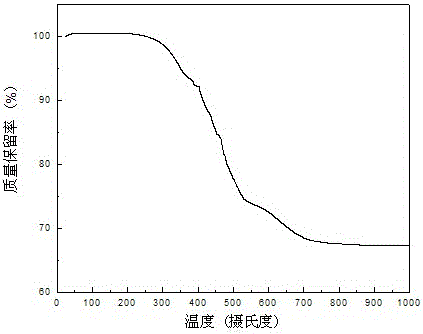
Figure 3
Abstract
Description
technical field
[0001] The invention relates to a synthesis method of aluminum-containing polycarbosilane, in particular to a synthesis method of aluminum-containing polycarbosilane with low oxygen content. Background technique
[0002] The development of high-tech fields such as aerospace, weapons, and energy has put forward an urgent demand for composite materials of thermal structural materials. High-performance ceramic fibers are key raw materials for thermal structural material composites. Among them, silicon carbide (SiC) fibers have received great attention due to their excellent high temperature resistance, high strength, high modulus, and oxidation resistance.
[0003] Organic precursor conversion method is the main method to prepare SiC fibers. The organic precursor conversion method is a method in which an organic polymer is used as a precursor, and after being molded using its soluble and fusible properties, it is then transformed from an organic material into ...
Examples
Embodiment 1
[0033] (1) Put 100 g polycarbosilane in a flask, vacuumize the reaction system, replace the gas in the reaction system with nitrogen to normal pressure, repeat 3 times, add 200 mL xylene to dissolve, and obtain component a; (2 ) Under the protection of a nitrogen atmosphere, add 30 mL of a commercially available heptane solution dissolved in 0.9 mol / L dimethylaluminum chloride to component a obtained in step (1) at room temperature, stir, and heat up to 145 °C, The reaction time is 8 h to obtain component b; (3) Program the temperature of component b obtained in step (2) to 420 °C, keep it warm for 2 h, 350 °C, -0.1 MPa, distill under reduced pressure for 2 h, cool to room temperature, That is, 72.5 g of aluminum-containing polycarbosilane was obtained.
[0034] The yield of aluminum-containing polycarbosilane was 72.5%, and the softening point of the product was 218.8 ℃; the element composition was: Si: 49.01 wt%, C: 42.03 wt%, Al: 1.10 wt%, O: 1.36 wt%, H: 6.50 wt%.
[003...
Embodiment 2
[0039] (1) Put 100 g of polycarbosilane in a flask, vacuumize the reaction system, replace the gas in the reaction system with argon to normal pressure, repeat 3 times, add 250 mL of chloroform to dissolve, and obtain component a; (2) Under the protection of argon atmosphere, add 25 mL of commercially available heptane solution dissolved in 0.9 mol / L methyl ethyl aluminum bromide to the component a obtained in step (1) at room temperature, stir, and raise the temperature program to 145 °C, and the reaction time was 12 h, to obtain component b; (3) program the temperature of component b obtained in step (2) to 400 °C, keep it warm for 3 h, and 360 °C at -0.1 MPa, and distilled under reduced pressure for 1.5 h, After cooling to room temperature, 70.2 g of aluminum-containing polycarbosilane was obtained.
[0040] The yield of aluminum-containing polycarbosilane was 70.2%, and the softening point of the product was 212.3 ℃; the element composition was: Si: 49.66 wt%, C: 41.33 wt%...