

Alcohol ether phosphate and preparation method thereof and trace cutting fluid prepared by same
A technology of alcohol ether phosphate ester and cutting fluid, which is applied in the field of lubrication, can solve the problems of affecting the health of operators, wasting resources, and using a large amount of lubricants, etc., achieves remarkable environmental protection effects, suppresses the generation of foam, and increases the amount of lubricating oil sexual effect
Patent Information
- Authority / Receiving Office
- CN · China
- Patent Type
- Applications(China)
- Current Assignee / Owner
- Publication Date
- 2015-06-17
Smart Images
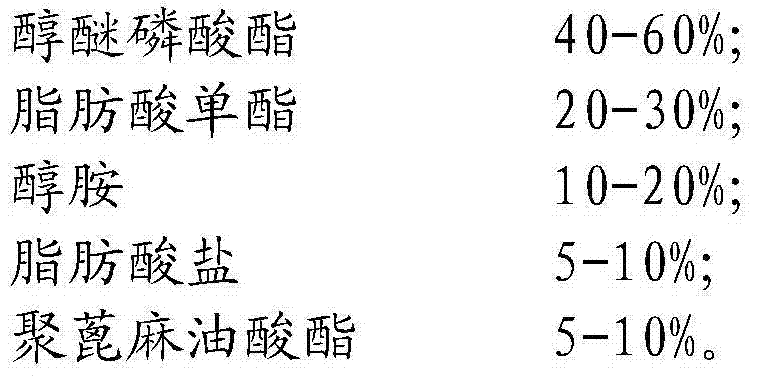
Figure 1 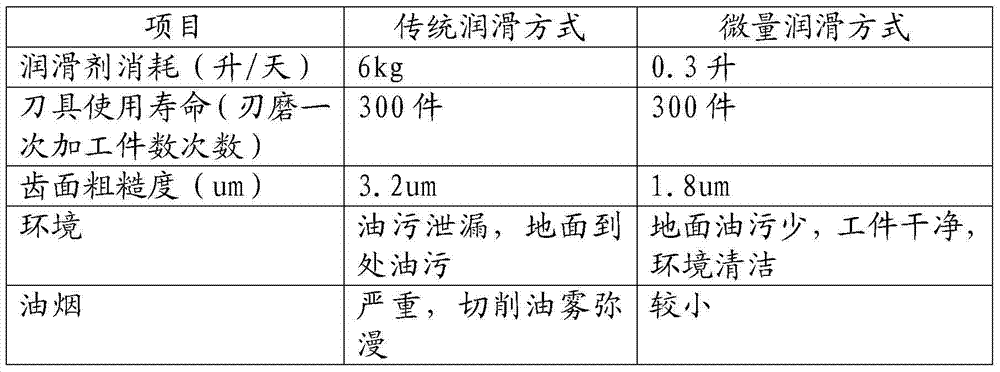
Figure 2 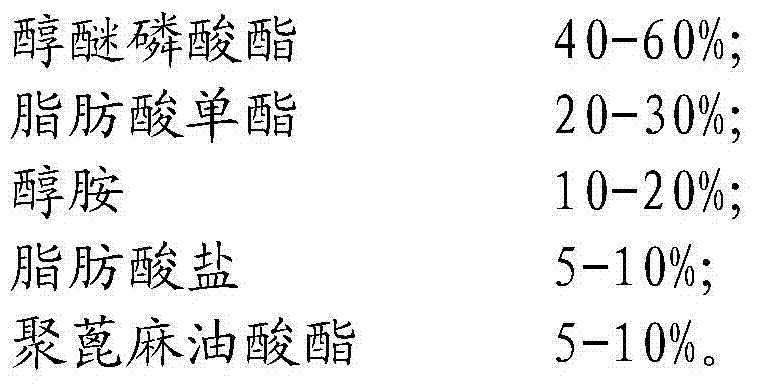
Figure 3
Abstract
Description
technical field
[0001] The invention belongs to the technical field of lubrication, and relates to an alcohol ether phosphate ester, a preparation method thereof, and a micro cutting fluid prepared by using the ester. Background technique
[0002] The traditional metal cutting process uses mineral oil or vegetable oil or cutting fluid for a large amount of shower lubrication. The amount of lubricant used is large, which not only wastes resources, but also causes huge pollution to the processing site and the environment, and also seriously affects the health of the operators. In order to solve these problems, some progress has been made in the research of micro-quantity lubrication technology recently. The micro-quantity lubrication technology has solved the above problems such as large amount of lubricant used and serious pollution. The main problem is that the lubrication and cooling problems cannot be solved well.
[0003] In addition, micro lubricants often need to add a...
Examples
Embodiment 1
[0042] Step 1: Take by weighing 186.38kg (1000mol) of lauryl alcohol and 5.5kg potassium hydroxide (50%) in the solution reaction kettle, fill with nitrogen to convert the air in the reaction kettle, when the nitrogen in the polymerization kettle maintains positive pressure, use nitrogen to enter Push the mixture of 308.35kg (7000mol) ethylene oxide and 58.08kg (1000mol) propylene oxide into the reaction kettle while stirring to raise the temperature to 120°C and keep the reaction temperature not exceeding 120°C. The reaction time is 6 hours, which is Polyoxyethylene Laureth(7) Polyoxypropylene(1) Ether.
[0043] Step 2. After the reaction of lauryl alcohol polyoxyethylene (7) polyoxypropylene (1) ether in the above reaction kettle is completed, slowly add 70.97kg (500mol) of phosphorus pentoxide and stir to keep the reaction temperature not exceeding 150°C , After another 3 hours of reaction, decompress and discharge the water, which is polyoxyethylene lauryl alcohol (7) poly...
Embodiment 2
[0049] Step 1: Weigh 268.49kg (1000mol) of oleyl alcohol and 12kg of sodium hydroxide (30%) solution in the reaction kettle, fill with nitrogen to convert the air in the reaction kettle, when the nitrogen in the polymerization kettle maintains positive pressure, feed with nitrogen Push the mixture of 396.45kg (9000mol) ethylene oxide and 116.16kg (2000mol) propylene oxide into the reactor, while stirring and raising the temperature to 120°C, keeping the reaction temperature not exceeding 120°C. The reaction time is: 7 hours, which is the oil Alcohol polyoxyethylene (9) polyoxypropylene (2) ether.
[0050]Step 2. After the reaction of oleyl alcohol polyoxyethylene (9) polyoxypropylene (2) ether in the above reaction kettle is completed, slowly add 113.55kg (800mol) of phosphorus pentoxide and stir to keep the reaction temperature not exceeding 150°C , After reacting for another 4 hours, depressurize and discharge the water, which is oleyl alcohol polyoxyethylene (9) polyoxyprop...
Embodiment 3
[0055] Step 1: Weigh 298.55kg (1000mol) of peanut alcohol and 7kg potassium hydroxide (50%) solution in the reaction kettle, fill with nitrogen to convert the air in the reaction kettle, when the nitrogen in the polymerization kettle maintains positive pressure, feed with nitrogen Push the mixture of 440.5kg (10000mol) ethylene oxide and 116.16kg (2000mol) propylene oxide into the reactor, while stirring and raising the temperature to 120°C, keep the reaction temperature not exceeding 120°C, and the reaction time is: 6.5 hours, which is peanut Alcohol polyoxyethylene (10) polyoxypropylene (2) ether.
[0056] Step 2. After the reaction of arachidyl alcohol polyoxyethylene (10) polyoxypropylene (2) ether in the above reaction kettle is completed, slowly add 141.94kg (1000mol) of phosphorus pentoxide and stir to keep the reaction temperature not exceeding 150°C , After another 3.5 hours of reaction, depressurize and discharge the water, which is arachidyl alcohol polyoxyethylene ...