
Recombined Ad-TNFR2 shRNA adenoviridae and construction and application thereof
A technology of adenovirus and construction method, applied in application, virus/bacteriophage, drug combination, etc., can solve unclear problems
Patent Information
- Authority / Receiving Office
- CN · China
- Current Assignee / Owner
- Publication Date
- 2016-02-24
Smart Images
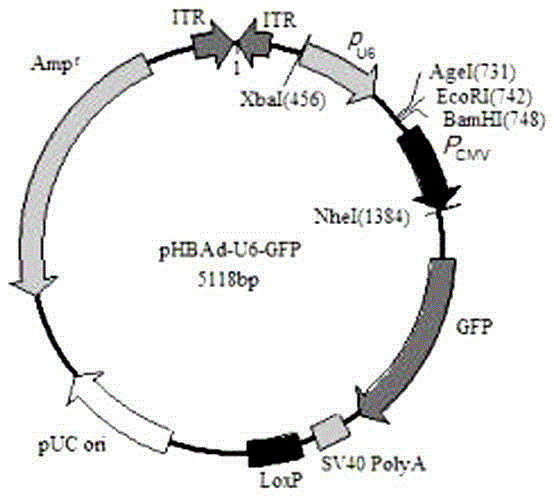
Figure 1 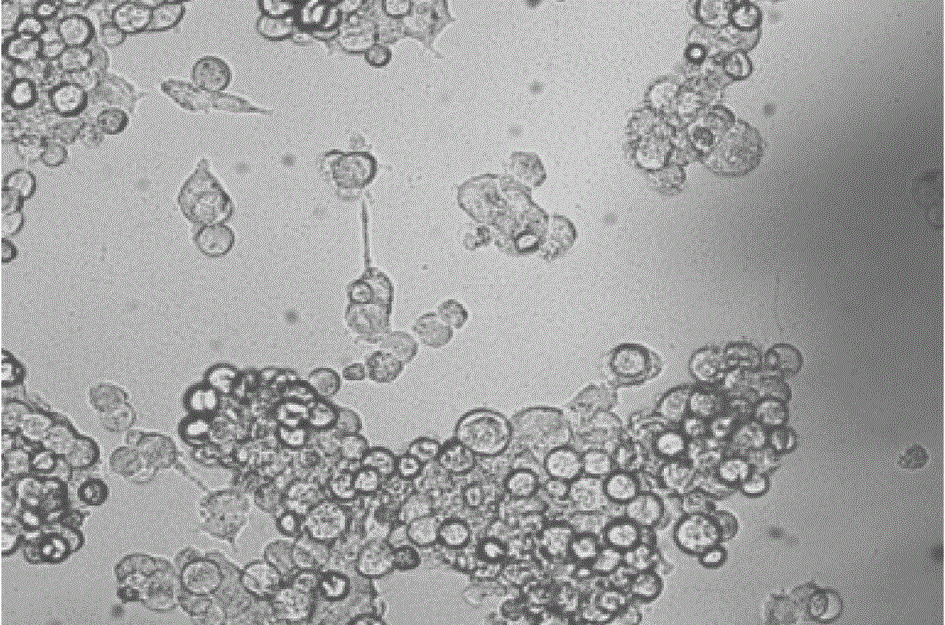
Figure 2 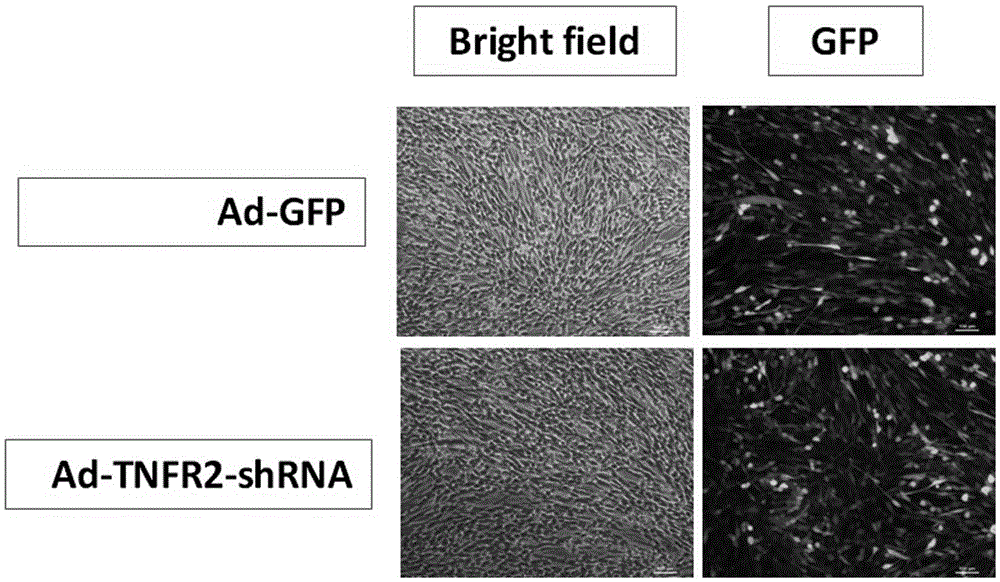
Figure 3
Abstract
Description
technical field
[0001] The invention belongs to the technical field of genetic bioengineering, and relates to the construction of an adenovirus, in particular to a recombinant adenovirus that interferes with the expression of TNFR2. Background technique
[0002] NMDA receptors are an important class of excitatory amino acid receptors in the central nervous system. They are ionotropic receptors and play an important role in synaptic plasticity and excitotoxicity.
[0003] NMDA receptors are heterotetramers composed of NR1, NR2, and NR3 subunits, each of which is distributed differently in the central nervous system. It is generally believed that NR1 is an essential subunit of NMDA receptors, distributed in large quantities in the brain and spinal cord, and is necessary for the realization of its channel function. NMDA receptors not only play an important physiological role in the development of the nervous system, but also play a key role in the formation of neuronal circuit...
Examples
Embodiment 1
[0022] Design the siRNA sequence that interferes with the expression of TNFR2, specifically: 5'-ttgacacccctacaagccagaa-3'.
[0023] The shRNA expression sequence containing the above siRNA was artificially synthesized, the sense strand and the antisense strand of the above siRNA were connected through a loop of 7 bases, and BamHI and EcoRI restriction sites were respectively introduced at both ends of the sequence.
[0024] Topstrand (62bp):
[0025] 5'-AATTCGttgacaccctacaagccagaaTGTGCTTttctggcttgtagggtgtcaaTTTTTTg-3';
[0026] Bottomstrand (62bp):
[0027] 5'-GATCCAAAAAAttgacaccctacaagccagaaAAGCACAttctggcttgtagggtgtcaaCg-3'.
[0028] The above-mentioned complementation utilizes 3' and 5' single-strand annealing to obtain the double-strand expression template annealing product of the corresponding target fragment shRNA. The annealing procedure is:
[0029] System: 20μl;
[0030] 10×Buffer2μl;
[0031] 100mM Tris-Cl pH7.5;
[0032] 1M NaCl;
[0033] 10mM EDTA;
[0034]...
Embodiment 2
[0052] Take 2ml of the adenovirus shuttle plasmid bacterial solution in the logarithmic growth phase prepared in Example 1, add it to 100ml LB medium containing 100μg / ml Amp, shake the bacteria overnight at 37°C and 300rpm, and extract the plasmid with the Kangwei Century Zhongli Plasmid Kit .
[0053] The day before transfection, 293 cells were inoculated in 60 mm culture dishes, the medium was DMEM+10% Hyclon fetal bovine serum, and placed at 37°C with 5% CO 2 cultured overnight in an incubator.
[0054] When the cells grow to 70-80% of the bottom area, take the recombinant adenovirus vector plasmid TNFR2shRNA and the backbone plasmid pHBAd-BHG, and use Lipofiter TM Lipofectamine (Hanbio) transfection reagent was used for transfection.
[0055] The specific steps are:
[0056] a. Replace the complete medium 2 hours before transfection. Take 2 μg of recombinant adenovirus vector plasmid TNFR2shRNA and 4 μg of backbone plasmid pHBAd-BHG, dilute with 300 μl of DMEM medium,...
Embodiment 3
[0066] Infection of recombinant Ad-TNFR2shRNA adenovirus to rat PC12 cells and verification by westernblot.
[0067] At a density of 2×10 5 Plant the MEF cell line into a 6-well plate. After the cells grow to 60% confluence, they are infected with Ad-GFP and Ad-TNFR2shRNA adenovirus, respectively, at 37°C and 5% CO 2 Cultivate in the incubator for 2 hours, replace the culture medium, and observe the fluorescent expression of GFP under a fluorescent microscope after culturing for 36 hours. The results are as follows: image 3 shown.
[0068] Collect the cells, wash them 3 times with PBS, scrape the cells with a scraper, transfer them into EP tubes, centrifuge at 1000rpm for 3 minutes, discard the supernatant, freeze the cell pellets with liquid nitrogen and store them in a -8°C refrigerator. Take out the cells from the -80°C refrigerator, add 500 μl RIPA Complete Lysis Solution, lyse on ice for 2 hours, centrifuge at 12,000 rpm for 30 minutes, collect the supernatant, and dis...