
Preparation method of ultraviolet light absorber UV-P
A UV-P and absorbent technology, applied in organic chemistry and other directions, can solve the problems of inaccuracy, increased workload, manual control in batch mode, etc., to increase safety performance, reduce pollution, and avoid excessive reaction speed. Effect
Patent Information
- Authority / Receiving Office
- CN · China
- Patent Type
- Applications(China)
- Current Assignee / Owner
- Publication Date
- 2016-09-07
Smart Images
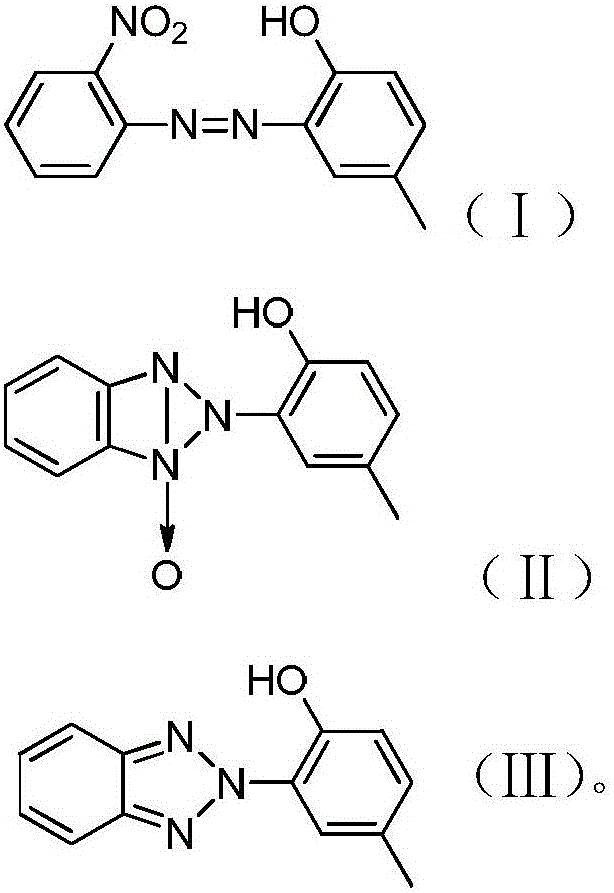
Figure 1 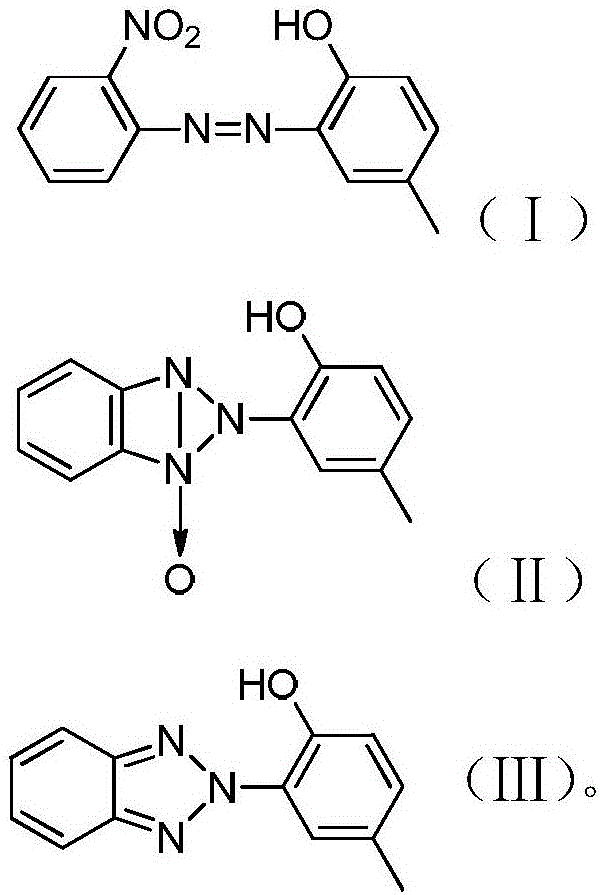
Figure 2
Abstract
Description
technical field
[0001] The present invention relates to a kind of preparation method of ultraviolet absorber, more specifically, it relates to a kind of preparation method of ultraviolet absorber UV-P. Background technique
[0002] The existing synthesis methods of benzotriazole ultraviolet absorbers mainly use azobenzene compounds as raw materials and carry out reduction according to different reduction processes. According to different reducing agents used, the reduction of benzotriazole compounds can be divided into one-step method and two-step method. The so-called one-step method is to use a reducing agent to reduce the azo dye to the product, and the so-called two-step method is to use a reducing agent to reduce the dye to nitrogen oxides. According to the situation, the nitrogen oxides can be separated or not separated, and then The nitrogen oxide intermediate is reduced to the final product with another reducing agent.
[0003] A large number of experiments have sh...
Examples
Embodiment 1
[0037] ①According to the weight ratio, aluminum powder:adsorbent=0.5:1, add metal powder and coke to the double-helix mixer and mix evenly;
[0038] ② Press molding;
[0039] ③Under nitrogen protection, control the temperature to 1200°C for sintering;
[0040] ④ Cooling with water and molding to obtain a reducing agent the size of soybean grains, with a diameter of 2mm.
Embodiment 2
[0042] ① According to the weight ratio, iron powder: adsorbent = 2: 1, add metal powder and clay to the double-helix mixer and mix evenly;
[0043] ② Press molding;
[0044] ③Under nitrogen protection, control the temperature to 700°C for sintering;
[0045] ④ Cooling with water and molding to obtain a reducing agent the size of soybean grains with a diameter of 6mm.
Embodiment 3
[0047] ① According to the weight ratio, zinc powder: adsorbent = 1.5: 1, add metal powder and coke to the double-helix mixer and mix evenly;
[0048] ② Press molding;
[0049] ③Under nitrogen protection, control the temperature to 900°C for sintering;
[0050] ④ Cooling with water and molding to obtain a reducing agent the size of soybean grains, with a diameter of 10mm.