
Resource allocation method based on clustering in femtocell double-layer network
A resource allocation and two-layer network technology, applied in network planning, advanced technology, electrical components, etc., can solve problems such as unbalanced number of femtocells, difficulty in finding a grouping scheme, and inability to allocate subchannels
Patent Information
- Authority / Receiving Office
- CN · China
- Current Assignee / Owner
- Publication Date
- 2016-12-14
Smart Images
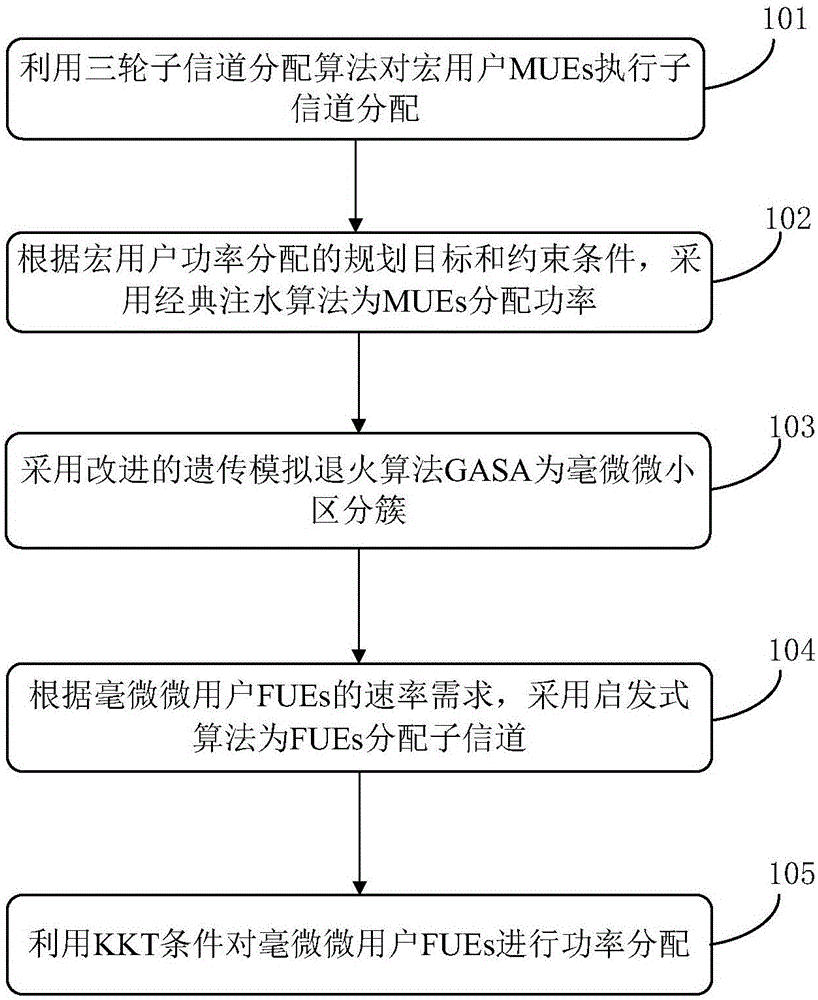
Figure 1 
Figure 2 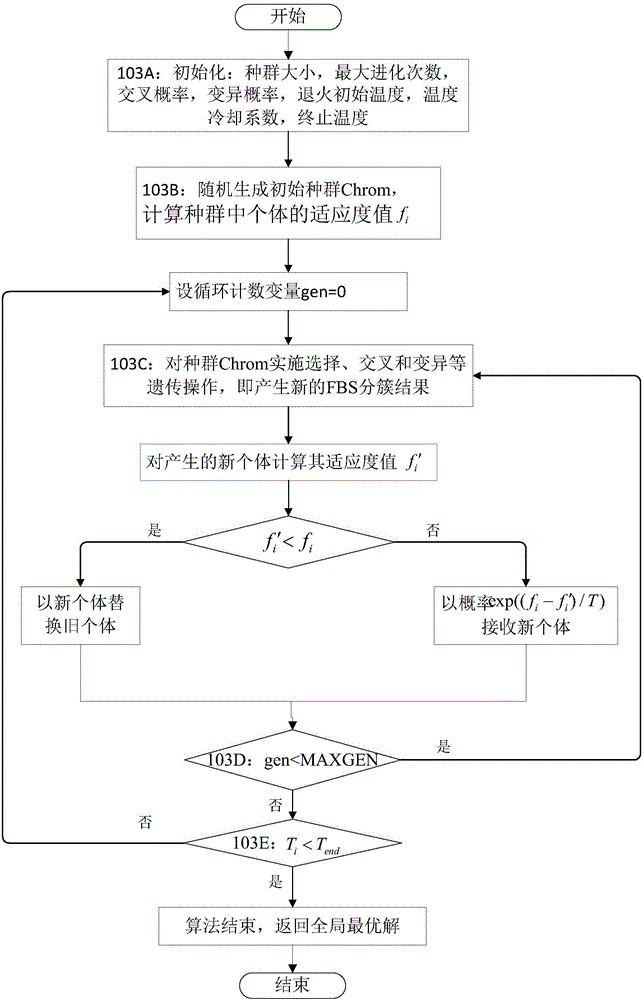
Figure 3
Abstract
Description
technical field
[0001] The invention relates to the technical field of wireless communication, in particular to a resource allocation method based on clustering in a femtocell Femtocell double-layer network. Background technique
[0002] and the third generation (the 3 rd Generation, 3G) mobile communication system, long-term evolution (Long TermEvolution, LTE) system has improved spectrum frequency utilization, but its path loss has increased compared with 3G system, so LTE system cannot provide good indoor cover. Studies have shown that nearly 90% of data services and 60% of voice services occur indoors and hot spots. Therefore, how to provide good indoor coverage and provide users with satisfactory service quality is an urgent problem for operators to solve.
[0003] Femtocells are introduced into the coverage area of traditional macrocells to form a Femtocell double-layer network, which has become an effective measure to solve the technical problems of indoor wirele...
Examples
Embodiment Construction
[0045] In order to express the object, technical solution and advantages of the present invention more clearly, the present invention will be further described in detail below in conjunction with the accompanying drawings and specific implementation cases.
[0046] figure 1 The flow chart of a preferred embodiment of the resource allocation method based on clustering in the Femtocell double-layer network of the present invention, the method includes the following steps:
[0047] Step 101: performing sub-channel allocation for macro user MUEs using a three-round sub-channel allocation algorithm;
[0048] Step 102: According to the planning objectives and constraints of macro user power allocation, adopt the classic water filling algorithm to allocate power for MUEs;
[0049] Step 103: using the improved genetic simulated annealing algorithm GASA to cluster the femto base stations FBSs;
[0050] Step 104: according to the rate requirement of FUEs of femto users, perform subcha...