
Preparation method of a mesoporous hollow nitrogen-doped carbon-coated copper nanocatalyst
A nano-catalyst, hollow technology, applied in catalyst activation/preparation, preparation of organic compounds, chemical instruments and methods, etc., can solve the problems of hindering the entry and exit of reactants, restricting catalytic activity, etc. The effect of good stability
Patent Information
- Authority / Receiving Office
- CN · China
- Patent Type
- Patents(China)
- Current Assignee / Owner
- Publication Date
- 2019-01-22
Smart Images
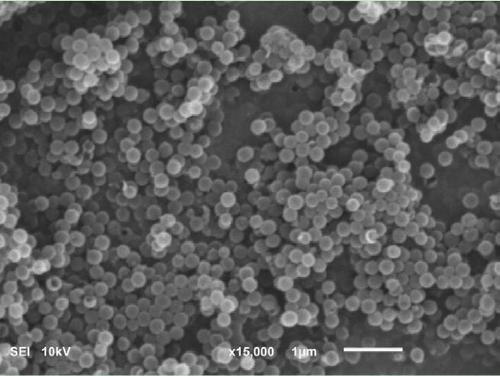
Figure 1 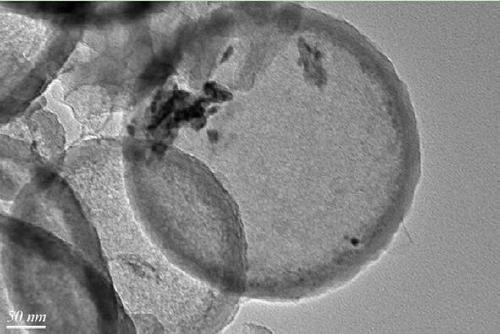
Figure 2 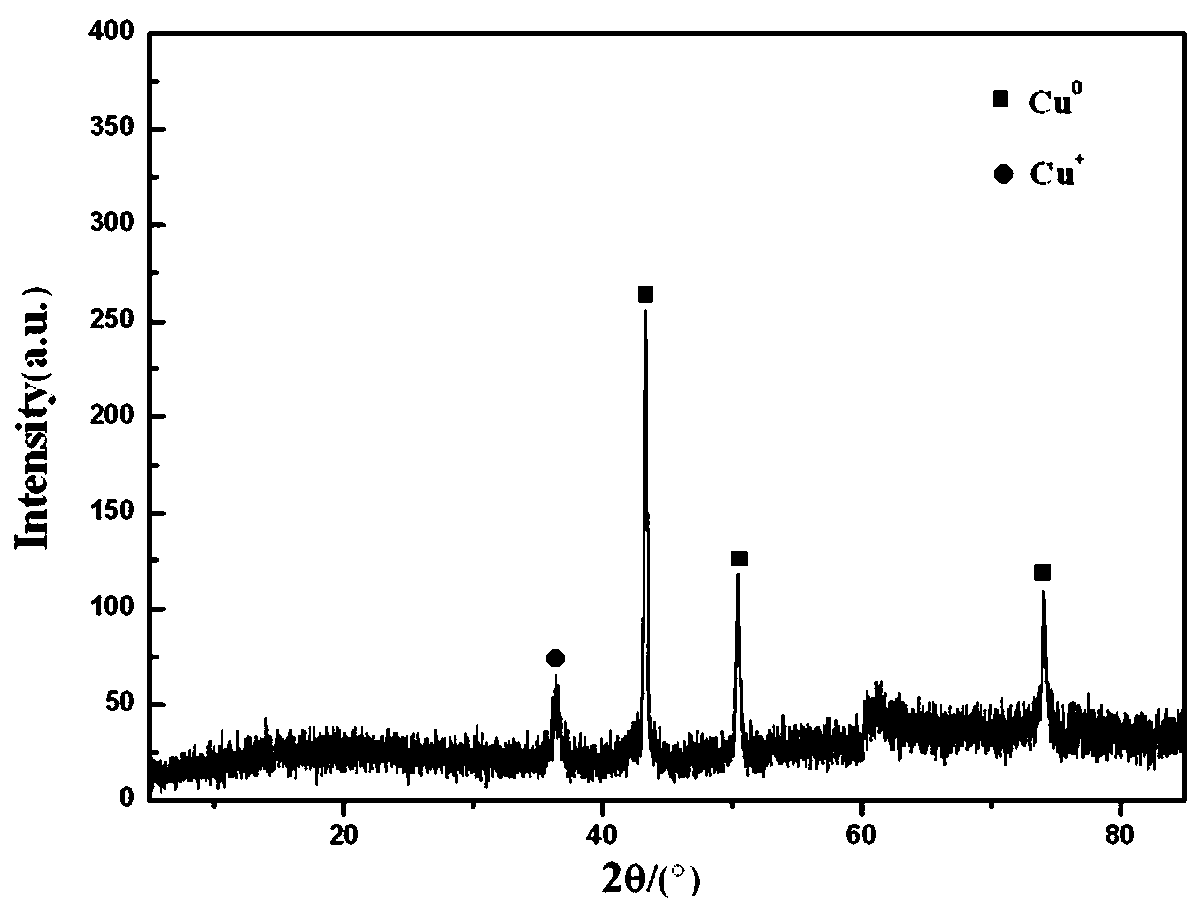
Figure 3
Abstract
Description
technical field
[0001] The invention belongs to the field of carbon-based composite material preparation, in particular to a method for preparing a mesoporous hollow nitrogen-doped carbon-coated copper nano-catalyst, which can be used to catalyze the oxidative carbonylation of methanol to prepare dimethyl carbonate. Background technique
[0002] Dimethyl carbonate (DMC) is a downstream product of methanol and has a wide range of uses. Compared with various preparation methods, methanol oxidative carbonylation method has become a research hotspot in recent years because of its low production cost, high selectivity, and low corrosion to equipment.
[0003] In the catalyst research of methanol oxidative carbonylation reaction, we proposed a composite material of hollow carbon spheres coated with copper nanoparticles. On the one hand, the barrier effect of the carbon layer is used to limit the agglomeration of active components. specific microenvironment.
[0004] Copper nanoc...
Examples
Embodiment Construction
[0019] The chemical material used in the present invention is: deionized water, ammonia water, copper sulfate, cetyltrimethylammonium bromide (CTAB), polyvinylpyrrolidone (PVP), pyrrole, styrene, azobisisobutyronitrile (AIBN), potassium persulfate, hydrazine hydrate, high-purity nitrogen, high-purity hydrogen, the preparation dosage is as follows: in grams, milliliters, centimeters 3 as a unit of measurement
[0020] Deionized water: H 2 O Liquid 3000ml±50ml
[0021] Ammonia:NH 3 •H 2 O Liquid 6 ml±0.1 ml
[0022] Pyrrole: C 4 h 5 N liquid 3 ml±0.1 ml
[0023] Styrene:C 8 h 8 Liquid 9ml±0.1ml
[0024] Hydrazine hydrate: H 6 N 2 O Liquid 280 µl±0.1 µl
[0025] Azobisisobutyronitrile: C 8 h 12 N 4 Solid 1 g±0.001 g
[0026] Potassium persulfate: K 2 S 2 o 8 Solid 1 g±0.001 g
[0027] Copper Sulfate: CuSO 4 • 5H 2 O solid 2 g±0.001 g
[0028] Hexadecyltrimethylammonium bromide: C1 9 h 42 BrN solid 1 g±0.001 g
[0029] Polyvinylpyrrolidone: (C 6 h 9...