

Method for preparing trans-4-amino-1-cyclohexane carboxylic acid and derivatives thereof
A reaction and compound technology, applied in the field of preparation of trans-4-amino-1-cyclohexanecarboxylic acid derivatives, can solve problems such as spontaneous combustion behavior, reduced attractiveness of industrial production, and difficulty in isolating products
Patent Information
- Authority / Receiving Office
- CN · China
- Patent Type
- Patents(China)
- Current Assignee / Owner
- Publication Date
- 2021-01-26
Smart Images
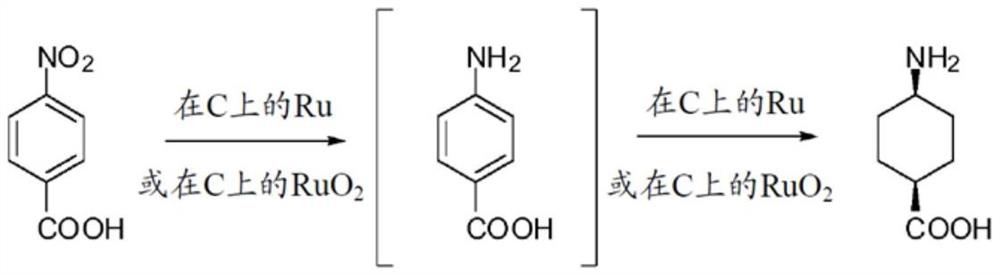
Figure 1 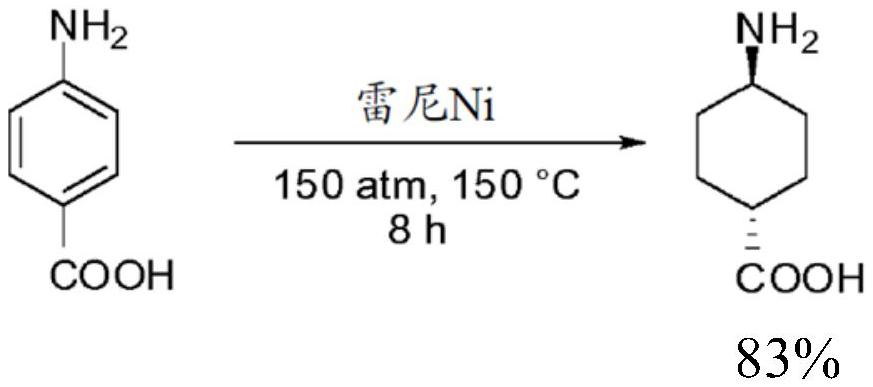
Figure 2 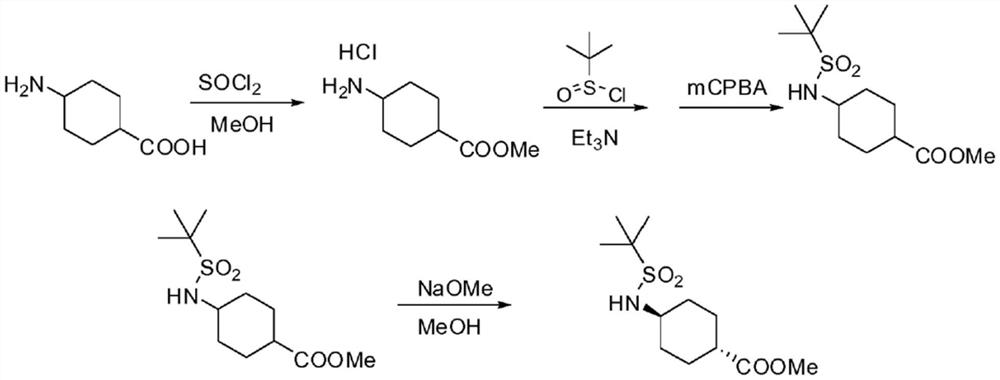
Figure 3
Abstract
Description
[0001] The present invention relates to a process for the preparation of trans-4-amino-1-cyclohexanecarboxylic acid derivatives (also known as "trans products", "trans isomers" or "trans derivatives") and Its use in the preparation of active pharmaceutical ingredients. Background technique
[0002] Trans-4-amino-1-cyclohexanecarboxylic acid derivatives are useful intermediates in the synthesis of optically active compounds. For example, EP2384326 reports the use of trans-4-(tert-butoxycarbonyl)amino-1-cyclohexanecarboxylic acid in the synthesis of Janus kinase inhibitors. It is also used in the synthesis of other useful active pharmaceutical ingredients, see WO9825897. The words "trans" or "cis" in the present invention relate to the relative configuration of the nitrogen and carboxylic acid moieties on the cyclohexane ring.
[0003] In addition, trans-4-amino-1-cyclohexanecarboxylic acid derivatives have been shown to be good substituents for daunorubicin and doxorubicin. ...
Examples
Embodiment 1
[0059] Preparation of 4-aminocyclohexane-1-carboxylic acid (cis / trans mixture) (1):
[0060] p-Aminobenzoic acid (10.0 g, 0.07 mol, 1 equiv), 5% Ru / C (2.50 g) and 10% NaOH (100.0 mL) were mixed in an autoclave. The mixture was stirred at 100° C. and 15 bar of hydrogen. After stirring for 20 hours, no starting material was observed on TLC (DCM / MeOH / NH 3 =5 / 5 / 1 (v / v / v); stain: ninhydrin). Complete conversion and cis:trans ratio = 1:4.6 according to NMR. Stop responding.
[0061] The table below gives a summary of the examples carried out according to the method described in Example 1.
[0062]
Embodiment 2
[0064] Preparation of 4-{[(tert-butoxy)carbonyl]amino}cyclohexane-1-carboxylic acid (cis / trans mixture) (2)
[0065] The catalyst from Example 1 was unfiltered. Acetone (327.3 mL, 30 volumes) and Boc anhydride (16.63 g, 0.07 mol, 1.0 equiv) were added. The reaction mixture was stirred at room temperature for 20 hours. Thereafter, TLC control (DCM / MeOH / NH 3 = 5 / 5 / 1 (v / v / v), lead to KMnO 4 (product sensitive) and ninhydrin (substrate sensitive)) only showed product, so the reaction was complete. The catalyst was filtered through celite and washed with 600 mL of the mixture (acetone / water=4 / 1 (v / v)). Acetone was evaporated under reduced pressure. The aqueous layer (pH=9) was extracted 3 times with dichloromethane (DCM) (3 x 75 mL). The aqueous solution was acidified to pH = 4 with 20 g of citric acid and extracted 5 times with DCM (5 x 100 mL). The combined organic layers were washed with Na 2 SO 4 After drying and filtering, the organic solution was evaporated and dried...
Embodiment 3
[0067] Isolation of trans-4-{[(tert-butoxy)carbonyl]amino}cyclohexane-1-carboxylic acid from its cis derivative
[0068] BOC-amino acid ((2) 12.99g, 0.05mol, 1.0 equivalent, cis: trans=1:3.6) and K 2 CO 3 (2 g, 0.06 mol, 1.2 eq relative to the cis content in (2)) were mixed and suspended in acetone (259 mL, 20.0 vol). Methyl bromide (1.93 mL, 2.82 g, 0.02 mol, 0.43 equiv (2.0 equiv calculated for the cis isomer content in the mixture)) was added to the reaction mixture with stirring. The reaction mixture was stirred at 60 °C for 3 hours. A white precipitate appeared. The reaction mixture was cooled to room temperature over 30 minutes, then stirred at -10°C for 1 hour. After this time, the precipitate was filtered and washed with 100 mL of acetone (cooled to -10°C). The precipitate was added to 200 mL of 20% citric acid and 100 mL of DCM. Multiple layers are separated. The aqueous layer was extracted 4 times with DCM (4 x 100 mL). The combined organic layers were washed...