
A kind of preparation method of porous ceramic membrane
A technology for porous ceramic membranes and preparation steps, which is applied in the field of preparation of porous ceramic membranes, and can solve problems such as poor bending strength and uneven pore size, and achieve the effects of increasing porosity, increasing porosity, and improving bending strength
Patent Information
- Authority / Receiving Office
- CN · China
- Patent Type
- Patents(China)
- Current Assignee / Owner
- Publication Date
- 2021-03-02
Smart Images
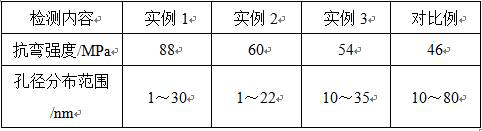
Figure 1
Abstract
Description
technical field
[0001] The invention discloses a preparation method of a porous ceramic membrane, which belongs to the technical field of inorganic non-metallic materials. Background technique
[0002] Inorganic membrane is a kind of membrane processed and formed on the basis of inorganic materials. Although it appeared later than organic polymer membrane, it develops very rapidly and has a very broad prospect. Due to the advent of a large number of inorganic membrane products and their industrial applications, they have partially replaced organic polymer membranes in industries such as water treatment, dairy products, and beverages. At present, a new breakthrough has been made in the preparation technology of inorganic membranes. A microporous ceramic membrane with a multilayer asymmetric structure has been developed by using sol-gel technology. The pore diameter can reach below 3nm. This membrane has reached the level of separating gases. Become a strong competitor of org...
Examples
example 1
[0022]Mix sodium silicate solution with a mass fraction of 18% and polyethylene glycol in a beaker at a mass ratio of 5:1, and adjust the pH of the material in the beaker to 10.0 with a mass fraction of 20% sulfuric acid. After curing for 40 minutes, continue to adjust the pH of the material in the beaker to 8.0 with 20% sulfuric acid by mass fraction, age for 50 minutes at a temperature of 85°C, and filter with suction to obtain a pretreated silica blank. After the silica blank was washed with water for 12 times, and dried for 3 hours at a temperature of 80°C, pretreated silica was obtained; the pretreated silica and distilled water were mixed in a flask at a mass ratio of 1:55, and the frequency was After ultrasonic dispersion at 65kHz for 30min, add a 25% titanyl sulfate solution with a mass fraction three times the mass of pretreated silica to the flask, and stir and mix for 2h at a temperature of 80°C and a rotational speed of 360r / min. Finally, the pretreated silica mixt...
example 2
[0024] Mix sodium silicate solution with a mass fraction of 18% and polyethylene glycol in a beaker at a mass ratio of 5:1, and adjust the pH of the material in the beaker to 10.0 with a mass fraction of 20% sulfuric acid. After curing for 40 minutes, continue to adjust the pH of the material in the beaker to 8.0 with 20% sulfuric acid by mass fraction, age for 50 minutes at a temperature of 85°C, and filter with suction to obtain a pretreated silica blank. After the silica blank was washed with water for 12 times, and dried for 3 hours at a temperature of 80°C, pretreated silica was obtained; in parts by weight, weigh in sequence: 35 parts of alumina powder, 10 parts of polyvinyl alcohol Butyral, 12 parts plasticizer, 12 parts tetraethyl orthosilicate, 15 parts fatty acid, 8 parts dispersant, 5 parts pH regulator, 6 parts surfactant, 18 parts pretreated silica and 60 parts ethanol , mix alumina powder and pretreated silica in a mixer, and add orthosilicate ethyl ester, pH reg...
example 3
[0026] Mix sodium silicate solution with a mass fraction of 18% and polyethylene glycol in a beaker at a mass ratio of 5:1, and adjust the pH of the material in the beaker to 10.0 with a mass fraction of 20% sulfuric acid. After curing for 40 minutes, continue to adjust the pH of the material in the beaker to 8.0 with 20% sulfuric acid by mass fraction, age for 50 minutes at a temperature of 85°C, and filter with suction to obtain a pretreated silica blank. After the silica blank was washed with water for 12 times, and dried for 3 hours at a temperature of 80°C, pretreated silica was obtained; the pretreated silica and distilled water were mixed in a flask at a mass ratio of 1:55, and the frequency was After ultrasonic dispersion at 65kHz for 30min, add a 25% titanyl sulfate solution with a mass fraction three times the mass of pretreated silica to the flask, and stir and mix for 2h at a temperature of 80°C and a rotational speed of 360r / min. Finally, the pretreated silica mix...