
Carbon dioxide adsorption recovery method
A carbon dioxide, adsorption and recovery technology, applied in chemical instruments and methods, separation methods, alkali metal oxides/hydroxides, etc., can solve the problems of serious waste residue and poor carbon dioxide adsorption effect, and achieve recycling and production costs. Inexpensive, strong adsorption effect
Patent Information
- Authority / Receiving Office
- CN · China
- Patent Type
- Applications(China)
- Current Assignee / Owner
- Publication Date
- 2018-12-18
Smart Images
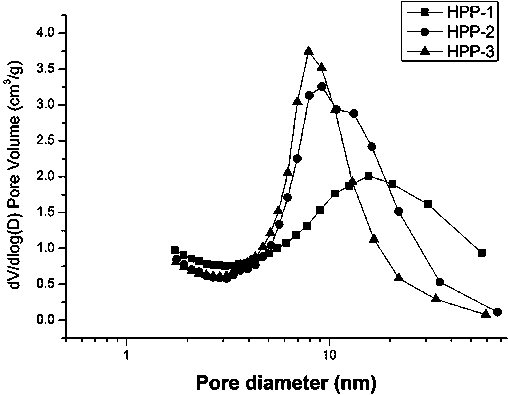
Figure 1 
Figure 2 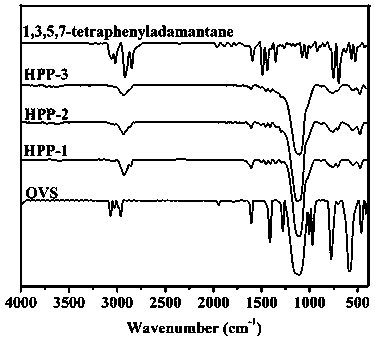
Figure 3
Abstract
Description
technical field
[0001] The invention relates to a method for absorbing and recovering carbon dioxide, which belongs to the field of environmental protection. Background technique
[0002] Carbon dioxide (carbon dioxide), chemical formula CO 2 . It is one of the main components in the air and a common greenhouse gas. A large amount of carbon dioxide gas is emitted into the atmosphere, which will cause climate change, bring about changes in the overall ecosystem, and affect food production and water supply. Therefore, all countries are promoting clean energy and reducing carbon emissions, and recycling captured carbon dioxide for reuse.
[0003] Carbon dioxide has a very wide range of uses. Carbon dioxide is an important raw material for plant photosynthesis; carbon dioxide can be injected into beverages to increase the pressure, make the beverage contain bubbles, and increase the taste when drinking, such as soda and beer. Solid carbon dioxide (or dry ice) will vaporize a...
Examples
Embodiment 1
[0044] (1) Preparation of octavinylsilsesquioxane Add 30 mL of vinyltriethoxysilane, 100 mL of acetone, 80 mL of concentrated hydrochloric acid and 80 mL of distilled water into a 500 mL round bottom flask in sequence. Stir at room temperature for 72 h, filter with suction, wash the filter cake with acetone and methanol several times, and dichloromethane and ethanol solution (V 二氯甲烷 / V 乙醇 =1:1) and dried under vacuum at 60 °C for 24 h to obtain octavinylsilsesquioxane.
[0045] (2) Adamantyl porous polymer: in N 2 In a 50 mL round bottom flask, add 1.00 g 1,3,5,7-tetraphenyladamantane, 1.44 g octavinylsilsesquioxane, 1.22 g anhydrous AlCl 3 and 20 mL of 1,2-dichloroethane, magnetically stirred for 1 h, heated to 80 °C and kept at this temperature for 24 h, filtered with suction, washed with anhydrous methanol successively, and then placed in a Soxhlet extractor, respectively The adamantyl porous polymer HPP-1 was obtained by using methanol and 1,2-dichloromethane as solvent...
Embodiment 2
[0049] (1) Preparation of octavinylsilsesquioxane Add 30 mL of vinyltriethoxysilane, 100 mL of acetone, 80 mL of concentrated hydrochloric acid and 80 mL of distilled water into a 500 mL round bottom flask in sequence. Stir at room temperature for 72 h, filter with suction, wash the filter cake with acetone and methanol several times, and dichloromethane and ethanol solution (V 二氯甲烷 / V 乙醇 =1:1) and dried under vacuum at 60 °C for 24 h to obtain octavinylsilsesquioxane.
[0050] (2) Adamantyl porous polymer: in N 2 Under atmosphere, add 1.00 g 1,3,5,7-tetraphenyladamantane, 2.35 g octavinylsilsesquioxane, 1.00 g anhydrous AlCl to a 50 mL round bottom flask 3 and 20 mL of 1,2-dichloroethane, magnetically stirred for 1 h, heated to 80 °C and kept at this temperature for 24 h, filtered with suction, washed with anhydrous methanol successively, and then placed in a Soxhlet extractor, Purified with methanol and 1,2-dichloromethane as solvents for 48 h respectively, and dried in v...
Embodiment 3
[0053] (1) Preparation of octavinylsilsesquioxane Add 30 mL of vinyltriethoxysilane, 100 mL of acetone, 80 mL of concentrated hydrochloric acid and 80 mL of distilled water into a 500 mL round bottom flask in sequence. Stir at room temperature for 72 h, filter with suction, wash the filter cake with acetone and methanol several times, and dichloromethane and ethanol solution (V 二氯甲烷 / V 乙醇 =1:1) and dried under vacuum at 60 °C for 24 h to obtain octavinylsilsesquioxane.
[0054] (2) Adamantyl porous polymer: in N 2 Under atmosphere, add 1.00 g 1,3,5,7-tetraphenyladamantane, 2.88 g octavinylsilsesquioxane, 0.63 g anhydrous AlCl to a 50 mL round bottom flask 3 and 20 mL of 1,2-dichloroethane, magnetically stirred for 1 h, heated to 80 °C and kept at this temperature for 24 h, filtered with suction, washed with anhydrous methanol successively, and then placed in a Soxhlet extractor, Purified with methanol and 1,2-dichloromethane as solvents for 48 h respectively, and dried in v...