
Synthetic process of herbicide tembotrione
A synthesis process, the technology of tembotrione, applied in the field of pesticide technical preparation, can solve problems such as solid waste generation, air and moisture sensitivity, sodium methoxide flammability, etc., to reduce production safety risks, reduce poisoning accidents, Ease of industrial production
Patent Information
- Authority / Receiving Office
- CN · China
- Current Assignee / Owner
- Publication Date
- 2019-04-26
Smart Images
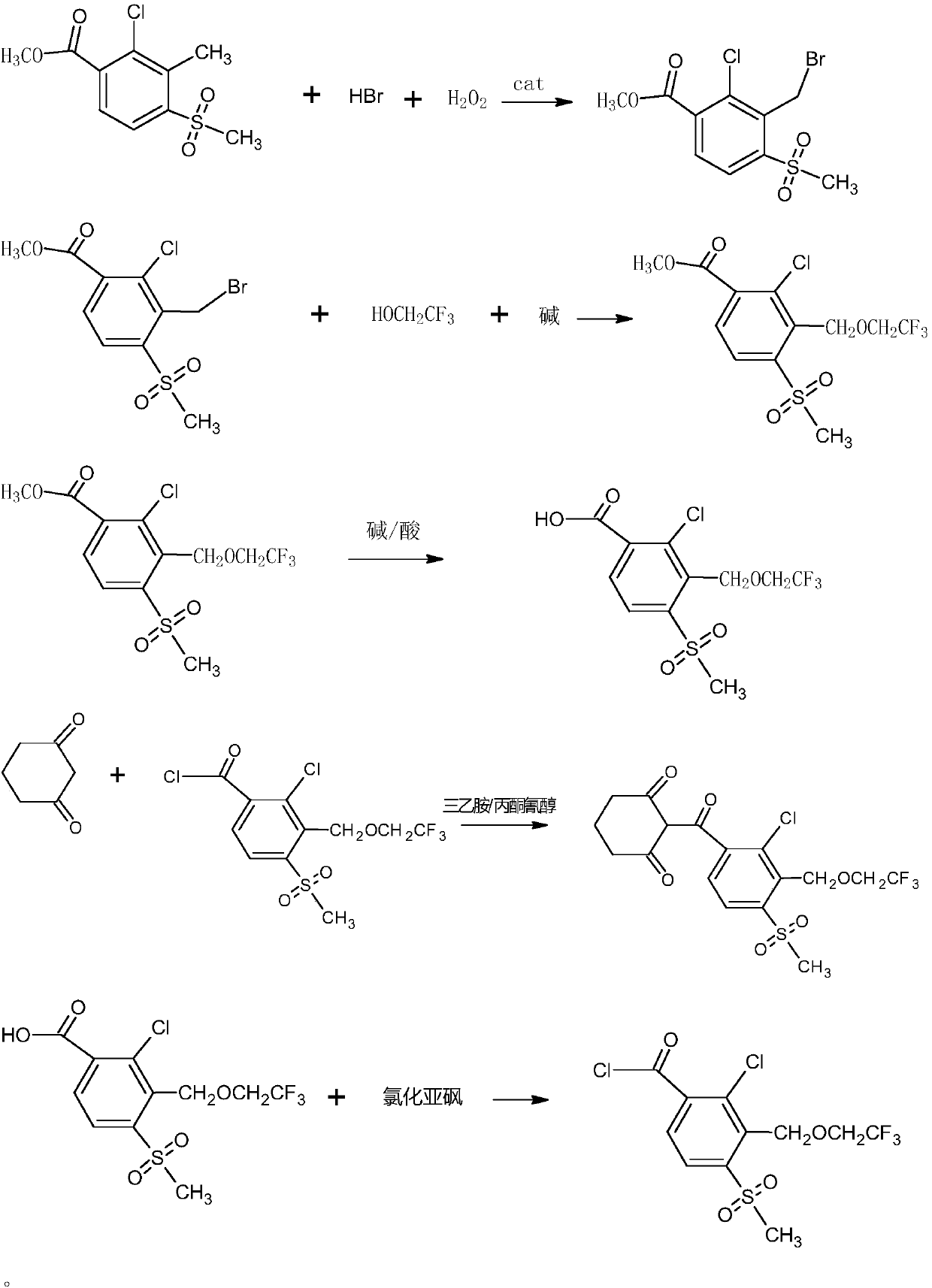
Figure 1 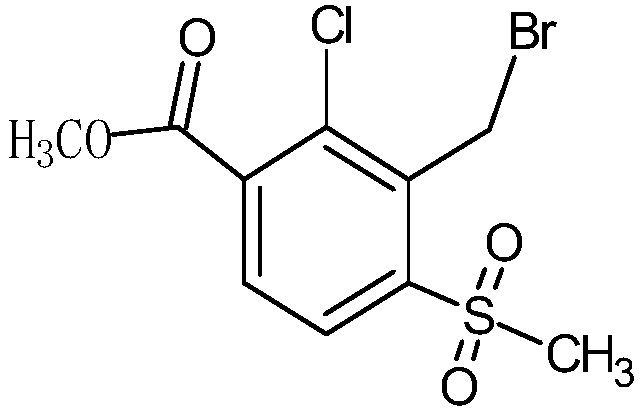
Figure 2 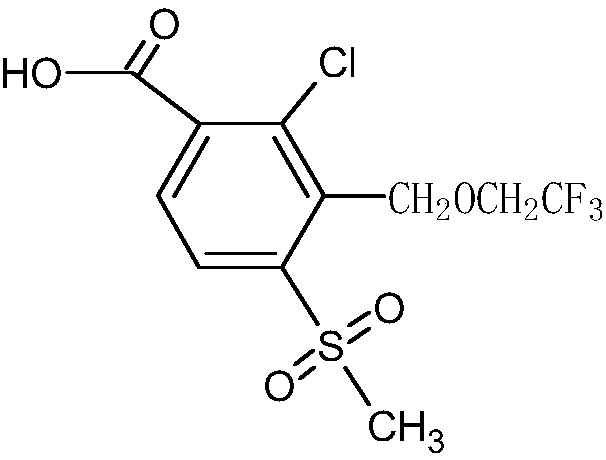
Figure 3
Abstract
Description
Technical field:
[0001] The invention belongs to the field of preparation of pesticide technical materials, and in particular relates to a synthesis process of herbicide tembotrione. Background technique:
[0002] Herbicide Tembotrione, chemical name: 2-{2-chloro-4-methylsulfonyl-3-[(2,2,2-trifluoroethoxy)methyl]benzoyl}cyclohexyl Alkane-1,3-dione is a triketone cornfield herbicide developed by Bayer in 2007. Its activity is higher than that of mesotrione (mesotrione, mesotrione), and it is safe for crops. Ebisulfone is mainly used in cornfields. It is a post-emergence HPPD (p-hydroxyphenylpyruvate dioxygenase) inhibitor herbicide, which can block the biosynthesis of prenyl quinone in plants, causing chlorosis and discoloration , tissue necrosis, and eventually died within 2 weeks. Teratrione has a wide herbicidal spectrum and a long suitable period for weeding. It mainly targets various broad-leaved weeds and gramineous weeds in the middle and late stages of cornfields af...
Examples
Embodiment 1
[0037] The present embodiment provides a kind of synthesis technique of tembotrione, comprising the following steps:
[0038] 1. Synthesis of 2-chloro-3-bromomethyl-4-methylsulfonylbenzoate
[0039]
[0040] 40g 2-chloro-3-methyl-4-methylsulfonylbenzoic acid methyl ester (99.6%, 0.152mol), 200ml dichloroethane, 1g azobisisobutyronitrile (99%, 0.006mol), 46g Add hydrobromic acid (48%, 0.273mol) into a 500ml reaction bottle, add 20.6g of hydrogen peroxide (30%, 0.182mol) dropwise at 75-80°C, continue the reaction after the addition is complete, and track it by LC until the reaction is complete. Layered, the organic layer was washed with water, concentrated, recrystallized with isopropanol, filtered, and dried to obtain 46.67 g of white powder with a purity of 99.0% and a yield of 89%.
[0041] 2. Synthesis of 2-chloro-3-(2,2,2-trifluoroethoxy)methyl-4-methylsulfonylbenzoic acid
[0042]
[0043] 30g 2-chloro-3-bromomethyl-4-methylsulfonylbenzoic acid methyl ester (99.0%, 0...
Embodiment 2
[0048] The present embodiment provides a kind of synthesis technique of tembotrione, comprising the following steps:
[0049] 1. Synthesis of 2-chloro-3-bromomethyl-4-methylsulfonylbenzoate
[0050]
[0051] 40g 2-chloro-3-methyl-4-methylsulfonylbenzoic acid methyl ester (99.7%, 0.152mol), 200ml dichloromethane, 0.5g azobisisobutyronitrile (99%, 0.003mol), 34g Add hydrobromic acid (48%, 0.202mol) into a 500ml reaction bottle, add 25g of hydrogen peroxide (30%, 0.22mol) dropwise at 45-50°C, continue the reaction after the addition is complete, and track until the reaction is complete by LC. layer, the organic layer was washed with water, concentrated, recrystallized with ethanol, filtered, and dried to obtain 46 g of white powder with a purity of 99.8% and a yield of 88.5%.
[0052] 2. Synthesis of 2-chloro-3-(2,2,2-trifluoroethoxy)methyl-4-methylsulfonylbenzoic acid
[0053]
[0054] 35g 2-chloro-3-bromomethyl-4-methylsulfonylbenzoic acid methyl ester (99.8%, 0.102mol)...
Embodiment 3
[0059] The present embodiment provides a kind of synthesis technique of tembotrione, comprising the following steps:
[0060] 1. Synthesis of 2-chloro-3-bromomethyl-4-methylsulfonylbenzoate
[0061]
[0062] 26.46g 2-chloro-3-methyl-4-methylsulfonylbenzoic acid methyl ester (99.6%, 0.1mol), 200ml dichloroethane, 0.174g m-chloroperoxybenzoic acid (99%, 0.001mol) 16.88g of hydrobromic acid (48%, 0.1mol) was added to a 500ml reaction flask, and 11.33g of hydrogen peroxide (30%, 0.1mol) was added dropwise at 50-55°C. After the addition was completed, the reaction was continued, and LC was followed until the reaction was complete. After the reaction was complete, the layers were separated, the organic layer was washed with water, concentrated, recrystallized with isopropanol, filtered, and dried to obtain 31.33 g of white powder with a purity of 98.0% and a yield of 90%.
[0063] 2. Synthesis of 2-chloro-3-(2,2,2-trifluoroethoxy)methyl-4-methylsulfonylbenzoic acid
[0064] ...