
Controllable sol-gel method for preparing polyethylene glycol phase-change heat-conducting composite material and application
A sol-gel method and polyethylene glycol technology, which is applied in the field of polyethylene glycol phase-change heat-conducting composite materials and its preparation, can solve problems such as insufficient structural coating performance, imperfect gelation degree, and easy leakage. Achieve low cost, promote thermal conductivity, and enhance thermal stability
Patent Information
- Authority / Receiving Office
- CN · China
- Current Assignee / Owner
- Publication Date
- 2019-04-26
Smart Images
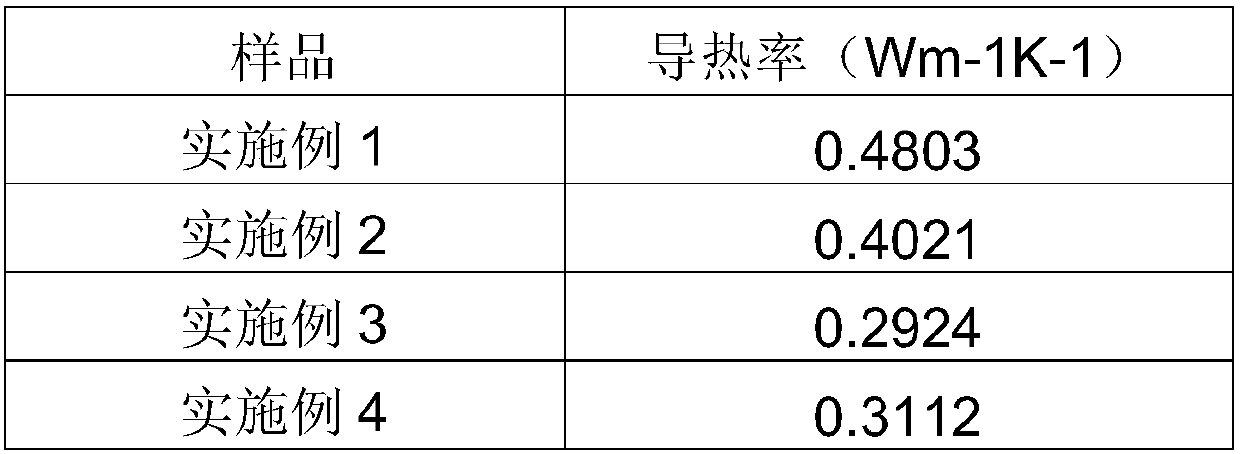
Figure 1 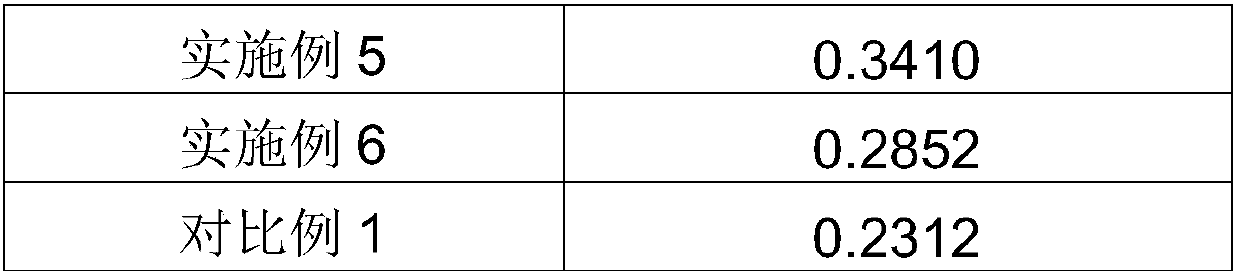
Figure 2
Abstract
Description
technical field
[0001] The invention relates to the field of phase-change heat-conducting materials, in particular to a polyethylene glycol phase-change heat-conducting composite material and its preparation method and application. Background technique
[0002] In recent years, with the rapid development of microelectronics technology, electronic equipment tends to be miniaturized, highly integrated and high-power, and thermal shock resistance and heat dissipation have become bottlenecks restricting the development of microelectronics technology. Phase change materials are often used as interface heat dissipation materials. As the temperature rises, the solid-liquid phase change materials that are solid at room temperature become softer and softer. When the phase change temperature is reached, the solid-liquid phase changes into a liquid state, and a large number of heat-generating components are absorbed. Heat, and can greatly wet the hot and cold metal interface, discharge...
Examples
Embodiment 1
[0031] Prepare a polyethylene glycol phase-change thermally conductive composite material according to the following steps:
[0032] (1) Preparation of Polyethylene Glycol and Tetraethyl Silicate Dispersion: Dissolve 0.0075 molar parts of polyethylene glycol in 2.5 molar parts of ethanol solution, stir at 80°C for 30 min, and then add 3.0 molar parts of deionized Dilute with water, then add 0.075 mole parts of tetraethyl silicate solution, then adjust the pH to 1 with 2 mol / L hydrochloric acid, and obtain the dispersion after ultrasonication for 2 hours;
[0033] (2) Solification process: at room temperature, add 0.06 mole parts of calcium hydroxide solution dropwise to the stirred dispersion within 30 minutes. Afterwards, the temperature was raised to 40° C., and the stirring was continued for 24 hours to obtain a sol-formed silica polyethylene glycol sol.
[0034] (3) Gelation process: the above sol was taken out, stirred with a glass rod, and 0.005 molar parts of ammonium ...
Embodiment 2
[0036] Prepare a polyethylene glycol phase-change thermally conductive composite material according to the following steps:
[0037] (1) Preparation of Polyethylene Glycol and Tetraethyl Silicate Dispersion: Dissolve 0.0075 molar parts of polyethylene glycol in 2.5 molar parts of ethanol solution, stir at 80°C for 60 min, and then add 3.0 molar parts of deionized Dilute with water, then add 0.075 mole parts of tetraethyl silicate solution, then adjust the pH to 1 with 2 mol / L hydrochloric acid, and obtain the dispersion after ultrasonication for 2 hours;
[0038] (2) Solification process: at room temperature, add 0.04 mole parts of magnesium hydroxide solution dropwise to the stirred dispersion within 30 minutes. Afterwards, the temperature was raised to 40° C., and the stirring was continued for 36 hours to obtain a sol-formed silica polyethylene glycol sol.
[0039] (3) Gelation process: the above sol was taken out, stirred with a glass rod, and 0.005 molar parts of ammoniu...
Embodiment 3
[0041] Prepare a polyethylene glycol phase-change thermally conductive composite material according to the following steps:
[0042] (1) Preparation of Polyethylene Glycol and Tetraethyl Silicate Dispersion: Dissolve 0.0075 molar parts of polyethylene glycol in 2.5 molar parts of ethanol solution, stir at 80°C for 30 min, and then add 3.0 molar parts of deionized Dilute with water, then add 0.075 molar parts of tetraethyl silicate solution, then adjust the pH to 1 with 2 mol / L hydrochloric acid, and obtain the dispersion after ultrasonication for 4 hours;
[0043] (2) Solification process: at room temperature, add 0.04 mol parts of aluminum hydroxide solution dropwise to the stirred dispersion within 30 minutes. Afterwards, the temperature was raised to 50° C., and the stirring was continued for 24 hours to obtain a sol-formed silica polyethylene glycol sol.
[0044](3) Gelation process: the above sol was taken out, stirred with a glass rod, and 0.05 molar parts of ammonium c...