
An agent-based IoT device integration system and its application method
A technology of IoT devices and integrated systems, applied in transmission systems, electrical components, etc., can solve problems such as the inability to achieve co-integration and sharing of data, difficulty in operation and maintenance, etc., and achieve the effect of solving the complex integration of equipment
Patent Information
- Authority / Receiving Office
- CN · China
- Patent Type
- Patents(China)
- Current Assignee / Owner
- Publication Date
- 2022-03-25
Smart Images
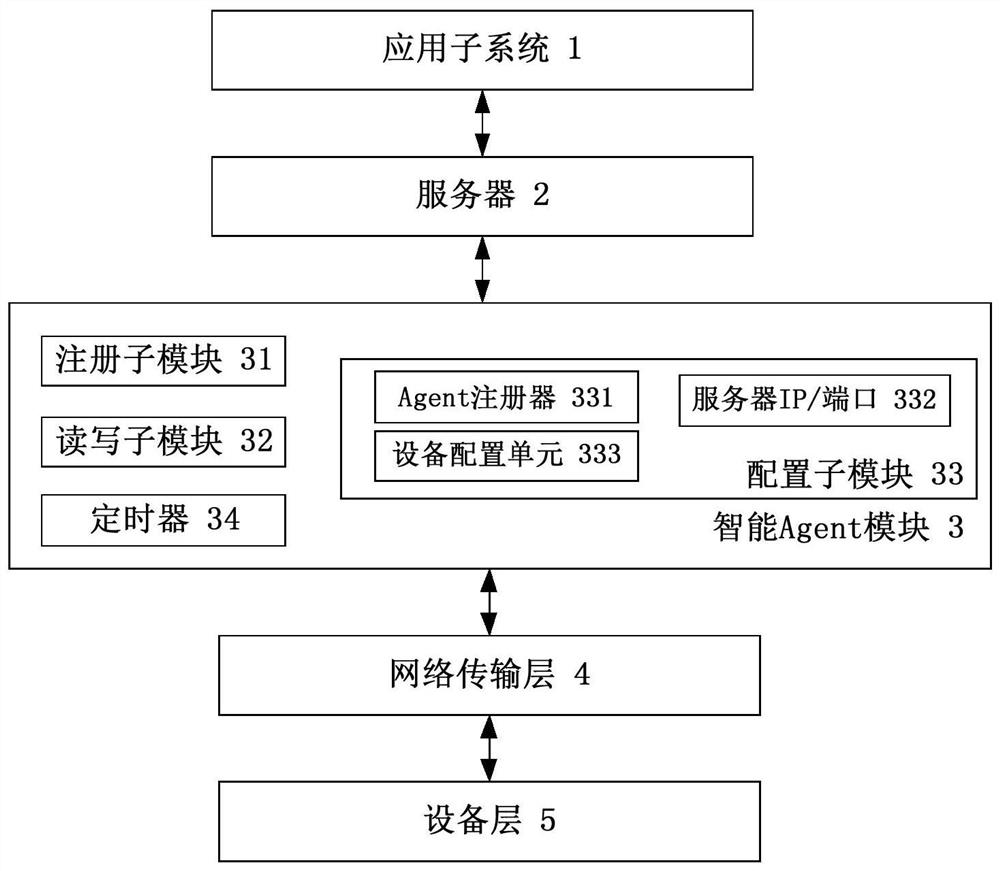
Figure 1 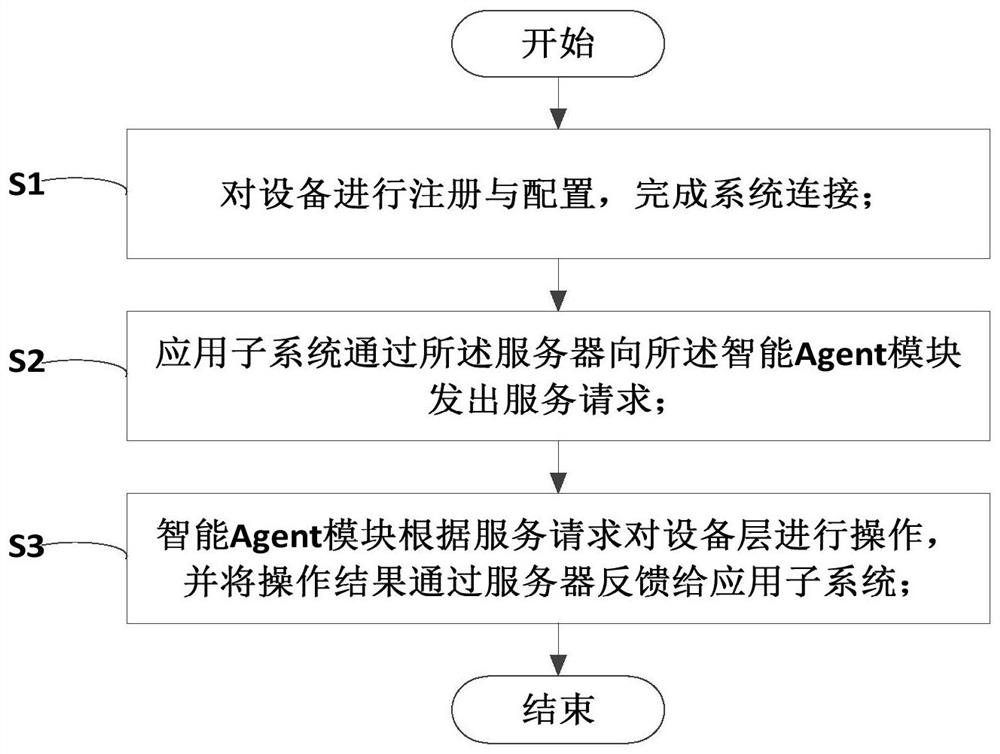
Figure 2 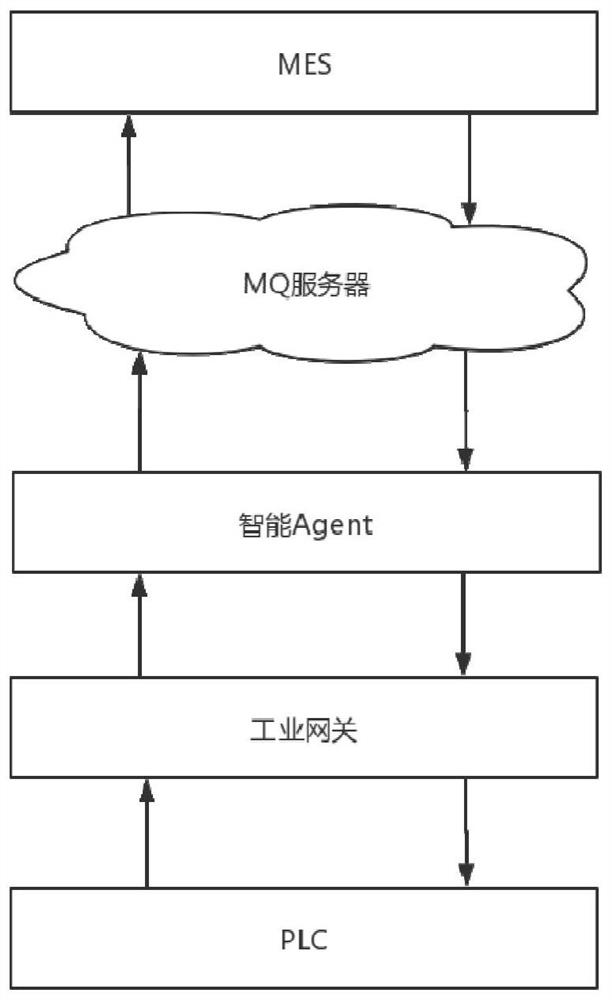
Figure 3
Abstract
Description
technical field
[0001] The invention relates to the application field of the Internet of Things technology, and more particularly, to an Agent-based Internet of Things device integration system, and an application method of the system. Background technique
[0002] The application and development of the Internet of Things in the manufacturing industry has improved the equipment management and information collection capabilities of the manufacturing industry, and solved the problems of traditional production methods that rely heavily on manpower, difficult to manage workshop equipment, and poor information flow. However, the existing manufacturing Internet of Things only solves the problem of information collection from a macro perspective, and does not provide reasonable and unified use standards and solutions for the complex Internet of Things environment in the manufacturing workshop and the diversity of workshop equipment, so that enterprises need to Different workshop eq...
Examples
Embodiment 1
[0054] like figure 1 As shown, an Agent-based IoT device integration system includes an application subsystem 1, a server 2, an intelligent Agent module 3, a network transmission layer 4 and a device layer 5; wherein:
[0055] The application subsystem 1 and the intelligent agent module 3 are all connected to the server 2 through a network;
[0056] The intelligent Agent module 3 establishes a network connection with the device layer 5 through the network transmission layer 4 .
[0057] More specifically, the application subsystem 1 submits to the intelligent Agent module 3 through the server 2 a service request for device registration, real-time acquisition of device status data, and real-time delivery of control instructions.
[0058] More specifically, the server 2 is an MQ server, and the MQ server transmits the message body in a Topic subscription / publishing manner.
[0059] More specifically, the intelligent agent module 3 includes a registration sub-module 31, a read-...
Embodiment 2
[0070] On the basis of Example 1, as figure 2 As shown, an application method of an Agent-based IoT device integration system includes the following steps:
[0071] S1: Register and configure the device to complete the system connection;
[0072] S2: The application subsystem 1 sends a service request to the intelligent Agent module 3 through the server 2;
[0073] S3: The intelligent agent module 3 operates the device layer 5 according to the service request, and feeds back the operation result to the application subsystem 1 through the server.
[0074] More specifically, the device registration and configuration described in step S1 specifically includes:
[0075] Carry out device registration through the registration sub-module 31; connect the registered device to the intelligent Agent module 3 through the configuration sub-module 33, configure the attributes supported by the device and configure the device attribute instruction format;
[0076] The completion of the sy...
Embodiment 3
[0093] In the specific implementation process, such as image 3 As shown, take the "PLC metering system" as an example for further explanation.
[0094] The application subsystem 1 is a web interface running on a PC or a mobile terminal, and adopts the MES manufacturing execution system (MES for short). The MES is connected to the intelligent agent module 3 running on the industrial computer through the MQ server, and the MES and the intelligent agent Module 3 transmits messages through MQ server topic subscription / publishing; the PLC network communication module is the TCP server side, and PLC communicates with the intelligent Agent module 3 through its own network module via the industrial gateway. To ensure the uniqueness of the service device, use GateID (GID) and DeviceName as the topic prefix of the message queue, and use the specific message service Send / Receive as the suffix. The specific example is shown in the following table:
[0095]
[0096] More specifically,...