
Nonlinear electromagnetic particle damper
A particle damper and particle damping technology, which is applied to building components, building types, earthquake resistance, etc., can solve the problems of limited particle movement ability and limited energy consumption capacity of collisions, so as to reduce peak displacement and peak acceleration and improve energy consumption Efficiency, easy recovery effect
Patent Information
- Authority / Receiving Office
- CN · China
- Patent Type
- Applications(China)
- Current Assignee / Owner
- Publication Date
- 2020-01-14
Smart Images
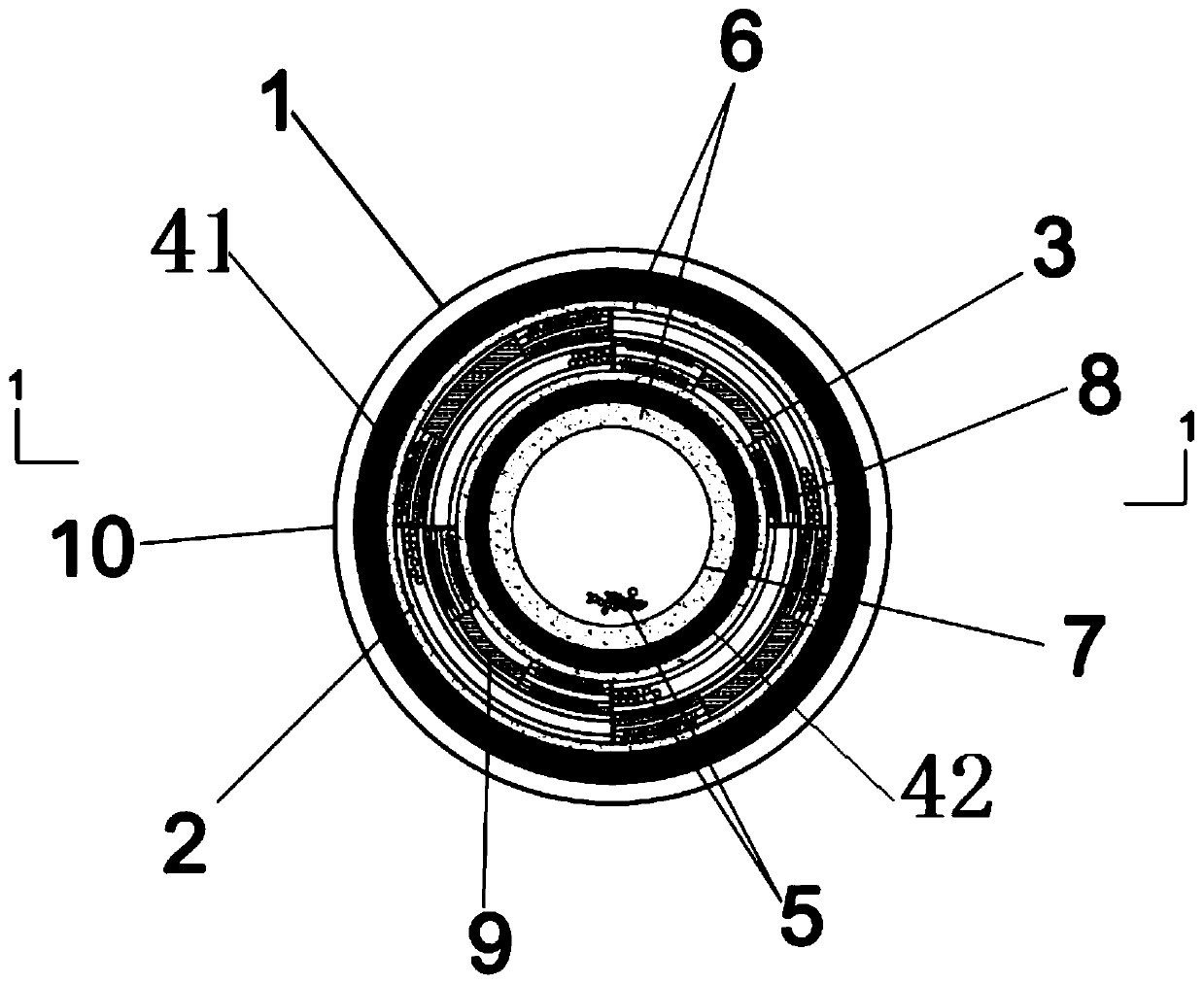
Figure 1 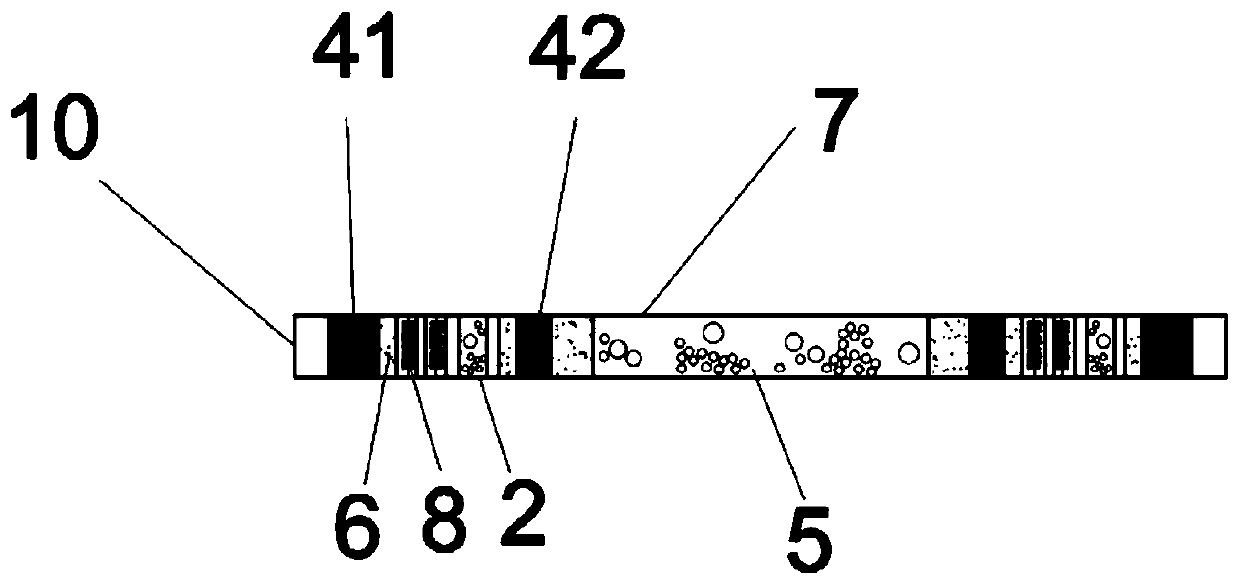
Figure 2
Abstract
Description
technical field
[0001] The invention relates to the field of vibration control of civil structures, in particular to a nonlinear electromagnetic particle damper. Background technique
[0002] In recent years, the tuned mass damper (TMD) has been widely welcomed for its simple construction, convenient operation, and remarkable vibration reduction effect. At the same time, the tuned mass damper only has a certain vibration reduction effect in a specific frequency band, and the additional mass block is connected to the main structure through a suspension or a sliding support, which can only provide a natural vibration frequency in the horizontal direction. However, the vibration direction of wind / earthquake is random, which limits its practical application. The particle damper is also a passive damper with additional mass. Its principle is to consume the vibration energy of the system by the friction and impact of tiny particles filled in a limited closed space in the vibratin...
Examples
Embodiment 1
[0029] A nonlinear electromagnetic particle damper, reference figure 1 , 2 , the damper as a whole is a spherical damper cavity structure 1 with a multi-layer structure, which sequentially includes a shell 10, a large permanent magnet 41, a small permanent magnet 42 and an inner cavity 7 from outside to inside, and the inner cavity 7 is provided with particles Group 5; two layers of electromagnetic particle damping mechanisms are arranged between the large permanent magnet 41 and the small permanent magnet 42; the electromagnetic particle damping mechanism is composed of alternately distributed particle damping units and buffer elements 3, and the particle damping units include particle tracks 2 and particle tracks 2 is provided with particle groups 5, and the buffer element 3 includes a lead-melting cavity 9 and variable stiffness spring groups 8 connected to both ends of the lead-melting cavity 9. The particle damping units and buffer elements 3 between the two layers of th...