
A method for the determination of free and protonated nicotine content by ultra-high performance convergence chromatography
An ultra-efficient confluence and nicotine technology, applied in the field of chemical analysis and detection, can solve the problem that free nicotine is easily interfered by factors such as moisture, temperature, solvent and pH, free nicotine and protonated nicotine have environmental damage, determination Accurately analyze problems such as the difficulty of testing personnel, and achieve the effect of shortening processing time, good peak shape, and short analysis time
Patent Information
- Authority / Receiving Office
- CN · China
- Patent Type
- Patents(China)
- Current Assignee / Owner
- Publication Date
- 2022-08-05
Smart Images
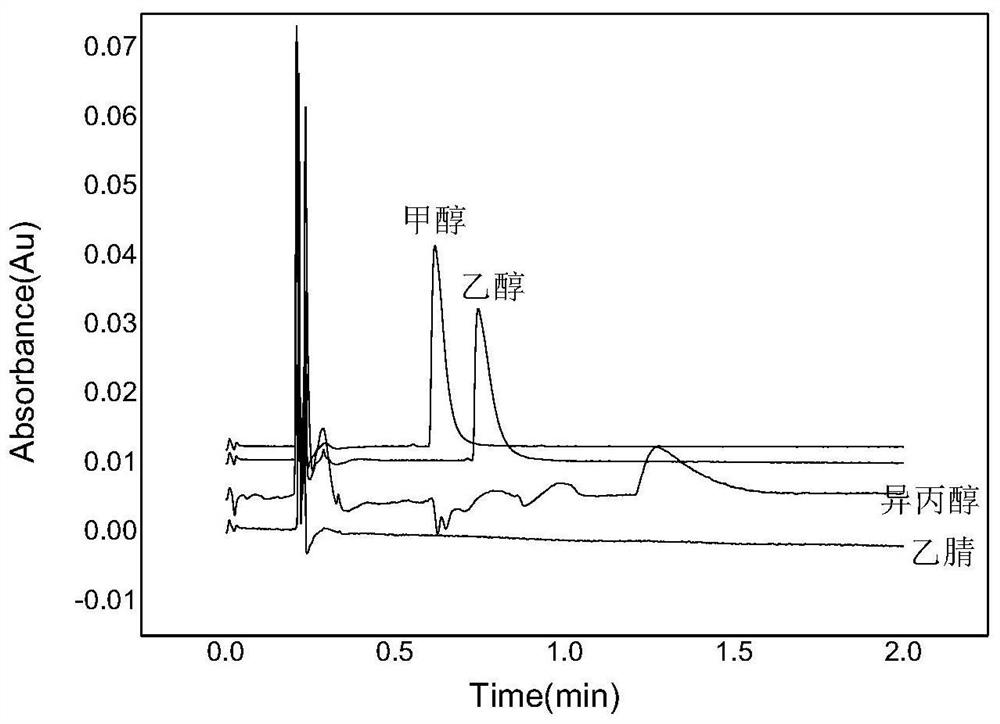
Figure 1 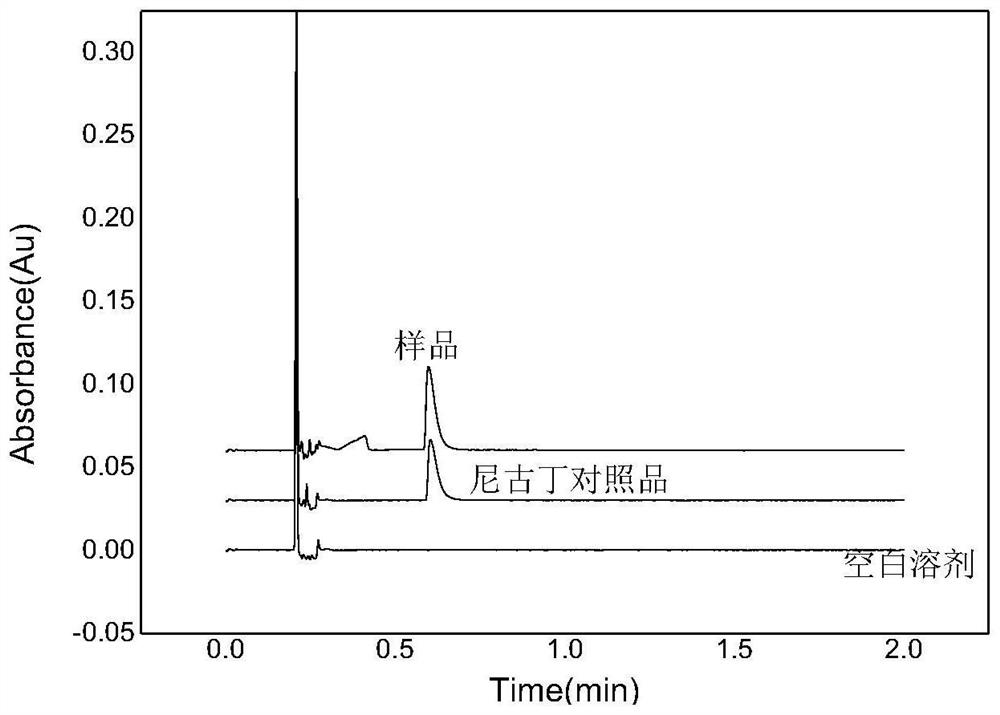
Figure 2 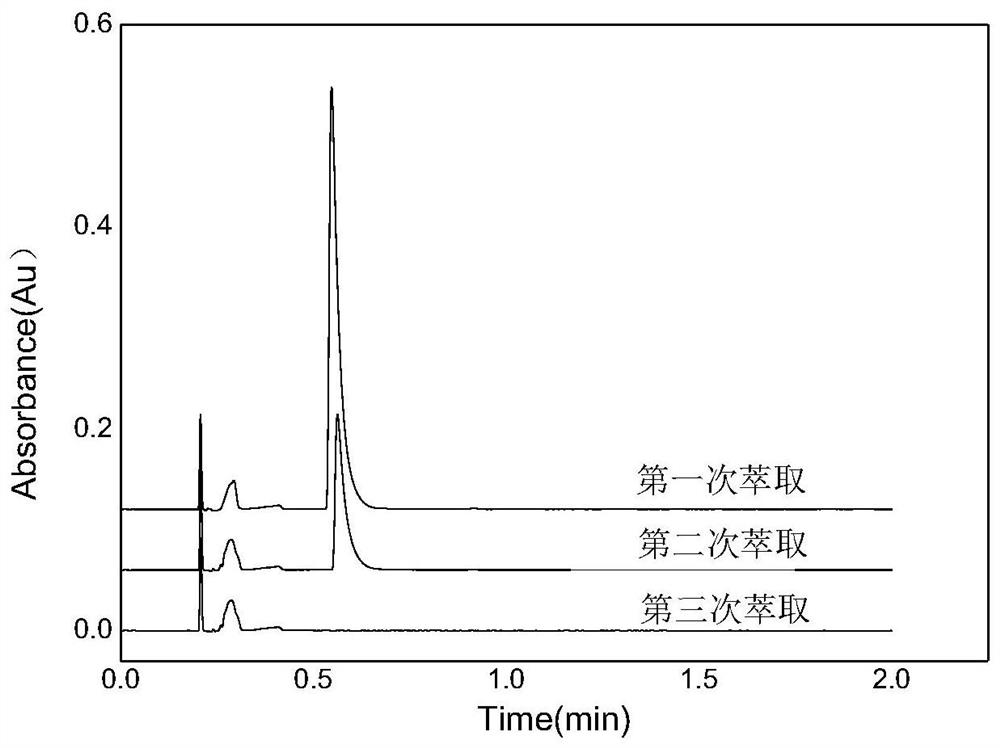
Figure 3
Abstract
Description
technical field
[0001] The invention relates to the technical field of chemical analysis and detection, in particular to a method for measuring free state and protonated nicotine content by ultra-high-efficiency convergence chromatography. Background technique
[0002] Nicotine, commonly known as nicotine, belongs to the pyridine family of alkaloids, is the main addictive component of tobacco, and has a strong physiological effect on people. The emergence of electronic cigarettes can meet people's needs for nicotine without producing tar and carbon monoxide, and has many flavors, which can meet the individual needs of different groups of people. With the implementation of the global anti-smoking policy, the demand for electronic cigarettes continues to grow, and the Chinese electronic cigarette market has shown a rapid growth trend in recent years. With the development of the electronic cigarette industry, people find that it is difficult to obtain the satisfaction brought ...
Examples
preparation example Construction
[0041](1) Preparation of nicotine standard solution: Weigh the nicotine reference substance, dissolve it by chromatographic methanol ultrasonically to constant volume, then carry out pipetting, constant volume with dichloromethane, and filter to obtain a series of standard solutions of different concentrations;
[0042] (2) Preparation of free nicotine solution of the sample to be tested: accurately weigh the sample and dilute to volume with ultrapure water, move it to a stoppered centrifuge tube, perform multiple extractions with dichloromethane, and combine the dichloromethane layers obtained by each extraction , dilute to volume, and filter to obtain filtrate I to be tested.
[0043] (3) Preparation of test sample protonated nicotine solution: add saturated sodium hydroxide to the aqueous phase of the centrifuge tube with stopper after extraction in step (2), then perform multiple extractions with dichloromethane, and combine each extraction The obtained dichloromethane lay...
Embodiment 1
[0062] (1) Preparation of nicotine standard test solution: Weigh 100mg of nicotine reference substance in a 50ml volumetric flask, dissolve it in chromatographic methanol ultrasonically to constant volume, and obtain a concentration of 2000mg·L -1 Standard mother liquor; the obtained standard mother liquor is accurately pipetted into 0.1mL, 0.2mL, 0.5mL, 0.8mL, 1mL to 10mL volumetric flask, dichloromethane is adjusted to volume, filtered through 0.22μm microporous membrane to obtain 20mg ·L -1 , 40mg·L -1 , 100mg·L -1 , 160mg·L -1 , 200mg·L -1 A series of standard solutions of different concentrations.
[0063] (2) Test: the solubility obtained in step (1) is 100 mg·L -1 The standard solution is used for detection by an ultra-high performance convergence chromatograph; wherein, the chromatographic conditions of the ultra-high performance convergence chromatograph are: flow rate: 2.5 mL·min -1 ; Detection wavelength: 259 nm; Injection volume: 2 μL; Column temperature: 50 ...
Embodiment 2
[0065] (1) Preparation of nicotine standard test solution: the same as step (1) of Example 1;
[0066] (2) Set the solubility obtained in step (1) to 100 mg·L -1 The standard solution is detected by an ultra-high performance convergence chromatograph; wherein, the chromatographic conditions of the ultra-high performance convergence chromatograph are: flow rate: 2.5mL·min -1 ; Detection wavelength: 259 nm; Injection volume: 2 μL; Column temperature: 50 °C; System back pressure: 2000 pis; Isocratic elution for 2 min: CO 2 (90%), mobile phase is supercritical CO 2 , the auxiliary solvent is ethanol.