
Application of Arenaria kansuensis Maxim
A unique and versatile technology, applied in the field of anti-hepatic fibrosis extracts, can solve the problems of less patients with secondary liver biopsy, lack of control, and less standardized clinical research
Patent Information
- Authority / Receiving Office
- CN · China
- Patent Type
- Applications(China)
- Current Assignee / Owner
- Publication Date
- 2020-09-11
- Estimated Expiration
- Not applicable · inactive patent
Smart Images
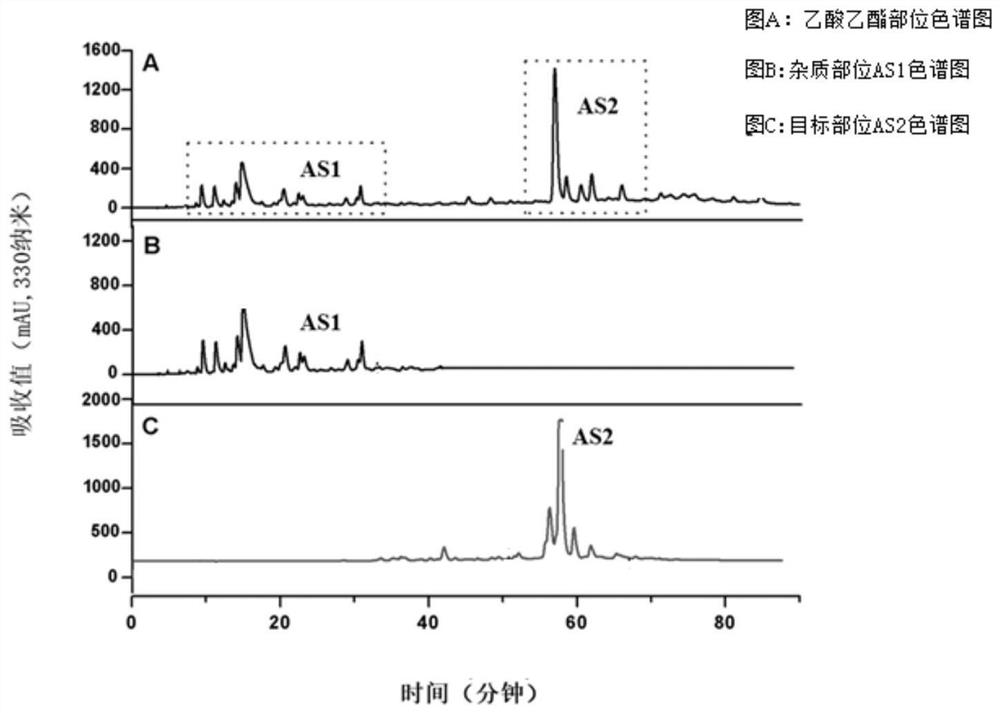
Figure 1 
Figure 2 
Figure 3
Abstract
Description
technical field
[0001] The invention relates to the technical field of prevention and treatment of liver fibrosis, in particular to an anti-hepatic fibrosis extract and its application. Background technique
[0002] Liver fibrosis is a disease in which the extracellular matrix (ECM) and connective tissue abnormally accumulate and proliferate in the liver, thereby destroying the normal structure and physiological functions. Alcoholic fatty liver disease and autoimmune liver disease, etc.) are the only way to develop cirrhosis and liver cancer. As of 2019, there are many clinical research reports on liver fibrosis, but there is no cure so far. For patients with advanced liver fibrosis (cirrhosis or liver cancer), liver transplantation is the ultimate life-saving straw, but limited liver resources and transplantation The subsequent immune rejection is still a huge problem in liver transplantation.
[0003] There have been clinical reports in the world that treat the cause of ...
Examples
Embodiment 1
[0034] The preparation method of the target site AS2 of the ethyl acetate extract of Gansu fleas is as follows:
[0035] (1) Dry and pulverize the whole plant of Gansu fleas, after sieving, take 2 kg of powder and extract it with 95% ethanol at room temperature, the ratio of solid to liquid is 1:10, and extract 3 times, each time for 8 hours;
[0036] (2) Combine the extracts, concentrate under reduced pressure to form an extract, dissolve the extract in 2L of water, and extract (2L×3) with petroleum ether, ethyl acetate and n-butanol respectively, and extract 3 times with each extractant. The ethyl acetate extract was concentrated and dried to obtain the ethyl acetate extract;
[0037] (3) The ethyl acetate extract part is processed in C18SPE in stages, first eluted with 60% methanol-water to remove the impurity part AS1, then eluted with 80% methanol-water, and collected 80% methanol-water wash The product is removed to obtain the target site AS2.
[0038] Each part can be...
Embodiment 2
[0041] (1) Dry and pulverize the whole plant of Gansu fleas, and after sieving, take 2kg of the powder and extract it with ethyl acetate, the ratio of solid to liquid is 1:10, and extract 3 times in total, each time for 8 hours;
[0042] (2) The above extract is processed in C18SPE in sections, first eluted with 60% methanol-water, then eluted with 80% methanol-water, and the eluted product of 80% methanol-water is collected to obtain the ethanol extract target site.
Embodiment 3
[0044] The whole plant of Gansu fleas is dried in the shade and crushed. After sieving, take 2kg of the powder and extract it with 95% ethanol at room temperature. The ratio of solid to liquid is 1:10. It is extracted 3 times for 8 hours each time. The extracts are combined and concentrated to obtain ethanol. Extract.