
Preparation method of catalytic cracking aid for increasing propylene yield
A catalytic cracking additive and propylene technology, which is applied in catalytic cracking, catalysts, hydrocarbon cracking and hydrocarbon production, etc. It can solve the problems of limited increase in propylene concentration, no attention to the secondary conversion of cracked products, and low propylene selectivity, so as to achieve a good society The effect of benefit and economic benefit, simple preparation method and low cost
Patent Information
- Authority / Receiving Office
- CN · China
- Patent Type
- Applications(China)
- Current Assignee / Owner
- Publication Date
- 2020-11-17
Smart Images
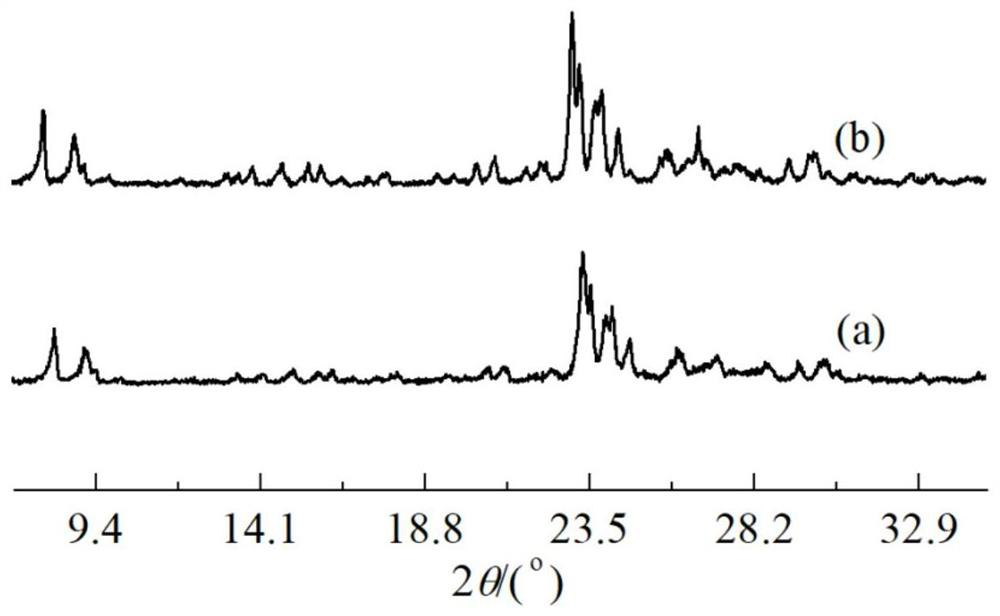
Figure 1 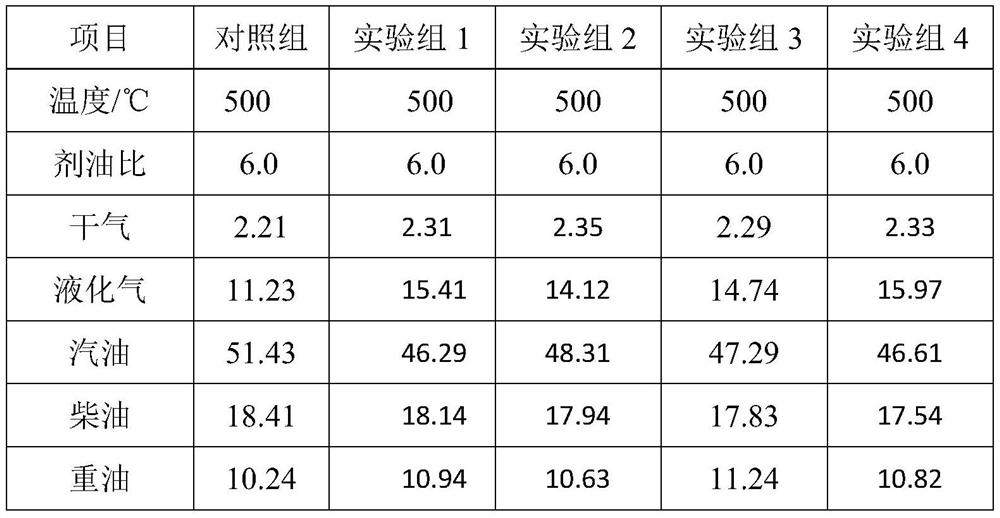
Figure 2 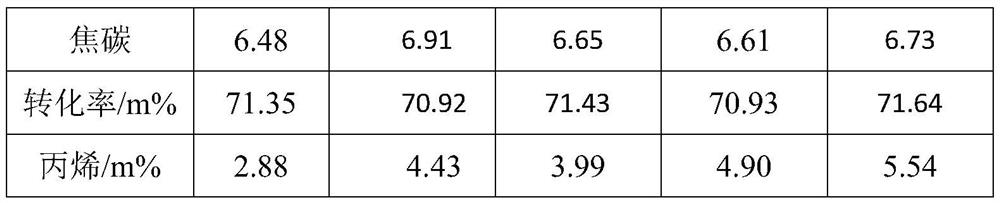
Figure 3
Abstract
Description
technical field
[0001] The invention belongs to the technical field of preparation of catalytic cracking additives, and relates to a preparation method of catalytic cracking additives for increasing propylene production. Background technique
[0002] Propylene is an important chemical basic raw material second only to ethylene. With the development of the national economy, the market demand for propylene is getting stronger and stronger, and the demand gap is getting bigger and bigger. In recent years, the annual growth rate of global demand has exceeded 6.3%, and the growth rate is much faster than that of ethylene. Although 66% of propylene mainly comes from the co-production of steam cracking to ethylene, it is limited by raw material cost, processing capacity, investment scale, etc.; while the by-product of catalytic cracking process (FCCU) is about 32% of propylene, which can be converted into heavy oil As a raw material, propylene can be produced through deep cracking...
Examples
Embodiment 1
[0025] A preparation method for increasing the production of propylene catalytic cracking additive, comprising the steps of:
[0026] (1) Put 300g of kaolin, 700g of diatomaceous earth and 1700mL of deionized water into the reactor, add 10g of sodium silicate, stir for 2 hours at a speed of 200rpm, control the temperature of the water bath to 50°C, and mix the slurry evenly, Spray drying into microspheres, and calcining the microspheres at 900°C for 5 hours to obtain calcined microspheres;
[0027] (2) 89g calcined microspheres, 5g white carbon black, 5g alumina, 403mL water glass, 42mL sodium hydroxide, 1g Y-type molecular sieve and 995mL deionized water are put into the crystallization reactor, and the final pH of the slurry is adjusted with sulfuric acid. To 11-12, hydrothermal crystallization at 150°C for 90 hours, after filtering to remove the mother liquor, the filter material was washed with water, filtered, and dried to obtain ZSM-5 molecular sieves; determined by X-ra...
Embodiment 2
[0032] A preparation method for increasing the production of propylene catalytic cracking additive, comprising the steps of:
[0033] (1) Put 200g of kaolin, 800g of diatomaceous earth and 1600mL of deionized water into the reactor, add 10g of sodium phosphate, stir at 250rpm for 1.5 hours, control the temperature of the water bath at 60°C, mix the slurry evenly, and spray Dried into microspheres, the microspheres were calcined at 1000°C for 1 hour to obtain calcined microspheres;
[0034] (2) 84g of calcined microspheres, 5g of white carbon black, 10g of alumina, 394mL of water glass, 39mL of sodium hydroxide, 1gX type molecular sieve and 1113mL of deionized water are dropped into the crystallization reactor, and the pH of the slurry terminal is adjusted to 11-12, hydrothermal crystallization at 160°C for 82 hours, after filtering to remove the mother liquor, the filter material was washed with water, filtered, and dried to obtain ZSM-5 molecular sieve; determined by X-ray di...
Embodiment 3
[0039] A preparation method for increasing the production of propylene catalytic cracking additive, comprising the steps of:
[0040] (1) Put 100g of kaolin, 900g of diatomaceous earth and 1500mL of deionized water into the reactor, add 10g of ammonium carbonate, stir at a speed of 300rpm for 1 hour, control the temperature of the water bath at 80°C, mix the slurry evenly, and spray Dried into microspheres, the microspheres were calcined at 950°C for 4 hours to obtain calcined microspheres;
[0041] (2) Put 100g of calcined microspheres, 1g of white carbon black, 1g of alumina, 450mL of water glass, 50mL of sodium hydroxide, 1g of ZSM-5 and 1200mL of deionized water into the crystallization reactor, and adjust the final pH of the slurry to 11-12, hydrothermal crystallization at 170°C for 68 hours, after filtering to remove the mother liquor, the filter material was washed with water, filtered, and dried to obtain ZSM-5 molecular sieve; X-ray diffraction determined that it cont...