
Peanut allergen specific IgE quantitative detection reagent, kit and application thereof
A technique for quantitative detection of peanut allergens, applied in biological testing, measuring devices, material inspection products, etc., can solve the problems of general specificity and sensitivity, high cost of use, and inferior sensitivity, etc., to achieve enhanced specificity and sensitivity, and dispersed Good stability and stability, the effect of increasing the potential number
Patent Information
- Authority / Receiving Office
- CN · China
- Patent Type
- Applications(China)
- Current Assignee / Owner
- Publication Date
- 2021-01-05
Smart Images
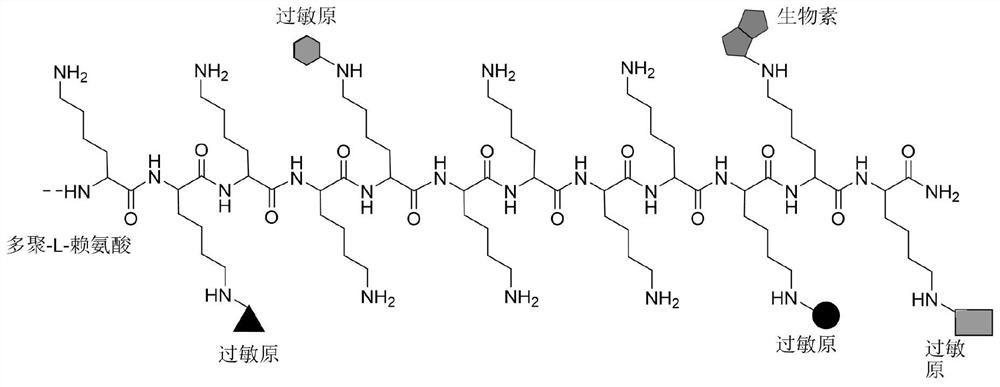
Figure 1 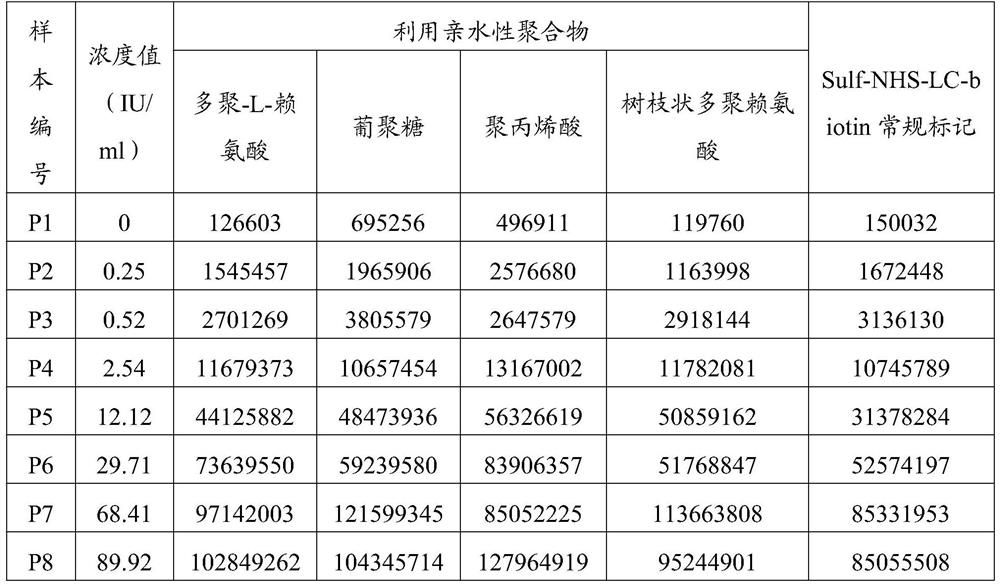
Figure 2 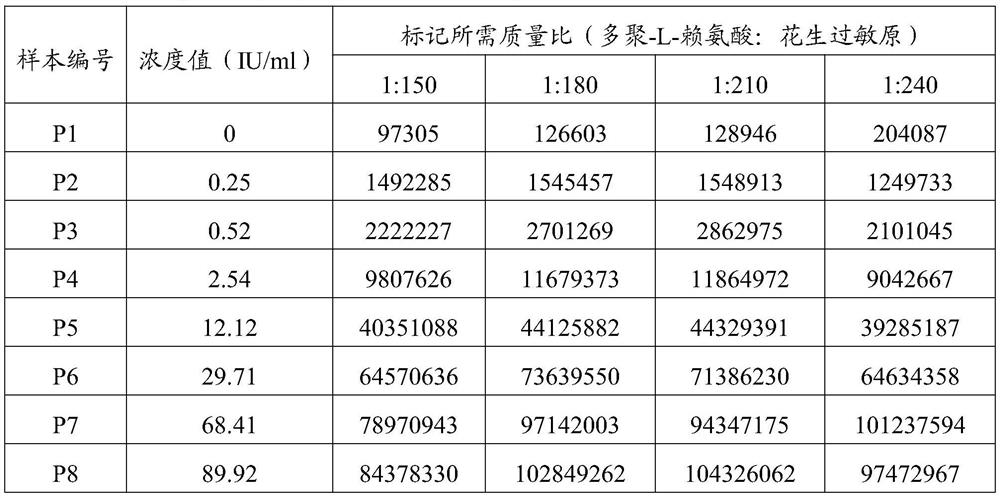
Figure 3
Abstract
Description
technical field
[0001] The invention relates to the field of biological detection, in particular to a peanut allergen-specific IgE quantitative detection reagent, kit and application thereof. Background technique
[0002] In 2013, the World Allergy Organization (WAO) pointed out in the white paper (WAO White Book on Allergy: Update 2013) on allergy (also known as anaphylaxis, Allergy): "The prevalence of allergic diseases is on the rise worldwide. Allergic diseases include allergic asthma, allergic rhinitis, eczema, urticaria, and angioedema; food allergy is a health problem that requires special attention, with a global incidence of 20%-30% (about 240-550 million people). The incidence rate is higher in young children (5%-8%) than in adults (1%-2%)". There are about 160 kinds of foods that cause allergies, among which milk, eggs, peanuts, soybeans, wheat, fish, crustaceans and tree nuts are identified by the FDA as the eight major allergic foods, and about 90% of food alle...
Examples
preparation example Construction
[0033] Preparation of the streptavidin-coated magnetic particle suspension:
[0034]The magnetic particles coated with 10mg / mL streptavidin were subjected to magnetic separation, and the 0.1M Tris-HCl buffer (pH=7~ 8) Resuspend, wash repeatedly 4 times (5-10min / time), magnetically separate, and finally resuspend the magnetic particles in 0.1M Tris- HCl buffer solution (pH=7-8), that is, a suspension of streptavidin-coated magnetic particles with a concentration of 0.8-1.5 mg / mL can be obtained.
[0035] The peanut allergen is modified with biotin based on the hydrophilic polymer, and the structure diagram is as follows: figure 1 :
[0036] The hydrophilic polymer is poly-L-lysine, dendritic polylysine, dextran, polyacrylic acid, considering sensitivity and background background, preferably poly-L-lysine , the ratio used for the preferred labeling is hydrophilic polymer: peanut allergen is 1:180~1:210, the experimental data are shown in Table 1 and Table 2, and the samples (...
Embodiment 1
[0059] Embodiment 1 The preparation of streptavidin-coated magnetic particle suspension
[0060] The 10 mg / mL streptavidin-coated magnetic particles were magnetically separated, resuspended in 0.1M Tris-HCl buffer (pH=7) containing 1% BSA, 10% glycerol and 2% sucrose, and washed repeatedly for 4 time (5 min / time), magnetic separation, and finally the magnetic particles were resuspended in 0.1M Tris-HCl buffer solution (pH=7) containing 1% BSA, 10% glycerol and 2% sucrose, to obtain a concentration of 0.8mg / mL of streptavidin-coated magnetic particle suspension.
Embodiment 2
[0061] Embodiment 2 Preparation of streptavidin-coated magnetic particle suspension
[0062] The 10 mg / mL streptavidin-coated magnetic particles were magnetically separated, resuspended in 0.1M Tris-HCl buffer (pH=8) containing 3% BSA, 5% glycerol and 5% sucrose, and washed repeatedly for 4 time (10min / time), magnetic separation, and finally the magnetic particles were resuspended in 0.1M Tris-HCl buffer solution (pH=8) containing 3% BSA, 5% glycerol and 5% sucrose to obtain a concentration of 1.0mg / mL of streptavidin-coated magnetic particle suspension.