
Method for preparing magnesium-aluminum-zinc hydrotalcite from aluminum-air battery electrolytic waste liquid, and application thereof
An aluminum-air battery, electrolytic waste liquid technology, applied in chemical instruments and methods, aluminum compounds, alkali metal compounds, etc., can solve the problems of difficult separation and recycling of alkaline substances, improve initial coloring, reduce production costs, Simple device operation
Patent Information
- Authority / Receiving Office
- CN · China
- Patent Type
- Applications(China)
- Current Assignee / Owner
- Publication Date
- 2021-11-09
- Estimated Expiration
- Not applicable · inactive patent
Smart Images
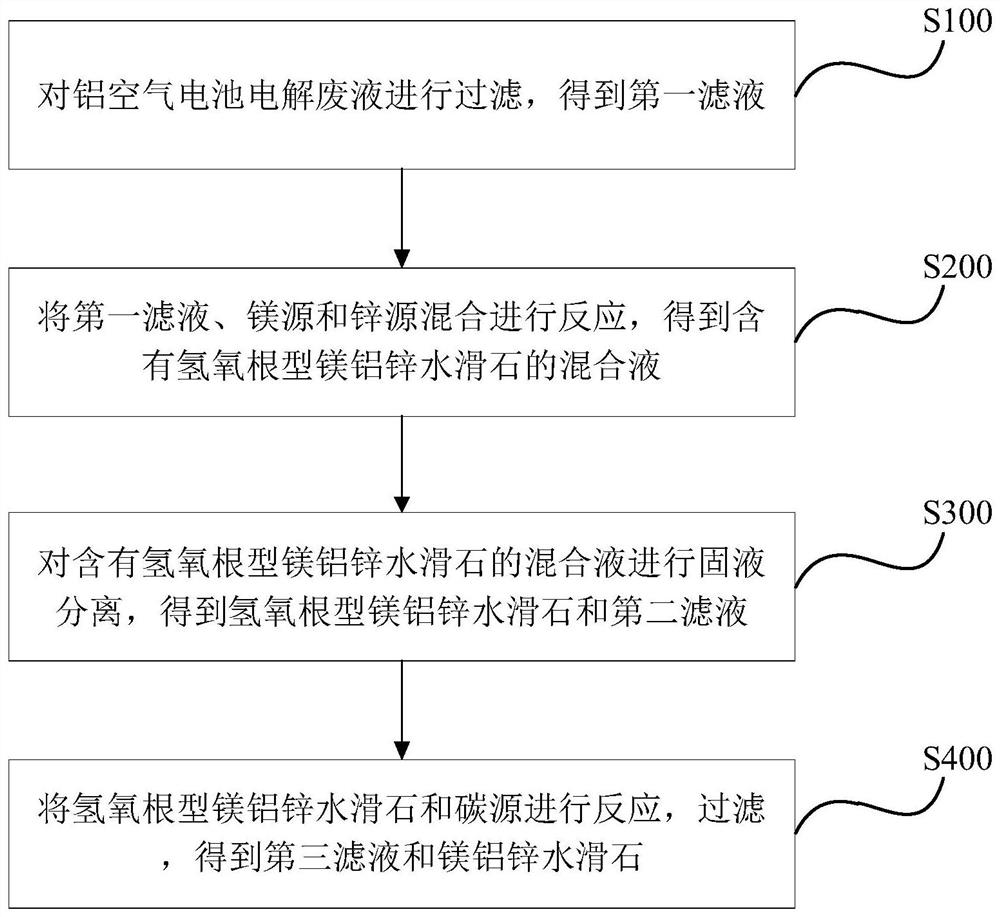
Figure 1 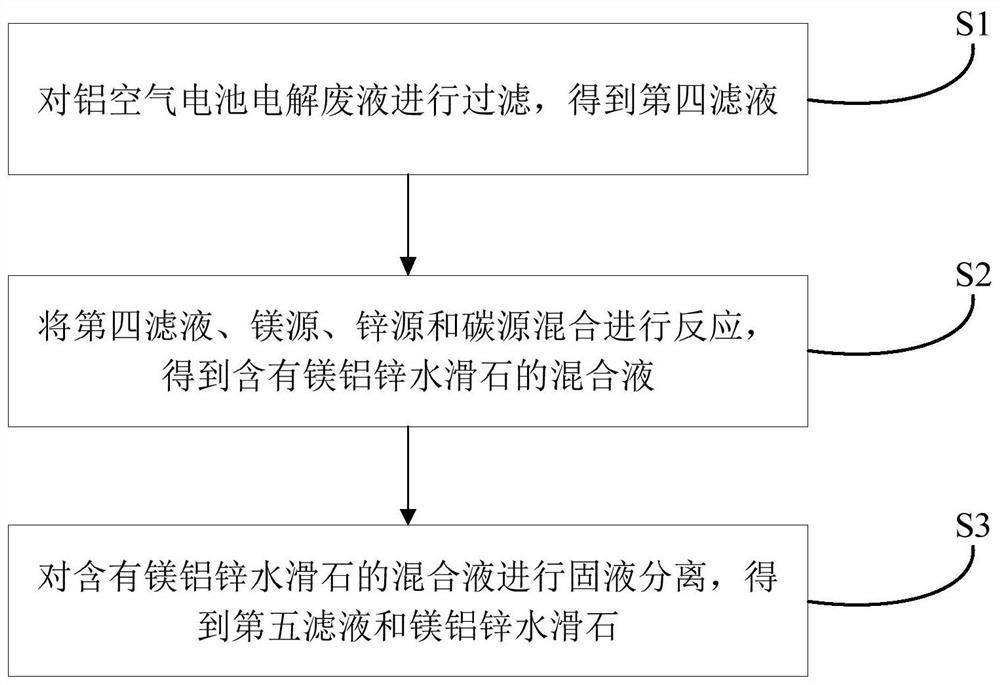
Figure 2 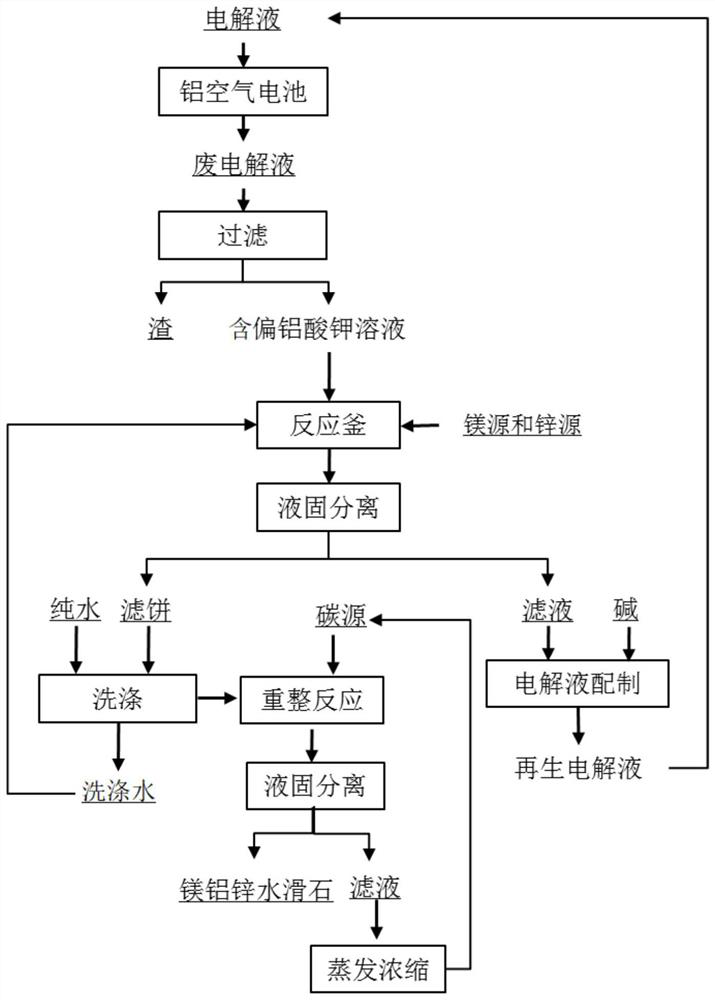
Figure 3
Abstract
Description
technical field
[0001] The invention belongs to the field of resource recovery and utilization, and in particular relates to a method for preparing magnesium-aluminum-zinc hydrotalcite from electrolytic waste liquid of an aluminum-air battery and an application thereof. Background technique
[0002] Aluminum-air batteries have high specific energy, are safe and environmentally friendly, and have abundant raw materials. They have broad development prospects in backup power supplies, electric vehicles, and communication equipment. The negative extremely high-purity aluminum or aluminum alloy of the aluminum-air battery is discharged under the alkaline system of 3-8 mol / L potassium hydroxide or sodium hydroxide solution. During the discharge process, the aluminum anode is oxidized and dissolved with OH - A reaction occurs to form Al(OH) 4 - . When Al(OH) 4 - When a certain concentration is reached in the electrolyte, aluminum hydroxide will be precipitated, and a large am...
Examples
Embodiment 1
[0068] Take the filtered filtrate of the waste electrolyte of the 100L aluminum-air battery after discharge and put it in a 300L reactor, in which the aluminum content is 102.5g / L, heat and stir, and when the solution temperature reaches 60°C, the molar ratio of aluminum, magnesium and zinc is 1:2.8: 0.2 Weigh 42.8kg of magnesium oxide and 6.2kg of zinc oxide respectively into the reaction kettle, heat and stir to make the reaction temperature reach 120°C, and after constant temperature hydrothermal reaction for 6 hours; use plate and frame filter press to filter the reactant under pressure, and the filtrate is regenerated alkali The concentration of the lye is 3.1mol / L, and then potassium hydroxide or sodium hydroxide is added to the regenerated lye to make the concentration of the lye reach 6mol / L. At an electrolyte temperature of 60°C, the anode is aluminum alloy, the cathode is an air electrode, and the current density is 160mA / cm 2 The discharge performance test of the al...
Embodiment 2
[0070] Take 100L aluminum-air battery discharge and the filtered aluminum content of the waste electrolyte is 102.5g / L filtrate, get 42.8kg magnesium nitrate and 6.2kg zinc nitrate and dissolve them in 300L deionized water, and dissolve 157.2kg potassium carbonate in deionized water. While stirring the three mixed solutions, drop them into the 500L reaction kettle. After the dropwise addition is completed, conduct hydrothermal reaction at a constant temperature of 90°C for 8 hours; filter with mechanical pressure, wash to pH=7, and dry at 80°C to obtain magnesium aluminum hydrotalcite.
[0071] Figure 5 The SEM spectrum of the magnesium-aluminum-zinc hydrotalcite was prepared for Example 1. It can be seen from the figure that the prepared magnesium-aluminum-zinc hydrotalcite has a uniform particle size and a good overall appearance; Figure 6 For the TG-DSC curve of the magnesium aluminum zinc hydrotalcite prepared in embodiment 1, from Figure 6 It can be seen from the TG ...