
Preparation method of glycolide
A glycolide and ethanol technology, applied in the field of materials, can solve problems such as poor appearance and color, increased production energy consumption, environmental and human hazards, etc.
Patent Information
- Authority / Receiving Office
- CN · China
- Patent Type
- Applications(China)
- Current Assignee / Owner
- Publication Date
- 2022-05-24
Smart Images
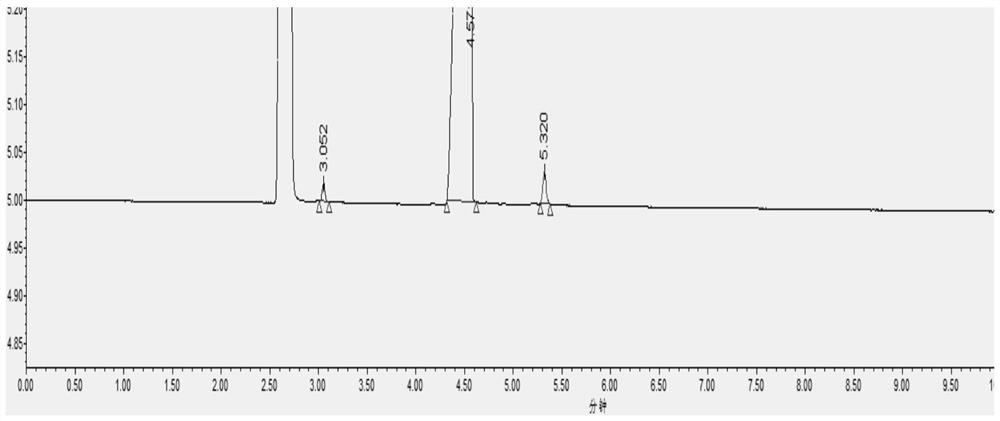
Figure 1
Abstract
Description
technical field
[0001] The invention relates to the technical field of materials, in particular to a preparation method of glycolide. Background technique
[0002] Polyglycolic acid is a degradable green polymer material with excellent biocompatibility, gas barrier properties and heat resistance, and is non-toxic and non-irritating. Therefore, polyglycolic acid can be used in various packaging. materials and medical polymer materials. At present, the synthesis methods of polyglycolic acid mainly include direct polycondensation method and glycolide ring-opening polymerization method. Glycolic acid is used for direct dehydration and oligomerization, and the molecular weight of the product is low, which is difficult to meet the performance of the material. In order to obtain high-molecular-weight and high-performance polyglycolic acid, it is necessary to adopt the ring-opening polymerization method of glycolide, in which the preparation of glycolide is the key.
[0003] Glyc...
Examples
Embodiment 1
[0029] 1.1 760g 100% glycolic acid, 1000g polyethylene (BASF, Luwax A) and 2g catalyst stannous benzoate were successively added to the 3L round-bottomed flask, and the temperature was raised to 160° C. Under agitation, vacuumize to carry out polycondensation reaction, P= 3000Pa, after 4h, the vacuum degree was increased to P=700Pa, and the polycondensation reaction was continued for 12 hours to obtain 570g of oligoglycolic acid.
[0030] The oligoglycolic acid obtained by the present invention is analyzed by gel permeation chromatography according to the above method, and the number-average molecular weight of the polyglycolic acid is measured to be 3100 g / mol.
[0031] 1.2 The oligoglycolic acid in Example 1.1 is heated to 220°C, when the oligoglycolic acid is completely dissolved in polyethylene, it is added dropwise to a temperature of 220°C and contains 1500g polyethylene and 10g cracking catalyst trioxide The depolymerization was carried out in a 5L round-bottomed flask ...
Embodiment 2
[0037] 2.1 900g 100% methyl glycolate, 1500g polyethylene (BASF, Luwax AH3) and 3g catalyst stannous chloride are added successively in the 3L round-bottomed flask, be warming up to 150 ℃, vacuumize under stirring and carry out polycondensation reaction, P=3000Pa, after 4 hours, the vacuum degree was increased to P=700Pa, and the polycondensation was continued for 15 hours to obtain 562 g of oligoglycolic acid.
[0038] The oligoglycolic acid obtained by the present invention is analyzed by gel permeation chromatography according to the above method, and the number-average molecular weight of the polyglycolic acid is measured to be 2600 g / mol.
[0039] 2.2 The oligoglycolic acid in Example 2.1 is heated to 220°C, when the oligoglycolic acid is completely dissolved in polyethylene, it is added dropwise to a temperature of 230°C and contains 1000g polyethylene and 5g cracking catalyst trioxide The depolymerization was carried out in a 5L round-bottomed flask of antimony, and the...
Embodiment 3
[0043] 3.1 1040g 100% ethyl glycolate, 1500g polyethylene (BASF, Luwax AH6) and 4g catalyst stannous octoate were successively added to the 3L round-bottomed flask, and the temperature was raised to 170° C. Under stirring conditions, vacuumize to carry out polycondensation reaction, P =3000Pa, after 3h, the vacuum degree was increased to P=700Pa, and the polycondensation was continued for 10 hours to obtain 565g of oligoglycolic acid.
[0044] The oligoglycolic acid obtained in the present invention is analyzed by gel permeation chromatography according to the above method, and the number-average molecular weight of the polyglycolic acid is measured to be 3500 g / mol.
[0045] 3.2 The oligoglycolic acid in Example 3.1 is heated to 220°C, and when the oligoglycolic acid is completely dissolved in polyethylene, it is added dropwise to a temperature of 240°C and contains 500 g of polyethylene and 5 g of cracking catalyst zinc oxide The depolymerization was carried out in a 5L roun...