
Traversal rate analysis method and phase optimization method in STAR-RIS assisted NOMA system based on statistical channel
A technology of phase optimization and analysis method, applied in transmission systems, diversity/multi-antenna systems, space transmit diversity and other directions, can solve problems such as non-compliance with reality, and achieve the effect of avoiding irrationality
Patent Information
- Authority / Receiving Office
- CN · China
- Patent Type
- Applications(China)
- Current Assignee / Owner
- Publication Date
- 2022-07-29
Smart Images
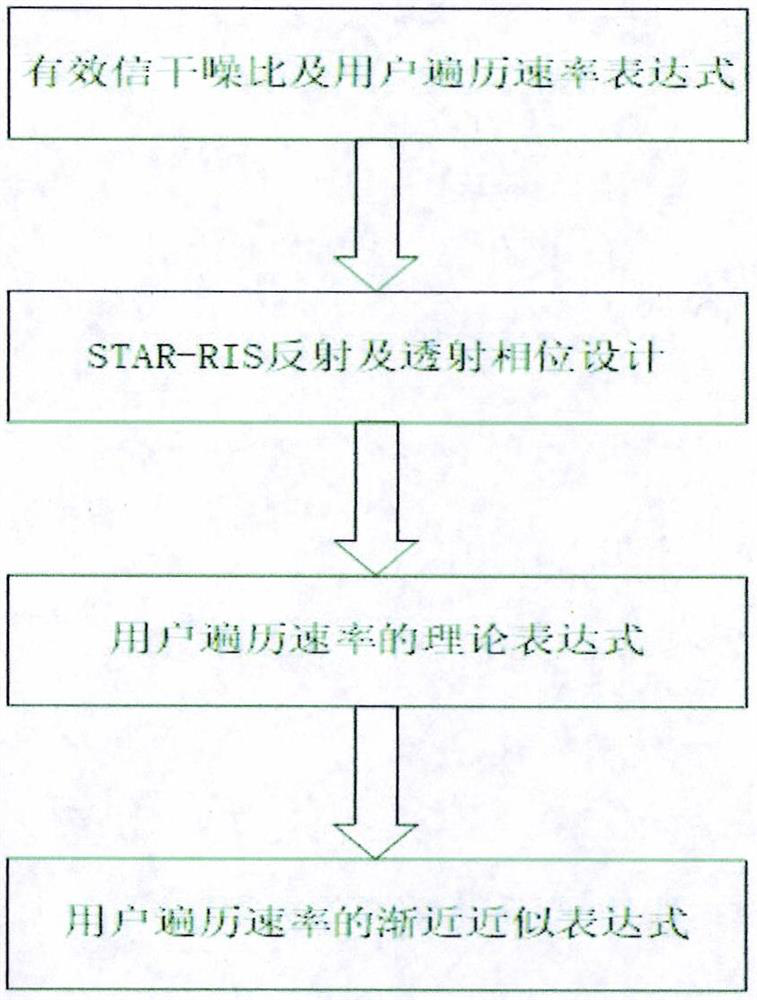
Figure 1 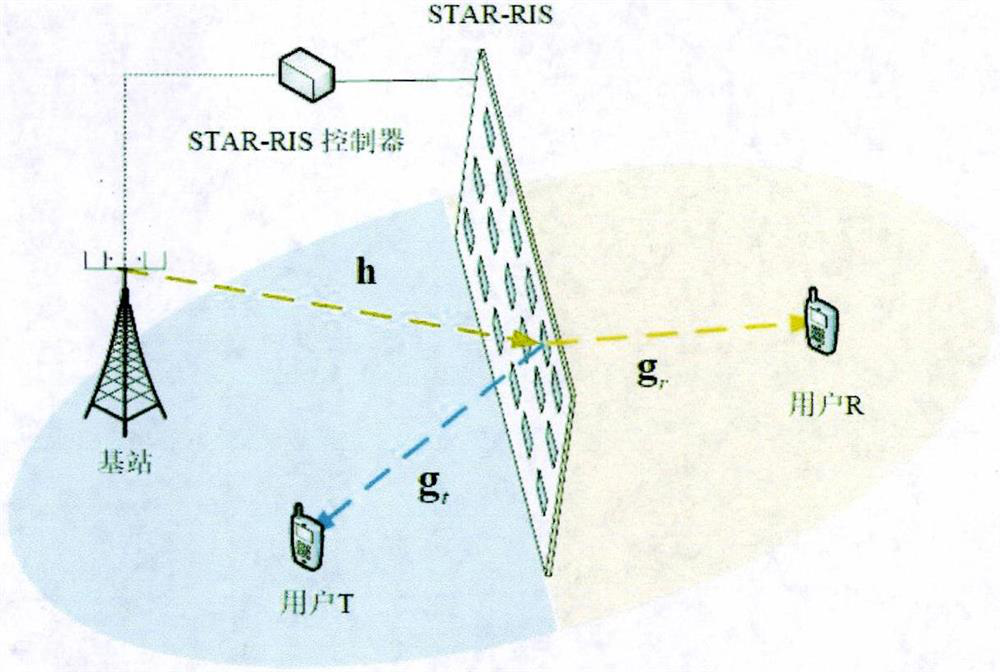
Figure 2 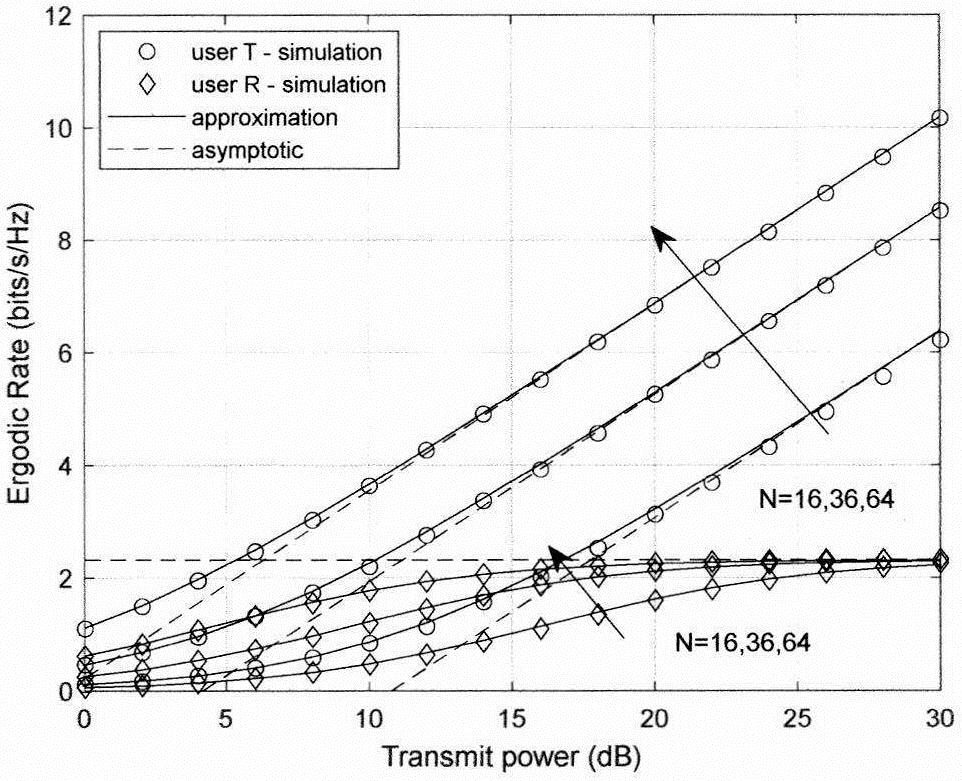
Figure 3
Abstract
Description
Technical field:
[0001] The invention belongs to the field of mobile communication and relates to a performance analysis method of a mobile communication system, in particular to a traversal rate analysis method and a phase optimization method in a STAR-RIS assisted NOMA system based on statistical channels. Background technique:
[0002] Reconfigurable Intelligent Surface (RIS) is an artificial reflective surface, which can enhance the communication environment by controlling the phase, amplitude and other parameters of the incident signal during the signal transmission process. Smart reflector technology can achieve functions such as spectrum enhancement and coverage expansion while reducing deployment costs. It is one of the main technologies for the sixth generation of mobile communications in the future. For traditional RIS, it can only realize the function of reflected signal, which means that the user must be on the same side of the RIS as the base station, which is u...
Examples
Embodiment Construction
[0024] The present invention will be further described below in conjunction with the accompanying drawings and embodiments.
[0025] 1. System Model
[0026] The STAR-RIS-assisted downlink NOMA system model involved in the present invention is as follows: figure 2 shown, the Rician fading channel between the base station and STAR-RIS is where the NLoS component The elements in are modeled as Rayleigh fading, subject to κ 1 represents the Rician factor, d 0 represents the distance between the base station and STAR-RIS, α 0 ≥2 indicates the path loss index, ρ 0 represents the path loss at a reference distance of 1 m; similarly, the channel between STAR-RIS and user k is where d k represents the distance between user k and STAR-RIS, κ 2 is the Rician factor, and the NLoS component is Rayleigh fading; the LoS component of the channel is expressed by the array response, and the ULA array response with M elements is expressed as:
[0027]
[0028] Among them, d and...