
Heat sink for an electric machine and method for producing said heat sink
a technology for electric machines and heat sinks, which is applied in the direction of dynamo-electric machines, electrical devices, supports/enclosements/casings, etc., can solve the problems of complex manufacturing and/or reliable sealing of the housing used for cooling, and achieves simple design, efficient dissipation, and small installation space for electric machines.
Patent Information
- Authority / Receiving Office
- US · United States
- Patent Type
- Patents(United States)
- Current Assignee / Owner
- Publication Date
- 2019-11-12
Smart Images
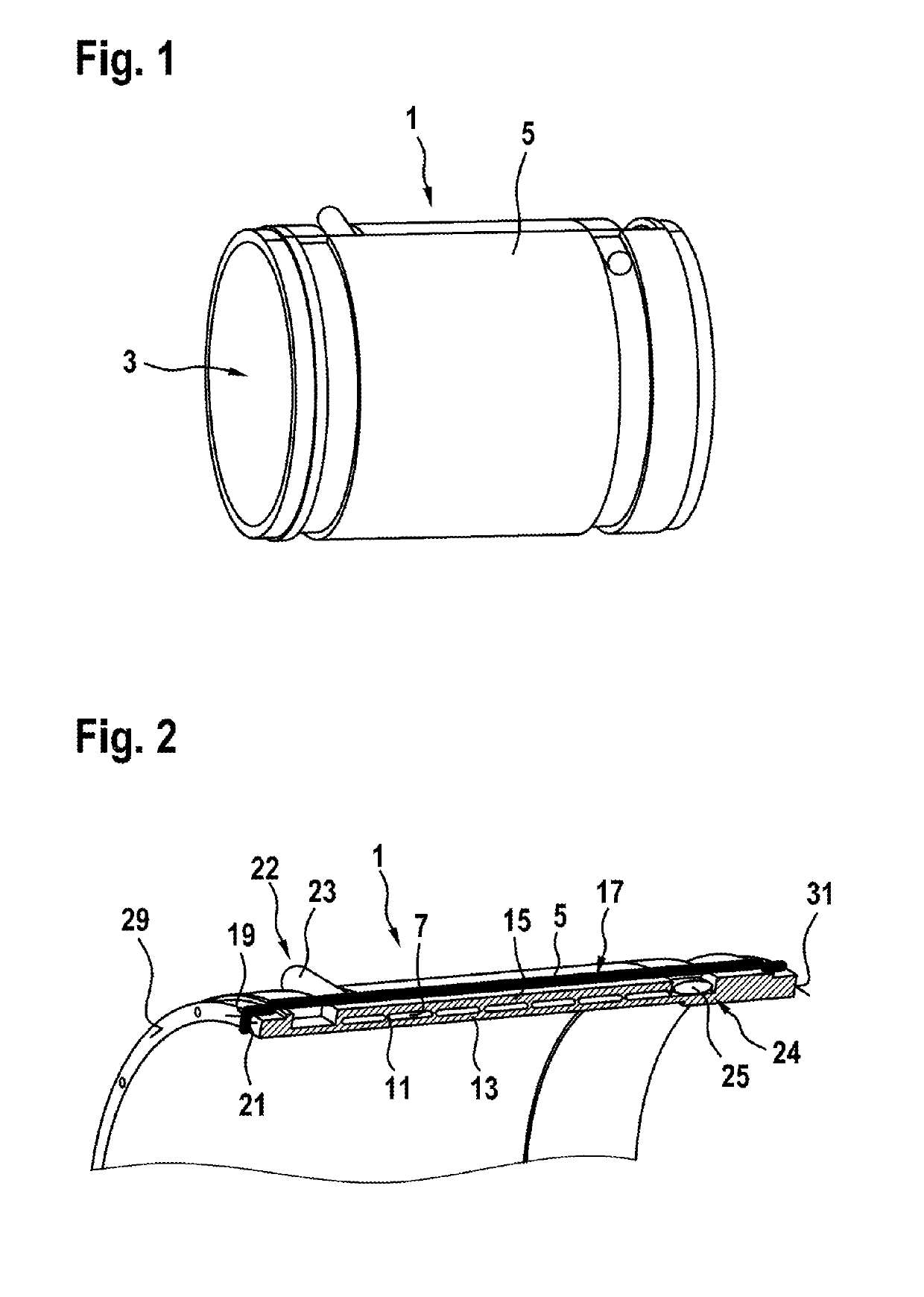
Figure 1 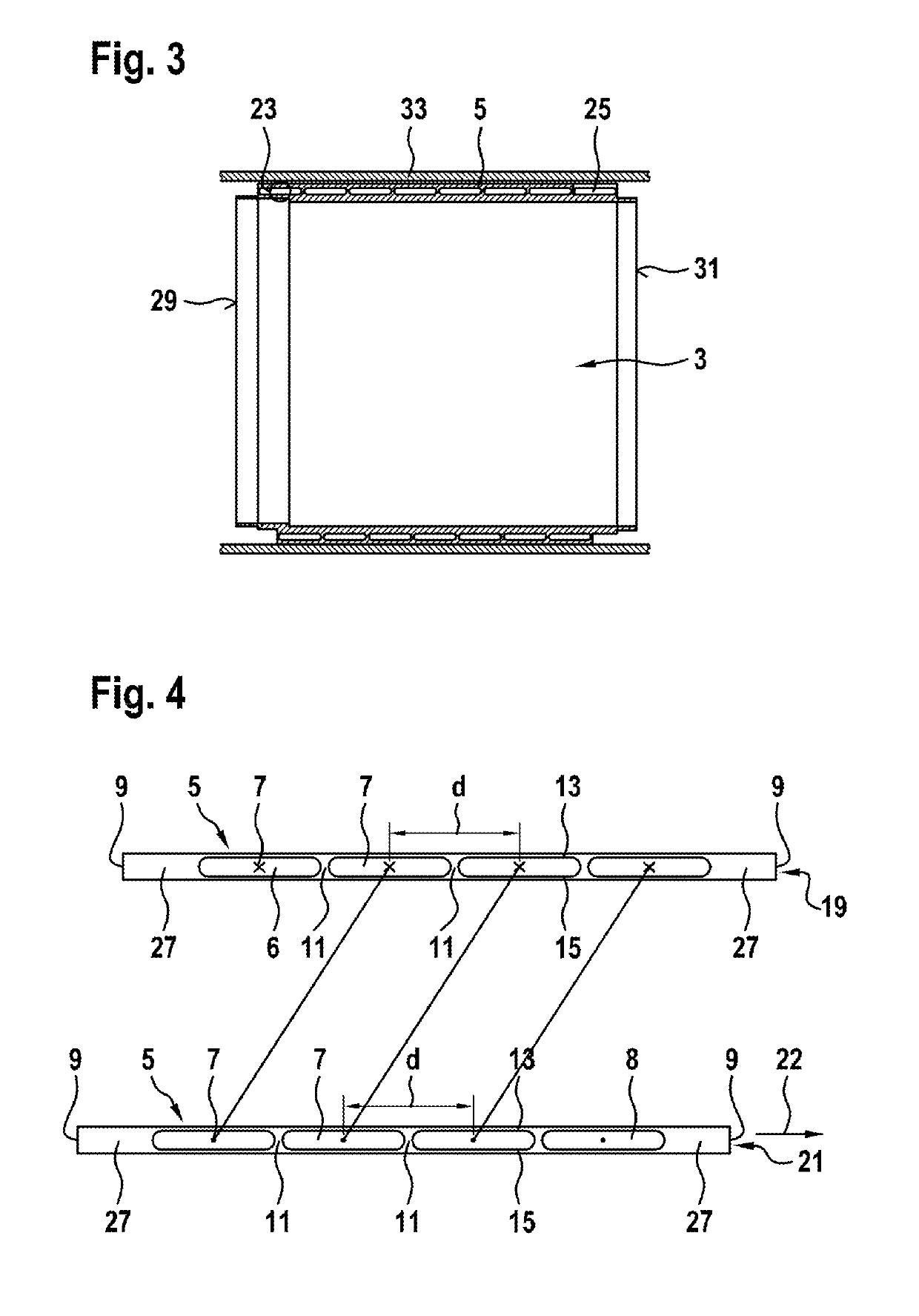
Figure 2 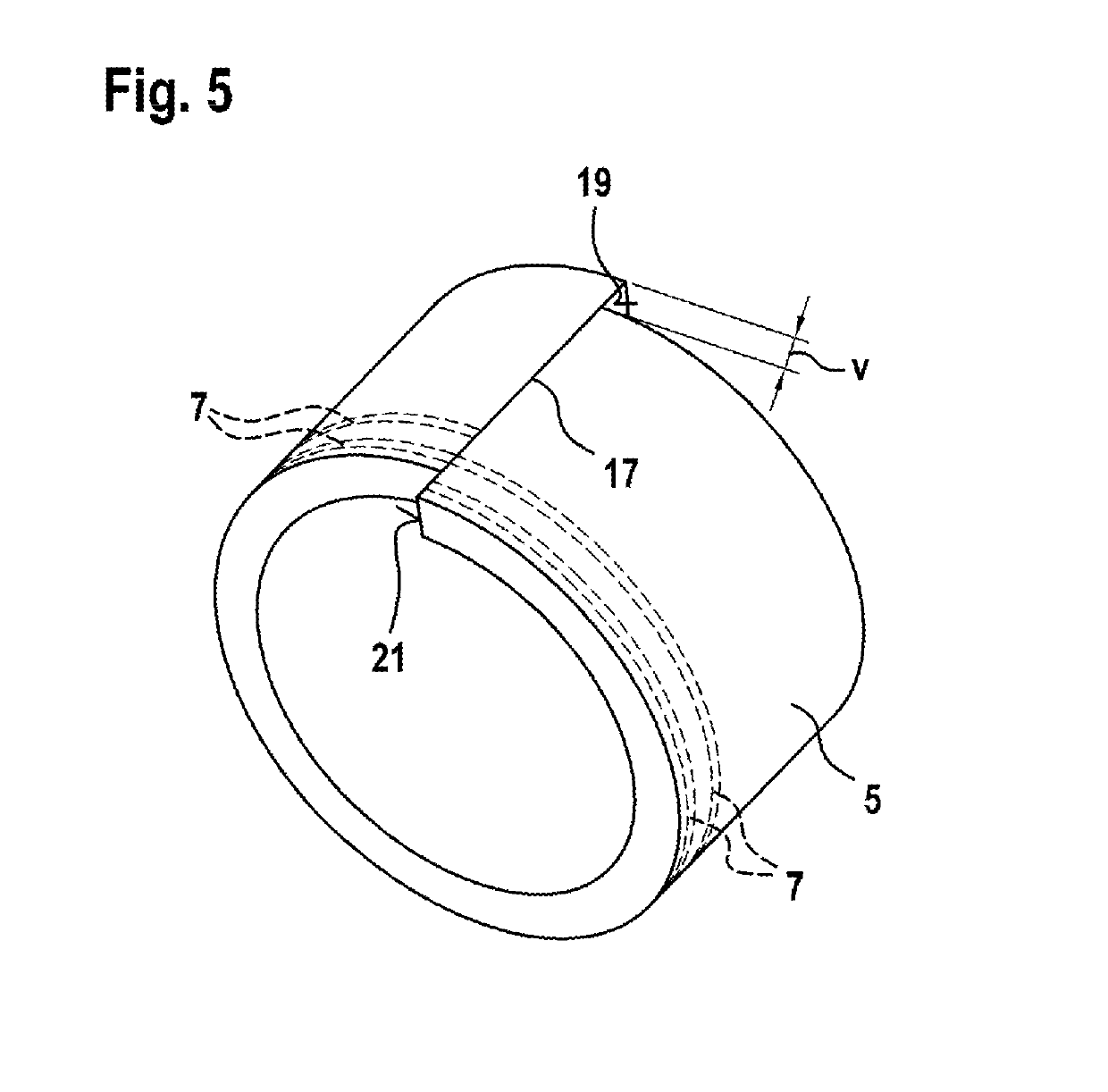
Figure 3
Abstract
Description
BACKGROUND OF THE INVENTION
[0001] The invention relates to a heat sink for an electric machine and to an electric machine equipped with such a heat sink. The invention further relates to a method for producing the heat sink.
[0002] Electric machines of the type used, for example, as electric motors or generators in electric or hybrid vehicles are expected to provide increasingly greater power and power densities. Heat is generated in electric machines as a result of losses occurring during a conversion between electrical energy and mechanical energy, and as a result of other effects. Fluid cooling, in particular liquid cooling, is frequently utilized in order to prevent overheating of the electric machine.
[0003] Fluid cooling systems in this case are often formed with the aid of specially designed, for example, double-walled housings, in which a cooling fluid is conveyed through channels or ribs. In this case, the housing adjoins components of the electric machine such as, for example, ...
Examples
Embodiment Construction
[0028]FIGS. 1, 2 and 3 show a perspective view, a partially cutaway view, and a sectional view of a heat sink 1 according to one embodiment of the invention. The heat sink 1 has a cylindrical shape. A cylinder diameter can be suitably selected in order to enable, for example, a stator of an electric machine (not shown) to be accommodated in an inner chamber 3 of the heat sink 1. The cylinder diameter can be between 2 cm and 100 cm, preferably between 5 cm and 40 cm, for example. An axial length of the heat sink can typically be between 5 cm and 200 cm, preferably between 10 cm and 50 cm.
[0029]The heat sink 1 can be formed with the aid of a plate 5; a sectional view of two abutting surfaces 19, 21 of said plate, which are located on end faces positioned opposite each other, is shown in FIG. 4. The plate 5 can be initially flat. Said plate can have a thickness, for example, between 0.5 cm and 20 cm, preferably between 1 cm and 5 cm. The plate 5 can consist of a thermally highly conduc...