
Low oxygen biologically mediated nutrient removal
a biologically mediated, low oxygen technology, applied in biological water/sewage treatment, multi-stage water/sewage treatment, products, etc., can solve the problems of containing undesired amounts, negatively affecting air and soil quality, etc., to achieve rapid denitrification, rapid mass transfer, and energetic efficiency
Patent Information
- Authority / Receiving Office
- US · United States
- Current Assignee / Owner
- Publication Date
- 2005-11-03
- Estimated Expiration
- Not applicable · inactive patent
Smart Images
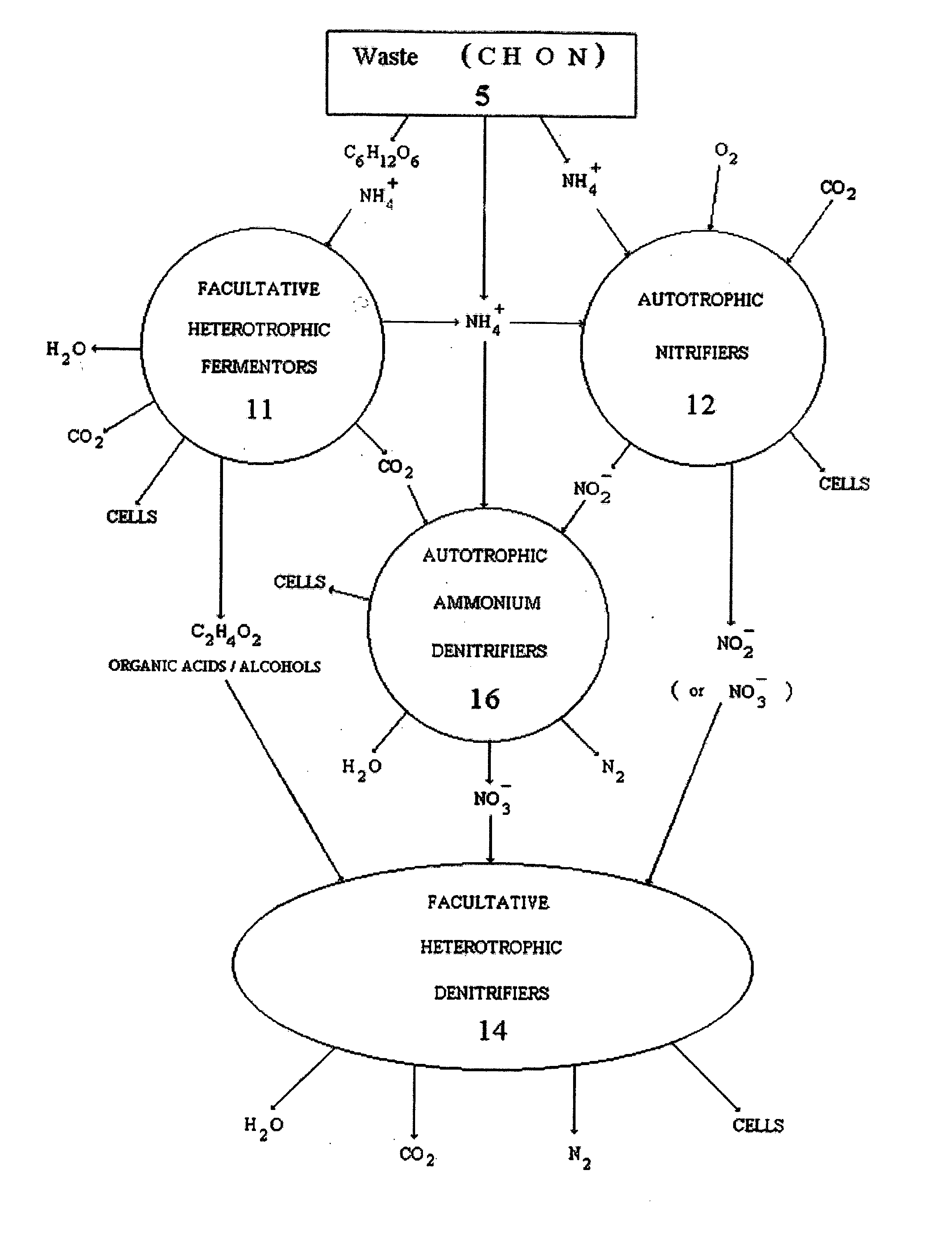
Figure 1 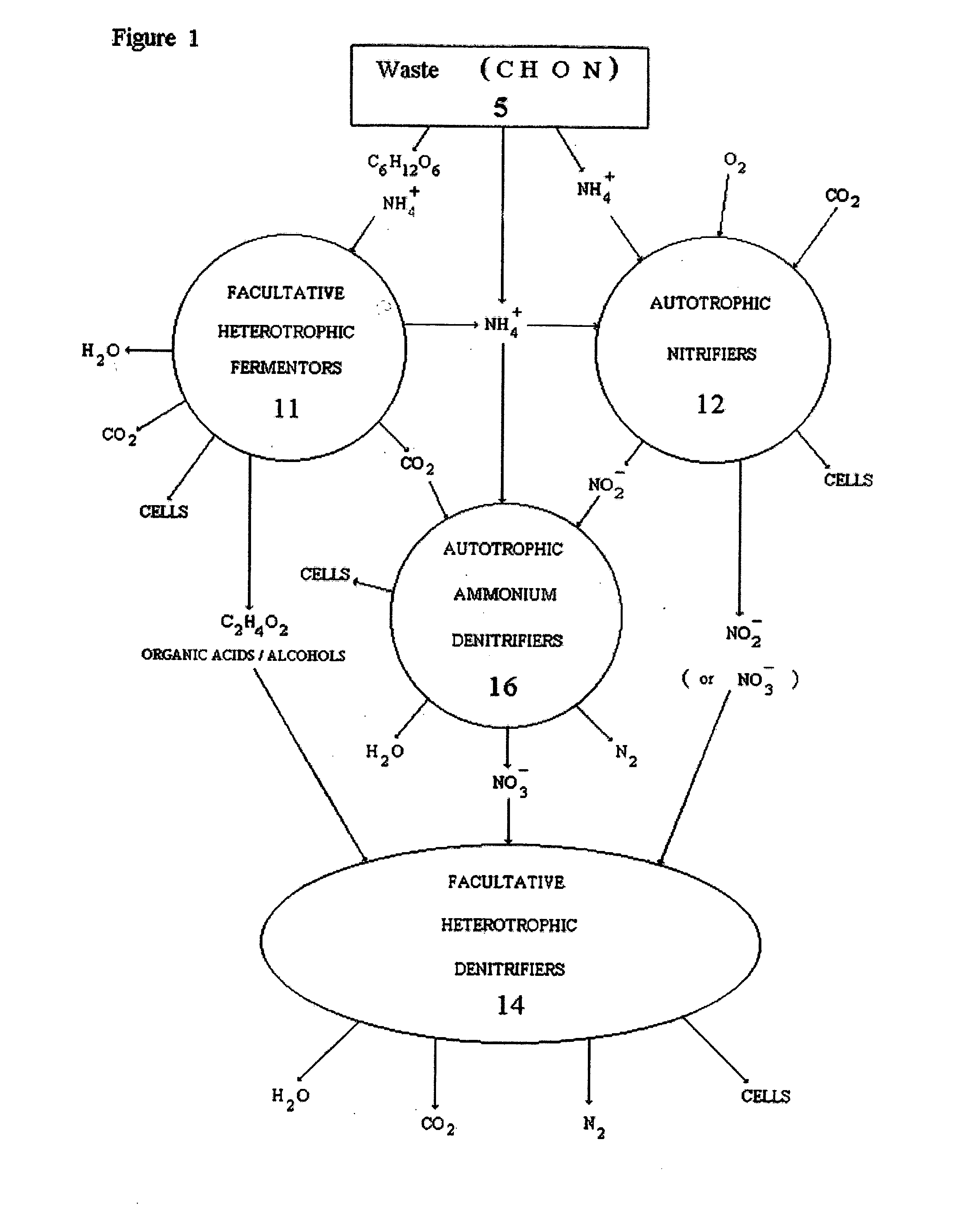
Figure 2 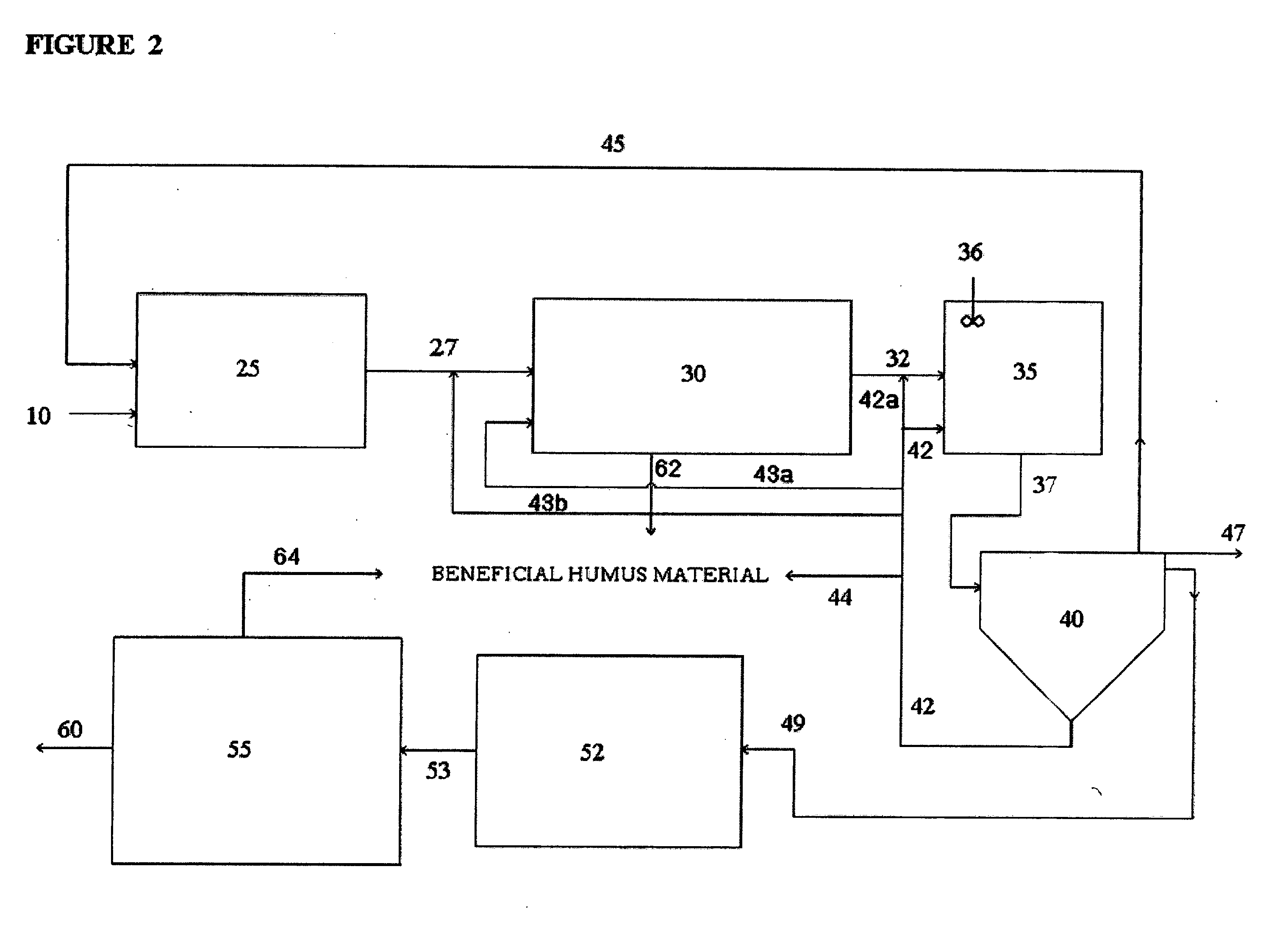
Figure 3
Abstract
Description
CROSS-REFERENCE TO RELATED APPLICATIONS
[0001] The present application is a continuation-in-part of U.S. patent application Ser. No. 10 / 600,936 filed on Jun. 20, 2003, and claims priority to U.S. patent application Ser. No. 09 / 709,171 filed on Nov. 10, 2000, now U.S. Pat. No. 6,689,274, each of which is expressly incorporated herein in its entirety by reference thereto.
[0002] The present invention relates to a novel process for the biologically mediated treatment of solid and liquid organic wastes, particularly animal farm wastes, including the removal of nutrients from such wastes, such as, for example, phosphorous and nitrogen. BACKGROUND OF THE INVENTION
[0003] Everyday, organic waste streams are created that need to be treated in some form or manner before they are disposed of. For example, organic waste streams in conventional municipal waste and wastewater plants, food manufacturing facilities, industrial factories, and animal farms are typically treated either physically, che...
Examples
Embodiment Construction
[0044] In the low oxygen biologically mediated conversion process of the present invention, evolution of a natural microbial community is encouraged under low dissolved oxygen conditions leading to a plurality of desirable ecological niches. Further, when the flowable organic waste stream to the biologically mediated conversion process of the present invention contains relatively high concentrations of total BOD and TKN, and the TKN to total BOD by weight ratio is relatively high, e.g. when the mass ratio of TKN:total BOD is more than about 1:20 by weight, and preferably more than about 2.5:20, the resulting low oxygen biologically mediated conversion process can be an effective processing approach for rapid, substantially odorless, biologically mediated conversion of the waste stream substrates (including nutrients).
[0045] When the influent oxygen loading and the dissolved oxygen concentration in a biological treatment process are suitably regulated to maintain a dissolved oxygen c...