
Mask configured to maintain nutrient transport without producing visible diffraction patterns
a technology of nutrient transport and mask, applied in the field of masks, can solve the problems of poor vision, inadequate treatment of vision deficiencies, presbyopia, etc., and achieve the effect of eliminating visible diffraction patterns and increasing the depth of focus of the patien
Patent Information
- Authority / Receiving Office
- US · United States
- Patent Type
- Applications(United States)
- Current Assignee / Owner
- Publication Date
- 2006-04-13
- Estimated Expiration
- Not applicable · inactive patent
Smart Images
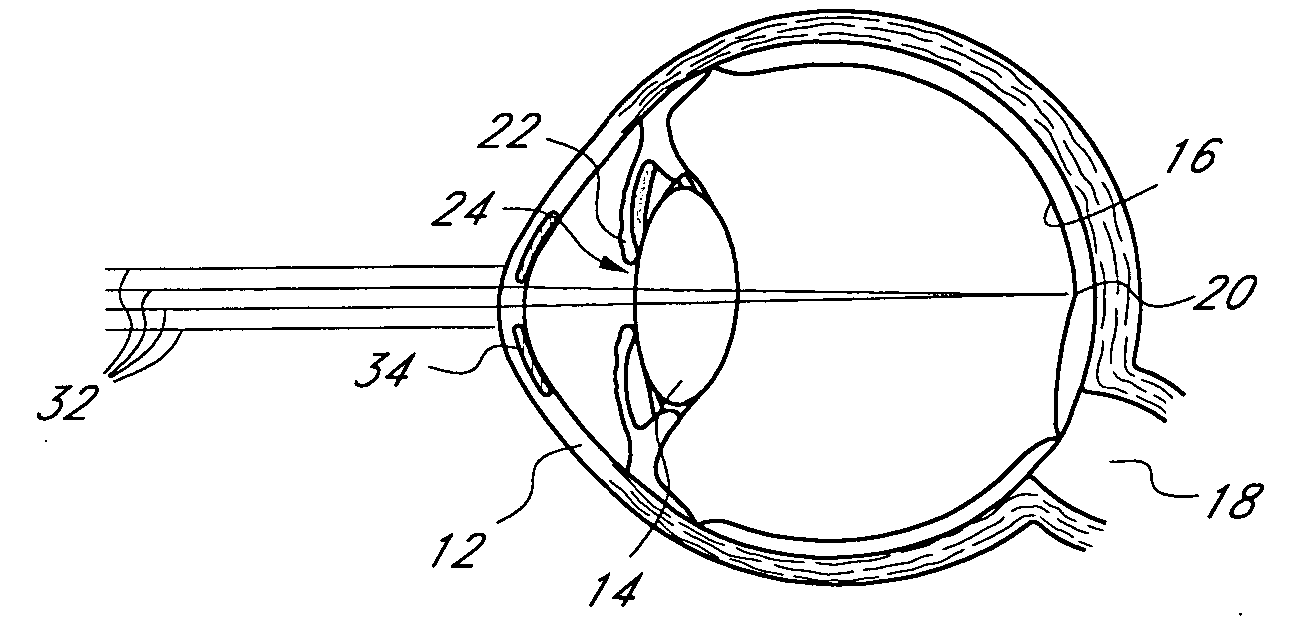
Figure 1 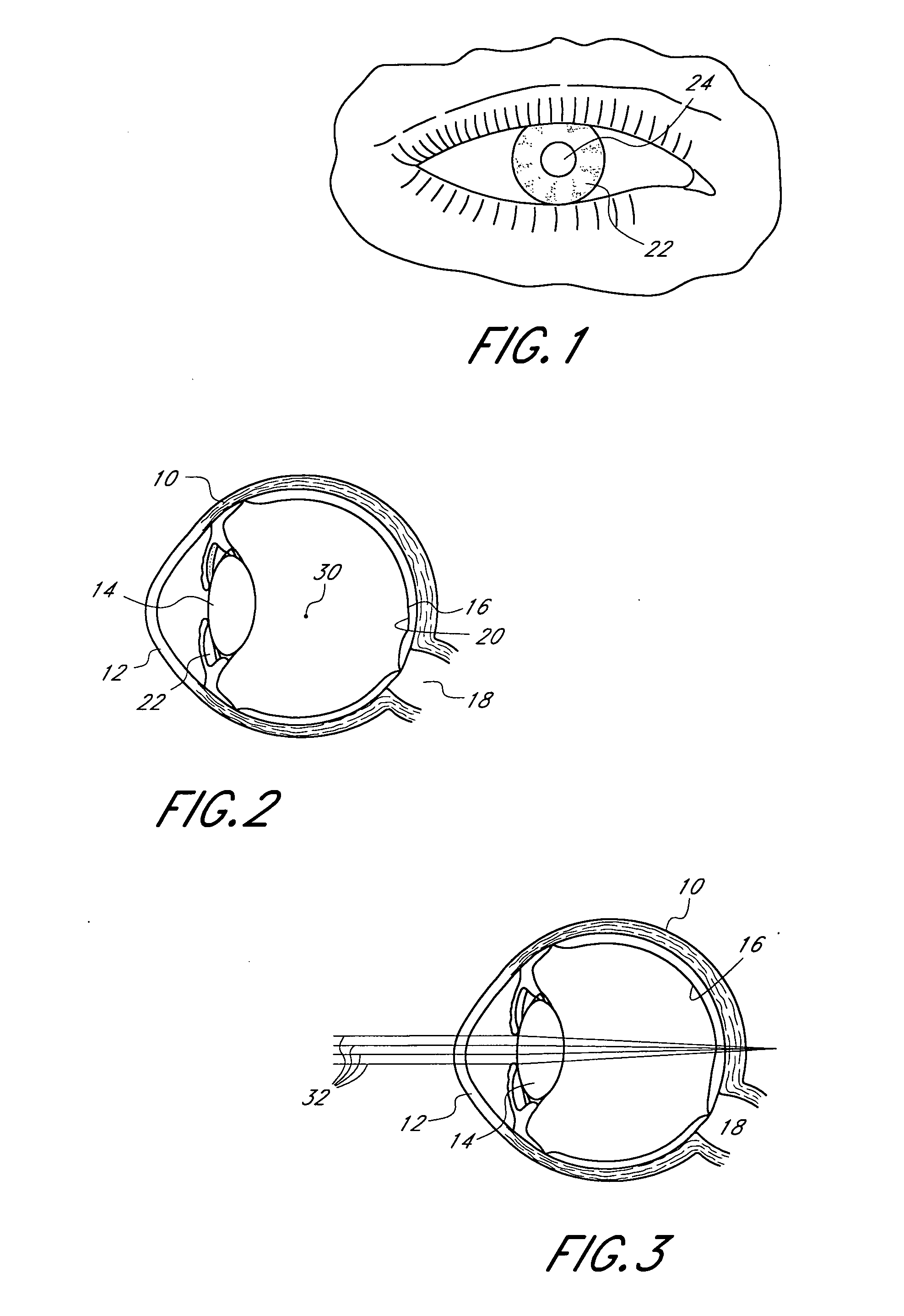
Figure 2 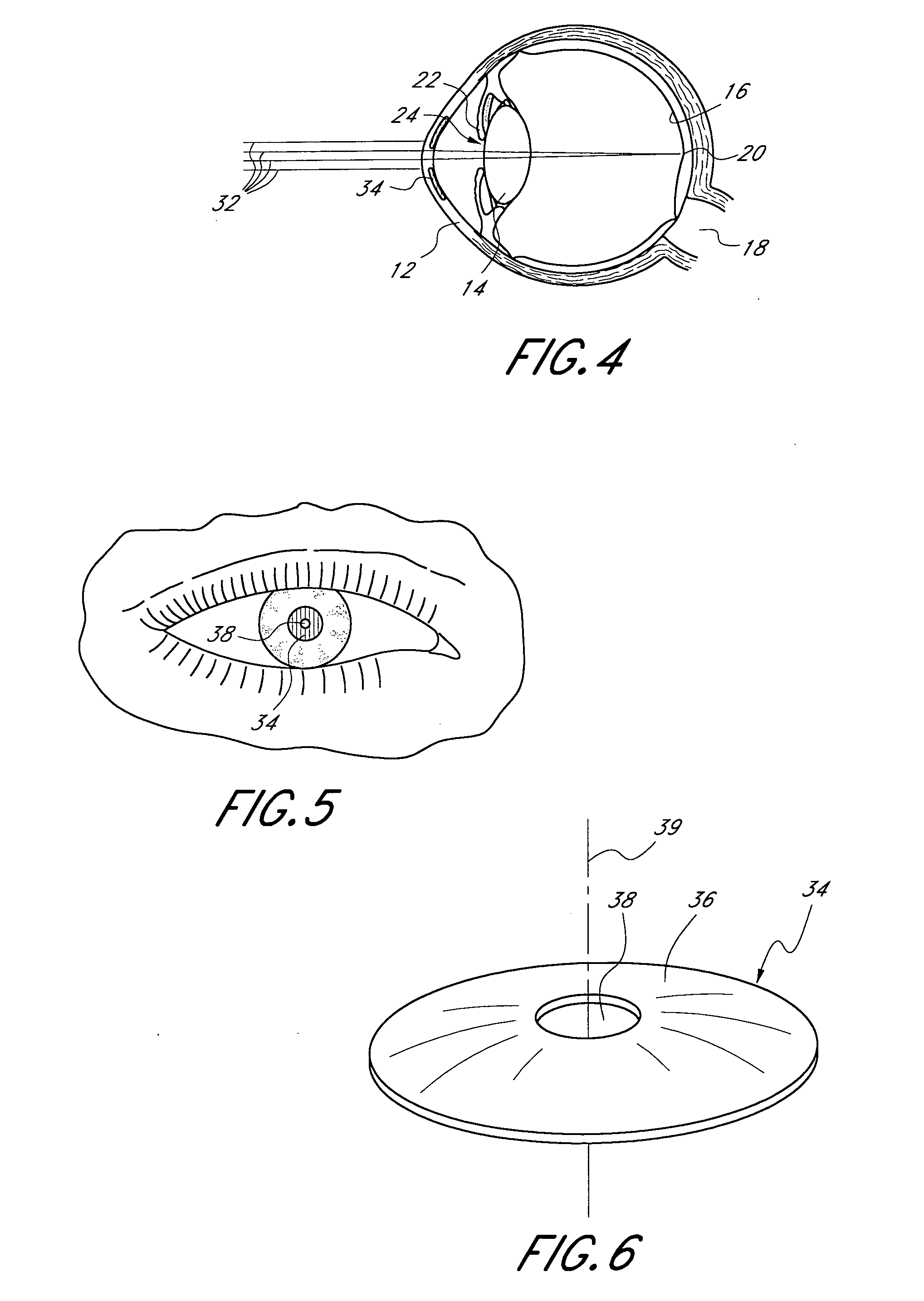
Figure 3
Abstract
Description
RELATED APPLICATIONS
[0001] This application is a continuation of U.S. application Ser. No. 10 / 854,033, filed May 26, 2004, which claims priority under 35 U.S.C. §119(e) to U.S. Provisional Application No. 60 / 473,824, filed on May 28, 2003 and to U.S. Provisional Application No. 60 / 479,129, filed on Jun. 17, 2003, all of which are hereby incorporated by reference in their entirety.BACKGROUND OF THE INVENTION
[0002] 1. Field of the Invention
[0003] This application is directed to masks for improving the depth of focus of an eye of a human patient and methods and apparatuses for applying such masks. More particularly, this application is directed to apparatuses and methods for aligning a mask with the line of sight of an eye and applying the mask to the eye.
[0004] 2. Description of the Related Art
[0005] Presbyopia, or the inability to clearly see objects up close is a common condition that afflicts many adults over the age of 40. Presbyopia diminishes the ability to see or read up c...
Examples
Embodiment Construction
[0102] This application is directed to masks for improving the depth of focus of an eye of a patient and methods and apparatuses for applying such masks. The masks generally employ pin-hole vision correction and have nutrient transport structures. The masks may be applied to the eye in any manner and in any location, e.g., as an implant in the cornea (sometimes referred to as a “corneal inlay”). The masks can also be embodied in or combined with lenses and applied in other regions of the eye, e.g., as or in combination with a contact lenses or an intraocular lenses. Apparatuses and methods for applying the masks to the patient generally use the patient's vision to locate the patient's line of sight while the mask is being applied to the eye so that the mask may be properly aligned with the line of sight.
I. Overview of Pin-Hole Vision Correction
[0103] A mask that has a pinhole aperture may be used to improve the depth of focus of a human eye. As discussed above, presbyopia is a pr...