
Intranasal Administration of Ketamine to Treat Depression
Patent Information
- Authority / Receiving Office
- US · United States
- Current Assignee / Owner
- Publication Date
- 2007-12-13
Smart Images
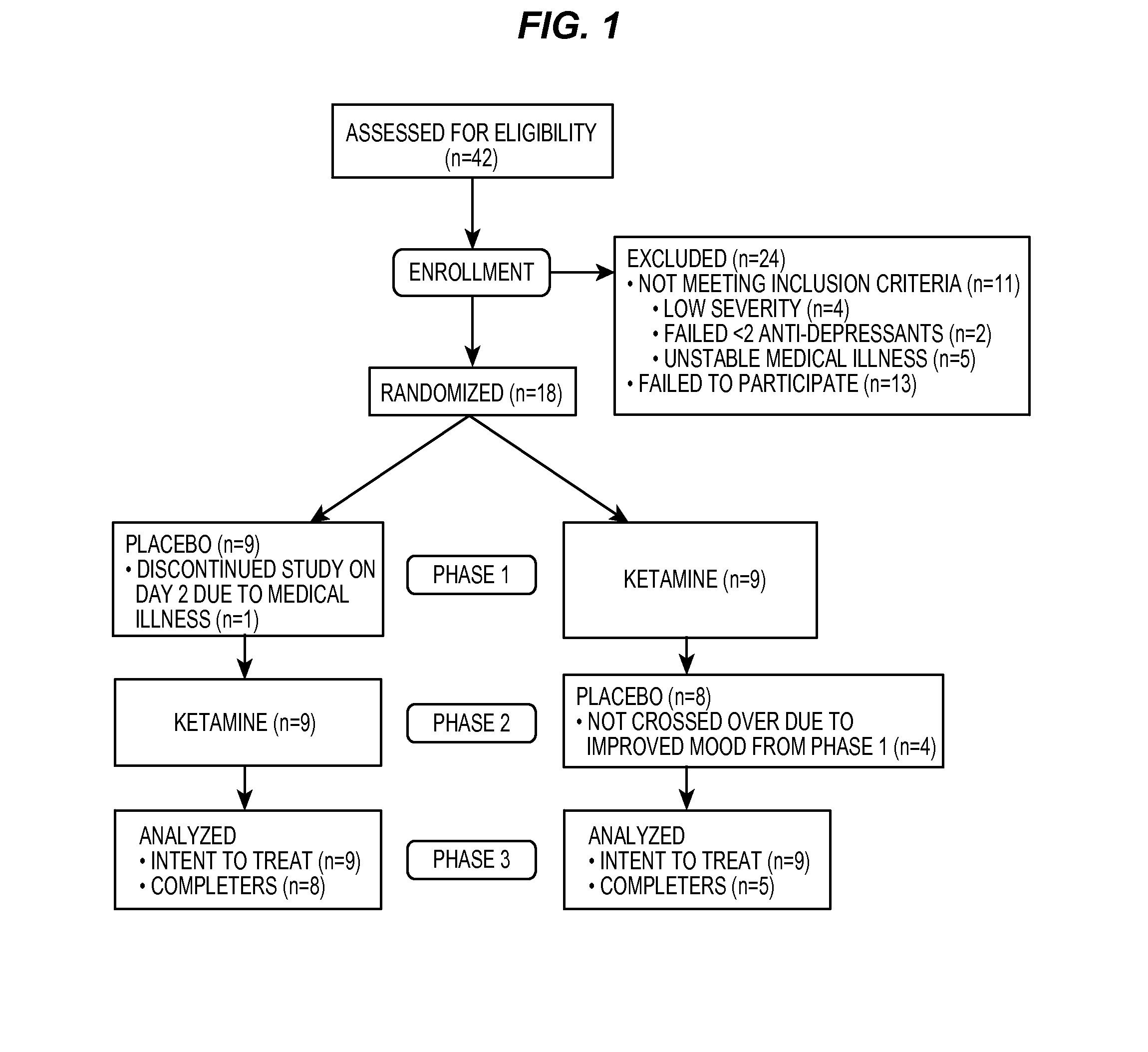
Figure 1 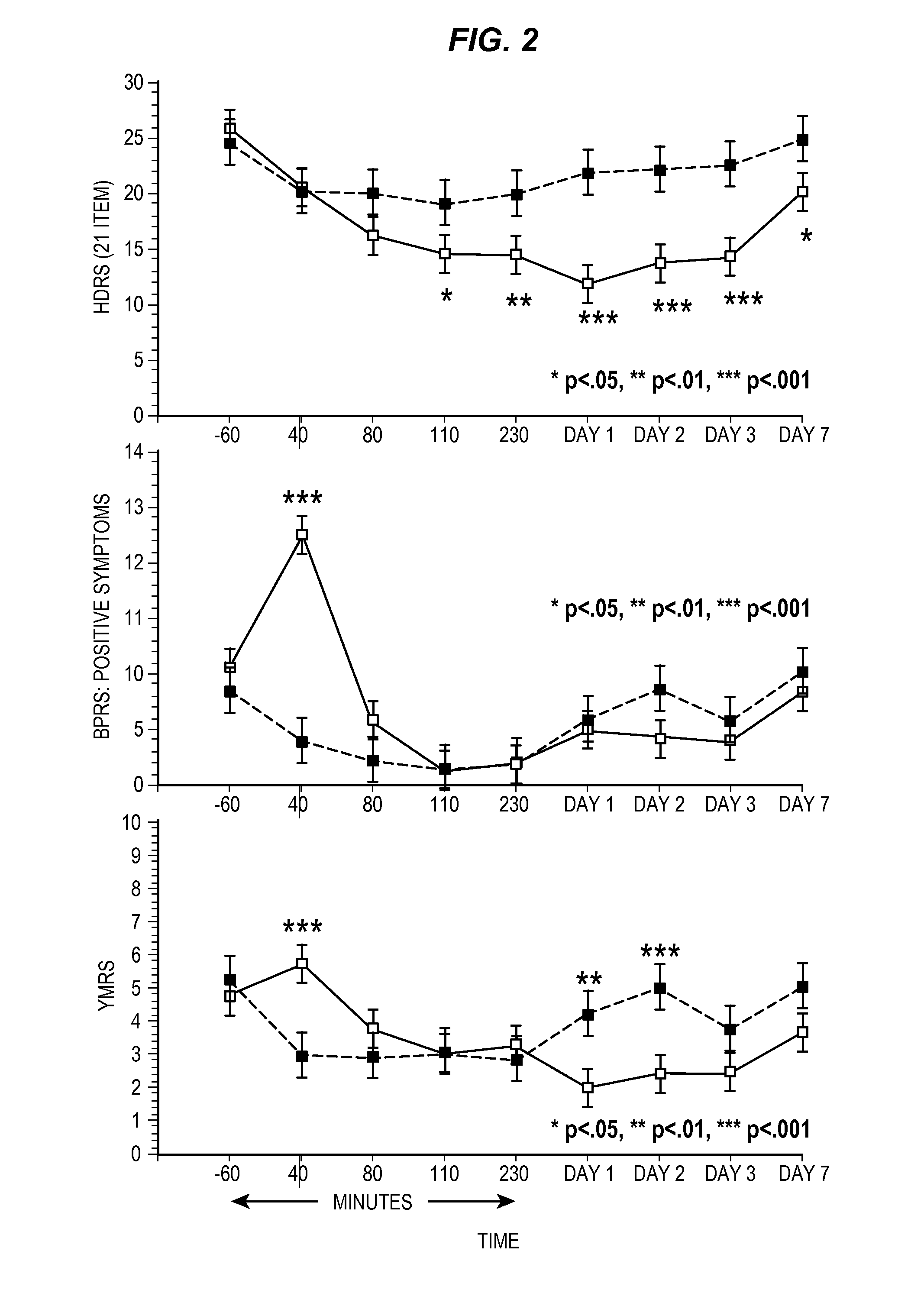
Figure 2 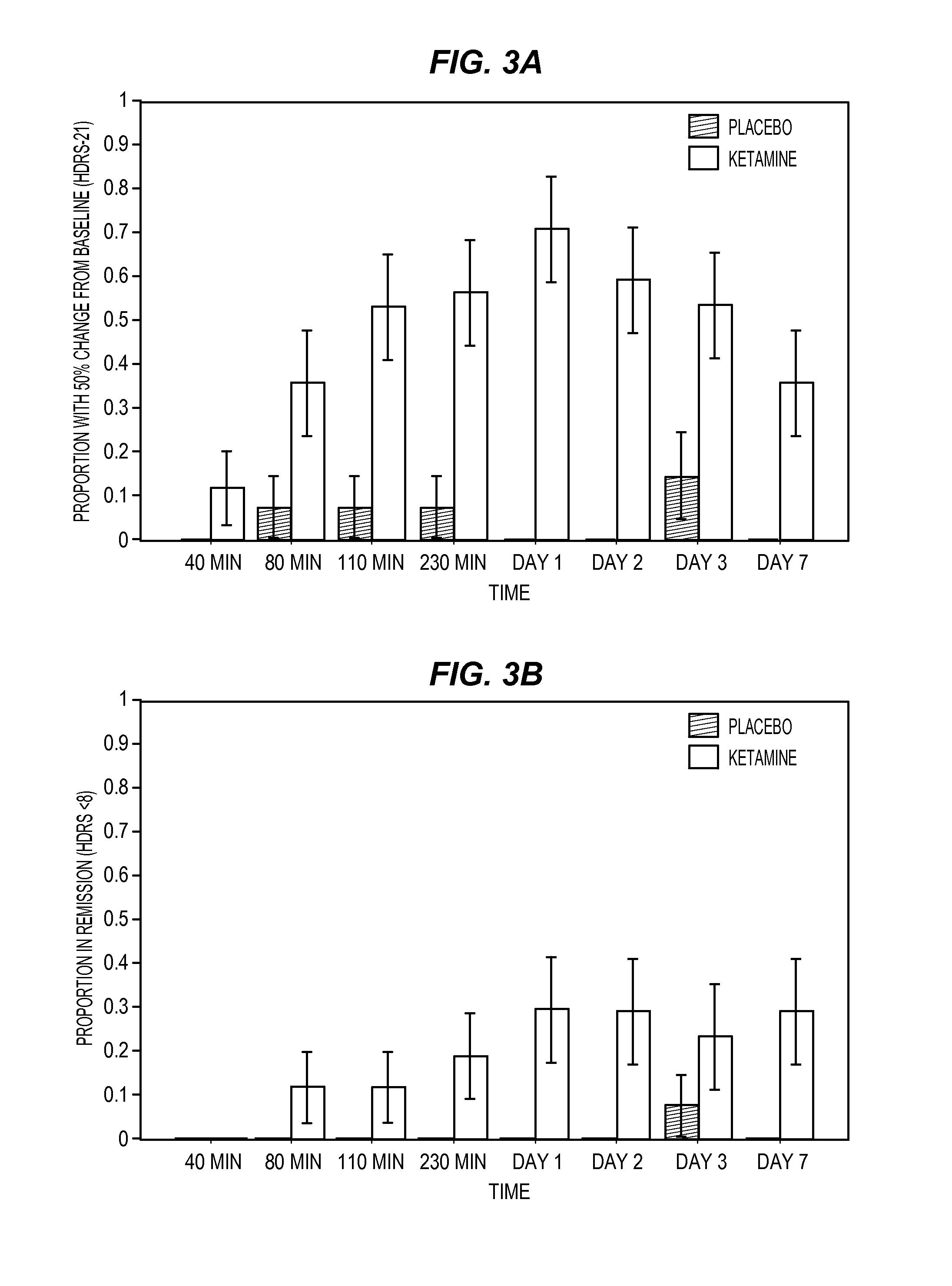
Figure 3
Abstract
Description
[0001] The present application claims the benefit of priority of U.S. Provisional Application No. 60 / 785,108, which was filed Mar. 22, 2006. The entire text of the aforementioned application is incorporated herein by reference.
[0002] This invention was made with government support under Grant No. 1Z01MH002857-01 awarded by the National Institutes of Health, and a Merit Review Grant from the Department of Veterans Affairs, NIMH Program Grant. The government has certain rights in the invention.FIELD OF THE INVENTION
[0003] The present invention relates to methods and compositions for the treatment of depression. More particularly, the invention relates to intranasal, intravenous and transdermal administration of ketamine to treat treatment-resistant depression. BACKGROUND OF THE INVENTION
[0004] Depression is among the most disabling of all medical disorders with a lifetime prevalence of approximately 17% [1]. It frequently appears early in life, can run a chronic course, and adversel...
Examples
example 1
[0125] The following examples are included to demonstrate certain embodiments of the invention. It should be appreciated by those of skill in the art that the techniques disclosed in the examples which follow represent techniques discovered by the inventors to function well in the practice of the invention, and thus are considered to constitute certain aspects for its practice. However, those of skill in the art should, in light of the present disclosure, appreciate that many changes can be made in the specific embodiments which are disclosed and still obtain a like or similar result without departing from the spirit and scope of the invention.
[0126] Methods
[0127] Men and women, ages 18 to 65 years, who were inpatients with a diagnosis of major depressive disorder recurrent without psychotic features as diagnosed by means of the Structured Clinical Interview for Axis I DSM-IV Disorders—Patient Version 28 were eligible to participate. Subjects were required to have a score of ≧18 o...
example 2
Repeated Administration of a Fixed Dose IV Ketamine
[0155] The following example describes a treatment strategy for treatment-resistant depression involving the repeated administration of ketamine for rapid mood stabilization.
[0156] A fixed IV ketamine dose (0.5 mg / kg infusion over 40 minutes) is repeated for up to six to nine sessions over a two to three week period in hospital. The determination of the number of treatment sessions is based on clinical response and tolerability. Standard pharmacotherapy treatments would be initiated in hospital such that once the final ketamine treatment session is completed; the patient has achieved a therapeutic dosage of an antidepressant for relapse prevention.
example 3
Repeated Administration of a Continuation Dose of IV Ketamine
[0157] The following example describes another treatment strategy for treatment-resistant depression involving the repeated administration of a continuation dose of ketamine for rapid mood stabilization.
[0158] All patients would initiate IV ketamine at the dose of 0.5 mg / kg at a rate of 1 mg / min, with continued titration over 40 minutes based on tolerability. At the first treatment, a tolerability threshold is determined using an empirical titration procedure based on the presence of psychotic side effects. he individualized optimal tolerated dose would serve as the continuation dosage for repeated treatments as described in Example 2 above. For patients who respond to IV ketamine at the 24 hour assessment, the continuation dose would be 20% reduced from the dose associated with psychotic side effects. If a patient did not have any psychotic side effects and is a responder at 24 hours, then the standard dose of 0.5 mg / kg...