
Compositions and methods for treatment of insulin-resistance diseases
a technology for insulin resistance and drugs, applied in the field of materials and methods for treating metabolic syndrome, insulin resistance diseases, can solve the problems of reducing lipid stores and glucose levels, and achieve the effects of reducing lipid levels, and reducing glucose levels in patients
Patent Information
- Authority / Receiving Office
- US · United States
- Patent Type
- Applications(United States)
- Current Assignee / Owner
- Publication Date
- 2009-01-29
- Estimated Expiration
- Not applicable · inactive patent
Smart Images
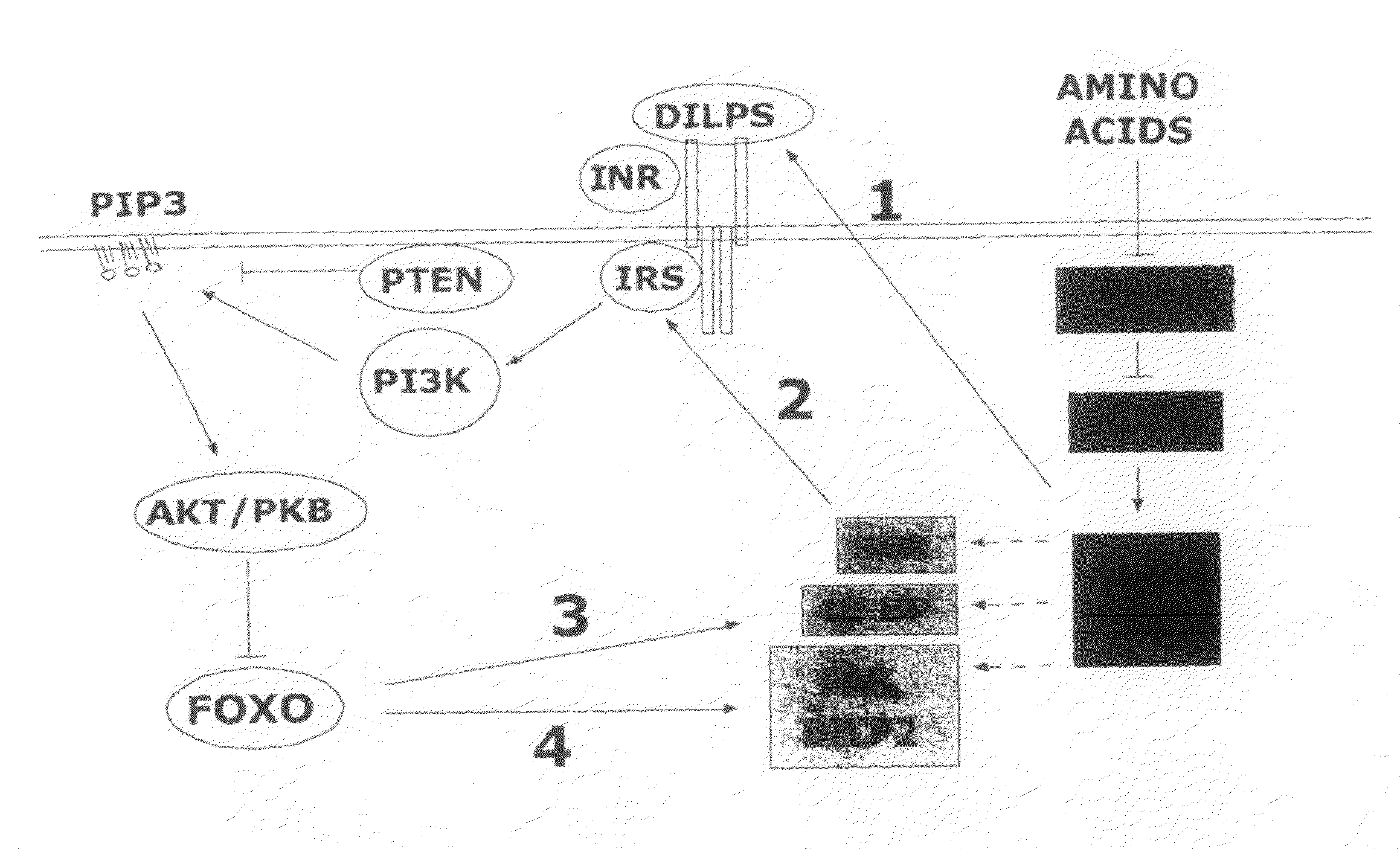
Figure 1 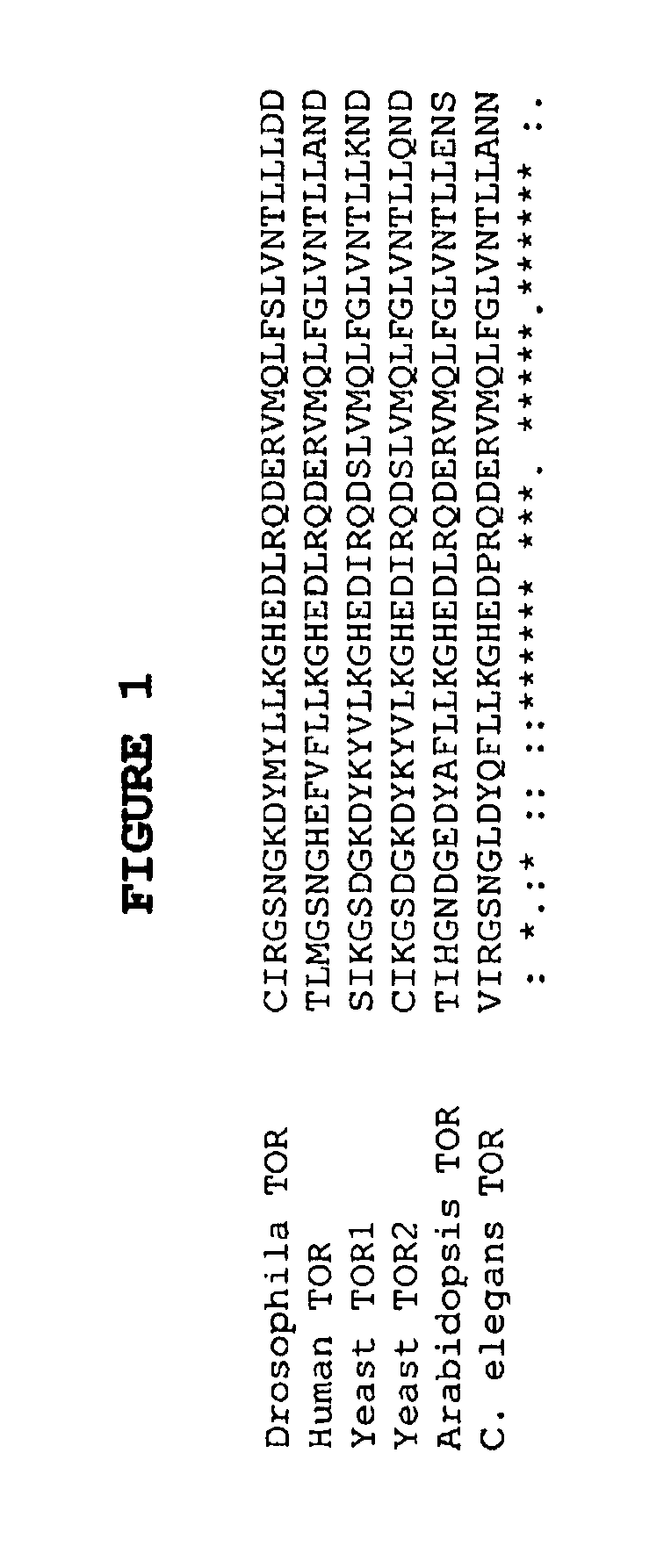
Figure 2 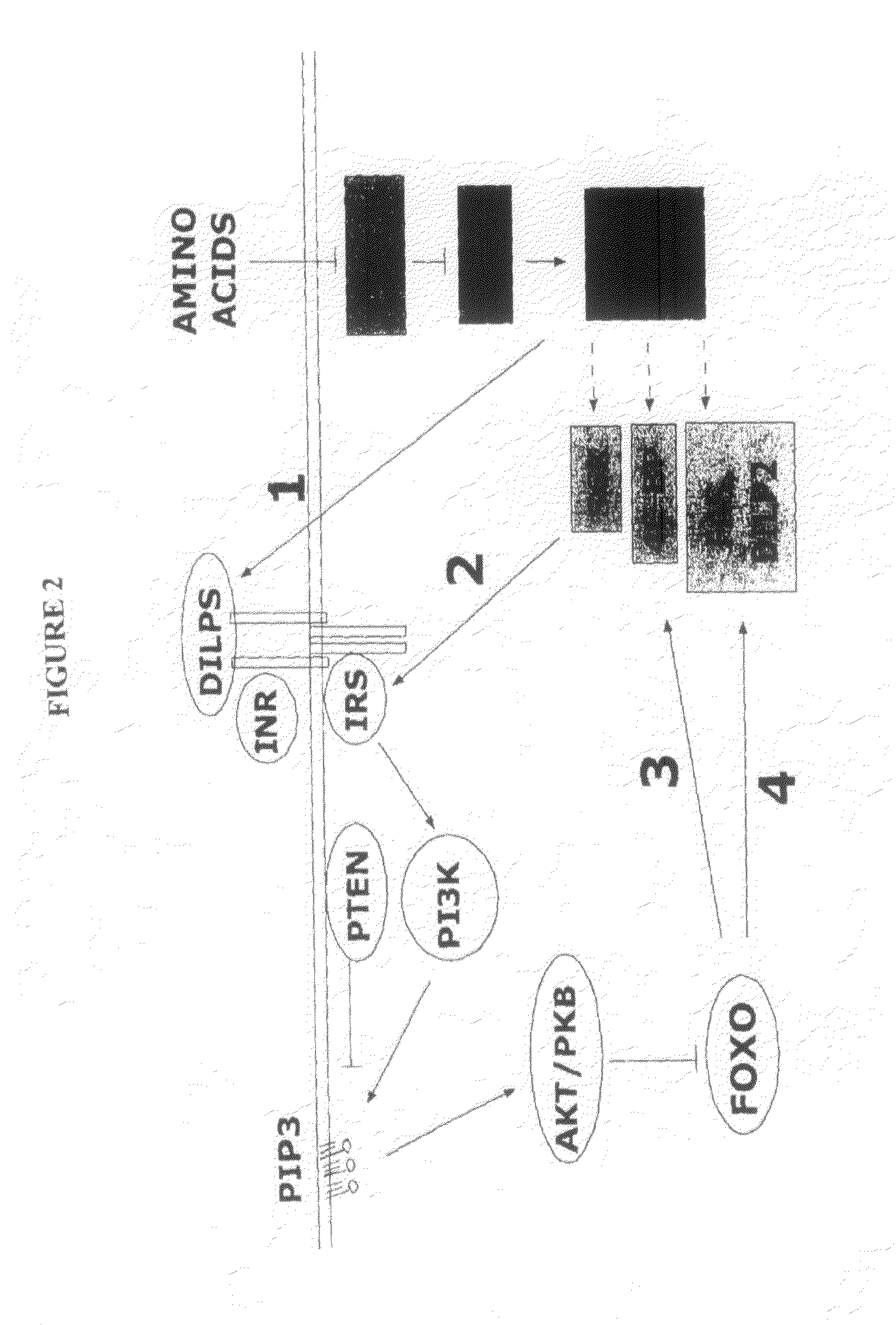
Figure 3
Abstract
Description
STATEMENT OF GOVERNMENT RIGHTS
[0001] The invention was supported, at least in part, by a grant from the Government of the United States of America (grant no. HL84949 from the National Institutes of Health). The Government has certain rights to the invention.BACKGROUND
[0002] 1. Technical Field
[0003] The present invention relates to materials and methods for treatment of metabolic syndrome, insulin-resistance diseases like obesity and Type II diabetes, and aging and organ senescence.
[0004] 2. Background of the Invention
[0005] Metabolic syndrome is a cluster of metabolic abnormalities like elevated glucose and lipid levels related to a state of insulin resistance. The major cause of metabolic syndrome and diabetes in humans is a reduction of insulin signaling, but the underlying pathways and mechanisms are not completely understood. Likewise, excessive nutrients can lead to nutrient toxicity and the metabolic syndrome. Thus, dysregulation of energy homeostasis can lead to metabolic disturba...
Examples
example 1
[0077]We have examined in detail the function of Drosophila TOR (dTOR) in terms of energy homeostasis and senescent responses. We show that reduction of dTOR function results in decreased glucose and lipid levels with concomitant increase of the Drosophila insulin-like peptides (DILPs) from the insulin-producing cells. We also show that a reduction of dTOR function can block activated dFOXO-mediated insulin resistance and metabolic syndrome phenotypes. Taken together, these data indicate that dTOR function is required for the maintenance of energy homeostasis and organismal senescence. Reduction of TOR function has clinical utility for treating metabolic syndrome and insulin resistance.
Materials and Methods
[0078]Fly Genetics. Standard genetic analyses were performed as described (Oldham et al., Genes Dev. 14:2689-2694, 2000).
[0079]Immunohistochemistry, Westerns and RT-PCR Analyses. We used the DILP2 antibody to measure DILP2 protein levels by performing immunohistochemistry as descr...